
Everest Base Camp in Tibet rewards patient photographers with immense Himalayan views, vivid prayer flags, and a stark plateau landscape. The best photographs come from observing the light, respecting local customs, and allowing time to adjust to the altitude.
Key Takeaways
- The north face of Everest is the defining subject, especially when clouds lift around the summit.
- Rongbuk Monastery and its surroundings add cultural and architectural context to the mountain scenery.
- Prayer flags, stone details, and plateau landscapes create intimate images beyond the famous panorama.
- Early and late daylight can bring out texture in the mountain and surrounding terrain.
- Altitude-aware planning and respectful photography matter as much as lenses and camera settings.
What Makes Everest Base Camp A Distinctive Photo Destination
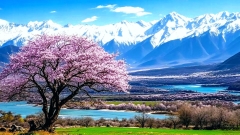
Everest Base Camp on the Tibetan side sits in a high-altitude landscape where the scale of the mountains can be difficult to convey in a single frame. The broad, open terrain, changing cloud cover, and clear views toward the north face of Mount Everest give photographers a range of subjects, from sweeping landscapes to small details that reveal a sense of place.
This is not a conventional campsite with a permanent village of climbers. Visitor access and facilities can change, and the area available for sightseeing may depend on local rules and conditions. Treat the base camp area as a protected, high-mountain destination rather than a guaranteed stage set. Check current arrangements before travel, and follow instructions from your guide and local authorities.
A strong photo story balances the iconic mountain with its setting. Include the foreground, the broad Rongbuk Valley, nearby structures, and the people or objects that convey scale. A frame filled only with distant peaks may be beautiful, but a carefully chosen foreground helps viewers understand the terrain and the experience of being there.
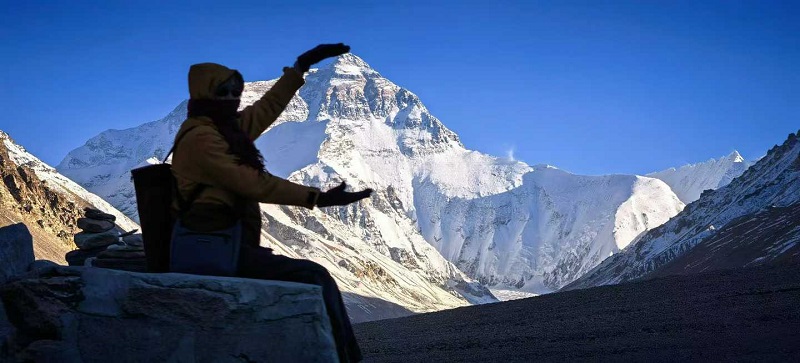
Mount Everest
Photograph Mount Everest From The North Side
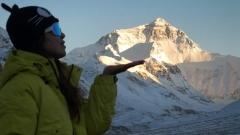
The north face of Everest is the central subject for most visitors. Its familiar pyramid shape can look quite different as clouds move across the upper slopes and changing light reveals ridges and snowfields. Rather than taking one photograph and moving on, watch the mountain for a while. A brief opening in the cloud can alter the scene completely, while a thin veil of mist may add depth without hiding the summit.
Choose A Clear, Readable Composition
Start with a straightforward landscape frame that gives Everest room within the surrounding peaks. Keep the horizon level and check that foreground objects do not appear to grow out of the summit. If the view is exceptionally clear, use a moderate telephoto focal length to bring out the mountain’s shape and surface. A wider lens is useful when the valley and sky are equally important, but very wide angles can make the mountain appear smaller than it feels in person.
Try several compositions rather than relying on a single viewpoint. A horizontal image can communicate the breadth of the range; a vertical image can emphasize the mountain’s rise from the valley. If conditions permit, photograph both with and without people or buildings in the foreground. The comparison can help tell the difference between the immense landscape and the human experience of reaching it.
Work With Clouds And Changing Light
Clouds are part of the story, not simply a problem to remove. Look for layers of cloud around the ridges, gaps that reveal the summit, and shadows moving across the mountain. When the summit is obscured, turn toward the valley, nearby slopes, or the changing sky. Waiting in one place for a weather opening is often more productive than repeatedly moving in search of a perfect, cloud-free view.
Morning and late afternoon can provide more directional light than the middle of the day, bringing texture to snow, rock, and ridgelines. Exact conditions vary with season, weather, and the time of your visit, so do not assume that sunrise will always be clear or that the summit will be visible at a particular hour. Plan enough time to respond to what the sky actually does.
Include Rongbuk Monastery In The Story
Rongbuk Monastery is an important cultural and visual subject in the Everest region. Its buildings, prayer flags, and mountain backdrop offer a different kind of photograph from the expansive views of the summit. Frame the monastery as a place with its own religious and local significance, not merely as a decorative foreground for Everest.
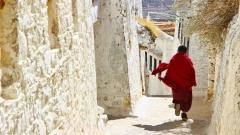
Photograph exterior details such as the building forms, windows, prayer flags, and the relationship between the monastery and the surrounding valley. A wider view can show how the settlement sits within the landscape; a closer composition can focus on a doorway or a line of flags. Keep the image natural and avoid forcing an artificial connection between the monastery and the mountain through extreme perspective.
Be considerate around worshippers and religious spaces. Ask permission before making close portraits, and follow posted restrictions or your guide’s advice about interior photography. If someone does not welcome a photograph, put the camera away. Thoughtful observation is more important than getting a particular shot.
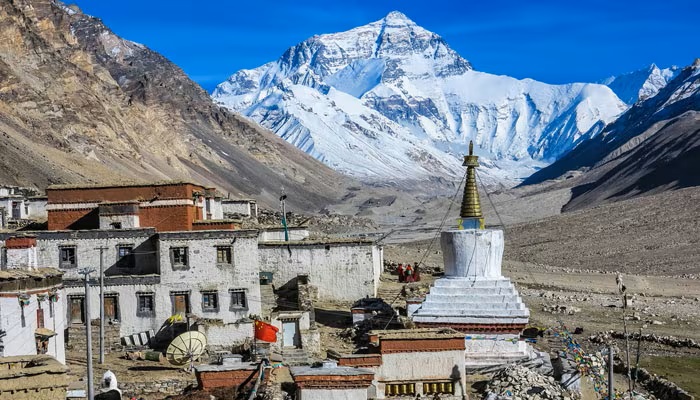
Rongbuk Monastery, Everest Base Camp on the north slope of Tibet
Photograph The Details That Give The Plateau Character
The grand view is only one part of a visit. Small subjects can make a photo collection more personal and help describe the high-altitude environment. Look for prayer flags against a clean sky, wind-shaped ground, stones arranged along paths, patterns in the earth, and the contrast between a simple structure and the open plateau.
Use Prayer Flags As A Foreground
Prayer flags can add color and a sense of movement, particularly when the wind catches them. Place them along the edge of the frame or use them to lead the eye toward the distant mountains. Check the background before shooting: a busy cluster of flags can obscure the mountain or make the composition feel crowded. A single strand against open sky may communicate the setting more clearly than filling the frame with fabric.
Treat flags and other religious objects respectfully. Do not move, rearrange, or handle them for a photograph. If you are unsure whether a subject is appropriate to photograph, ask your guide or choose another composition.
Look For Patterns, Texture, And Scale
The plateau can seem empty at first, but its visual interest often lies in texture. A track crossing a broad plain, small stones against pale soil, or a low structure beneath a huge mountain can create a strong sense of scale. Look for repeating forms and contrasts in color, then simplify the frame so the viewer’s attention is clear.
People can also give scale to the landscape, but they should not be treated as props. Photograph companions or willing subjects naturally and ask before making close portraits. A small figure walking along a path may be enough to communicate the distance and openness of the terrain without identifying anyone.
Make Better Landscape Photographs At High Altitude
At high elevation, cold, dry air, strong sunlight, wind, and rapid weather changes can affect both the photographer and the equipment. A practical camera setup is more valuable than carrying every lens you own. A wide-to-standard zoom covers most landscape situations, while a modest telephoto lens can help isolate the summit or compress layers of distant terrain. A lightweight tripod can be useful in low light, but only bring one if you can manage it comfortably.
Use a lens hood when possible to reduce stray light, and check the front element for dust, condensation, or snow. Avoid changing lenses in exposed, windy conditions if you can. Keep spare batteries warm in an inside pocket because cold can reduce battery performance, and carry memory cards securely. A simple protective cover helps guard equipment from dust and unexpected precipitation.
Bright snow and pale ground can mislead a camera’s automatic exposure, leaving the scene darker than it appears. Review the histogram and highlights, especially when the sky is bright or snow occupies much of the frame. Exposure compensation may help, but the right adjustment depends on the light and camera. Avoid relying only on the screen, which can be difficult to judge in strong daylight.
For moving clouds or people, choose a shutter speed fast enough to keep the subject sharp. For a deliberate long exposure, secure the camera and use a tripod only where it is safe and permitted. A polarizing filter can deepen some skies and reduce reflections, but its effect may be uneven across a very wide sky. Use filters carefully and make sure they do not introduce unwanted color or dark bands.
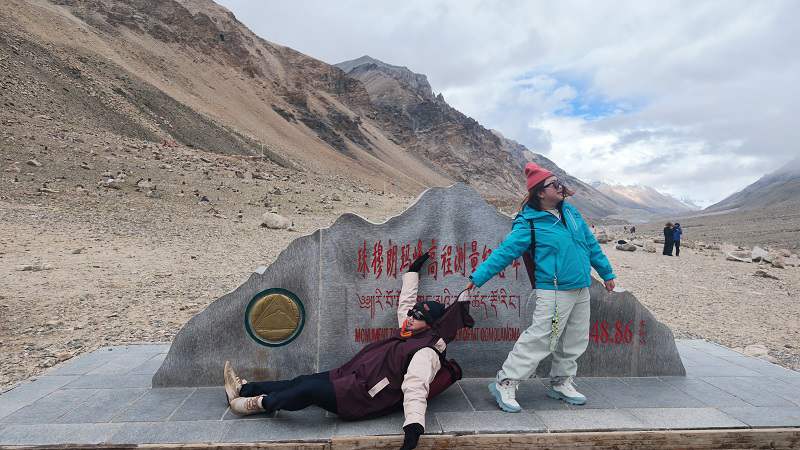
Mount Everest
Protect Your Health While Photographing
Everest Base Camp is at very high altitude, and photography should never take priority over your health. Acclimatize according to a responsible itinerary, move at a pace that feels manageable, drink fluids regularly, and follow medical guidance for altitude travel. If you develop symptoms that concern you, tell your guide and seek appropriate help rather than continuing to chase a shot.
Keep photography sessions short if you feel tired or cold. The effort of changing lenses, kneeling, or walking away from the vehicle can feel greater at altitude than expected. Choose a safe place to stop, stay aware of uneven ground, and do not back up while looking through the viewfinder. If you are traveling with a group, communicate before stepping away to compose an image.
Sun protection is important in exposed mountain environments. Sunglasses, suitable clothing, and sun protection help you stay more comfortable while waiting for the weather to change. Conditions can shift quickly, so keep warm layers and rain or wind protection accessible rather than buried in your luggage.
Plan Your Photo Stops And Travel Responsibly
The best photography plan leaves room for weather and rest. Ask your travel organizer how much time is available at the viewing area, what access is currently permitted, and whether local rules affect photography or vehicle arrangements. Conditions and visitor procedures can change, so confirm practical details before departure rather than relying on an old itinerary.
China Dragon Travel can be one option for travelers seeking help with a Tibet itinerary and logistics. When comparing tour arrangements, ask clear questions about acclimatization, transport time, permits, guide support, and how the schedule responds to weather. A carefully paced visit is more useful to a photographer than a tightly packed day with little time to observe the light.
Travel lightly and leave the landscape as you found it. Do not climb onto fragile features for a more dramatic angle, remove objects, or leave waste behind. Avoid blocking paths and respect instructions around religious sites and visitor areas. Responsible choices preserve the place and make it easier for everyone to enjoy the view.
Build A Balanced Photo Collection
A memorable set of photographs usually contains more than one type of image. Begin with a wide establishing view of the valley, then photograph Everest at different focal lengths as the light and clouds change. Add images of Rongbuk Monastery, prayer flags, surface textures, and small signs of human presence. Finish with a few quiet frames that show the weather or the route through the landscape.
You do not need to photograph continuously. Take a moment to look at the scene without a camera, then decide what matters most in the frame. A careful composition made after a short pause often communicates more than a large number of near-identical shots. If the mountain disappears behind cloud, record the atmosphere and the details that remain visible; those images can be just as true to the experience.
Frequently Asked Questions
What Is The Best Time Of Day To Photograph Everest Base Camp?
Morning and late afternoon can offer softer, more directional light, but mountain weather is unpredictable. The most useful time depends on cloud cover, visibility, season, and your itinerary. Allow time to watch the conditions instead of expecting the summit to appear on a fixed schedule.
Can I Photograph The Summit Of Mount Everest From Tibet?
The north face of Everest can be visible from viewpoints in the region, but visibility is never guaranteed. Clouds and weather may obscure the summit, and access to specific viewpoints can vary. Follow local instructions and treat any clear view as a fortunate condition, not a certainty.
What Camera Lens Should I Bring?
A wide-to-standard zoom is versatile for the valley, monastery, and broad mountain views. A modest telephoto lens is helpful for distant ridges and tighter summit compositions. Choose equipment you can carry comfortably at altitude rather than bringing a heavy kit you may not want to use.
Is It Appropriate To Photograph People Or Religious Sites?
Be respectful and ask permission before close portraits. Follow rules at religious sites, and do not photograph interiors or individuals where photography is restricted or unwelcome. Avoid moving religious objects or asking people to pose in ways that disrupt worship or daily life.
How Can I Keep My Camera Safe In The High-Altitude Environment?
Protect it from dust, wind, and moisture, and keep spare batteries warm in an inside pocket. Minimize lens changes in exposed conditions, check for condensation, and carry a simple protective cover. Most importantly, manage altitude and weather safely; no photograph is worth ignoring symptoms or taking unnecessary risks.