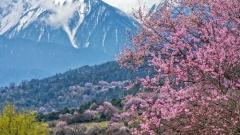

📍 Kathmandu Travel Guide Highlights
For first-time visitors to Nepal, Kathmandu is an unmissable destination. Although the city is crowded and chaotic, it offers the richest cultural experiences and the most authentic atmosphere of Nepal.
✅ Recommended stay: 3–5 days. Take your time and explore the city at a slower pace.
✅ Best area to stay: Thamel is the top choice for first-time visitors, with convenient access to restaurants, transportation, currency exchange, and travel services.
✅ Must-visit attractions: Kathmandu Durbar Square, Swayambhunath Stupa (Monkey Temple), Patan Durbar Square, Pashupatinath Temple, and Boudhanath Stupa.
✅ Best way to explore: Combine old town walking tours, historic architecture, and Buddhist and Hindu cultural experiences.
✅ Must-try experiences: Explore local markets, enjoy Nepali milk tea, watch the sunset from rooftop cafés, and experience the blend of Tibetan and Indian cultures.
✅ Transportation tips: Use ride-hailing apps such as Pathao and inDrive for more convenient and transparent fares.
✅ Travel tips: Wear comfortable shoes as many old town streets are uneven, and always respect local customs when visiting religious sites.
Kathmandu is not a city designed for perfection or luxury. It is a city full of history, culture, and everyday life. Slow down, wander through its ancient streets, and you will discover the true charm of Nepal.
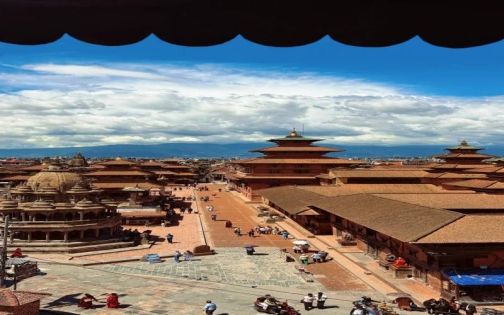
Kathmandu
Estimated Budget from Lhasa to Kathmandu
Transportation costs:Lhasa → Shigatse train: around 64 RMB,Shigatse → Nyalam bus: around 195 RMB,Nyalam → Zhangmu Port minibus: around 50 RMB,Zhangmu Port → Kathmandu local bus: around 25 RMB,Total transportation cost: approximately 334 RMB.Accommodation:Shigatse hostel bed: around 34 RMB/night,Nyalam hostel bed: around 50 RMB/night,Two nights accommodation: around 84 RMB.Food:A simple travel budget is around 30 RMB per day, approximately 60 RMB for three days.Total estimated cost:Transportation 334 RMB + accommodation 84 RMB + food 60 RMB = about 478 RMB.Of course, travelers choosing private cars or direct shared vans will pay more, usually around 400–500 RMB per person, but the journey will be more convenient.
Before Departure: Passport, Visa and Preparation
Before starting the journey, make sure your passport is valid for at least six months.For entering Nepal, travelers need a Nepal visa. There are two main options:The first option is applying for a Nepal visa in advance in Lhasa.The second option is applying for a visa after arriving at the Nepal border.For a smoother border crossing, applying for a Nepal electronic visa in advance is highly recommended. Save a digital copy or print the confirmation document before departure.For travelers heading toward border areas in Tibet, always confirm the latest border regulations. Some checkpoints may require passport, identification documents, or additional travel permits.
Recommended items to prepare:
- Motion sickness medicine
- Warm clothing
- Power bank
- Cash in RMB
- Small amount of Nepalese rupees
- Snacks and drinking water
The road conditions become more challenging after entering Nepal, and mobile payment services may not always be available.
Day 1: Lhasa to Shigatse
The most convenient way is taking the train from Lhasa to Shigatse.Reference schedule:Departure from Lhasa: around 13:50,Arrival in Shigatse: around 15:50,Ticket price: approximately 64 RMB
Travel time: about 2 hours,After arriving at Shigatse Railway Station, travelers need to go to Shigatse Bus Station to buy tickets for the next day’s bus to Nyalam.,The railway station is about 7 km from downtown. Transportation options:Public bus: around 2 RMB,Taxi: around 20–30 RMB,If time allows, travelers can explore Shigatse city in the evening.A recommended attraction is:Tashilhunpo Monastery,Tashilhunpo Monastery is one of the most important Tibetan Buddhist monasteries in western Tibet. The monastery looks especially impressive during sunset.For accommodation, staying near the bus station is recommended because the next day’s departure is early.
Day 2: Shigatse to Nyalam
The main transportation option from Shigatse to Nyalam is the long-distance bus.Details:Departure time: around 8:30,Ticket price: about 195 RMB,Distance: around 450 km,Travel time: about 9 hoursDuring the journey, the bus passes several checkpoints. Passengers may need to show passports or travel documents multiple times, so keep important documents easily accessible.This section is one of the most beautiful parts of the entire journey.
Along the way, travelers can see:
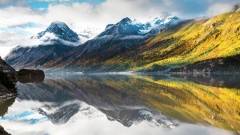
- Shishapangma Peak
- Himalayan snow mountains
- Tibetan plateau landscapes
- Remote valleys and lakes
For photography, sitting on the left side of the bus usually provides better views of the mountains.The scenery becomes especially dramatic in the afternoon when approaching Nyalam.After arriving in Nyalam, accommodation options are limited compared with larger Tibetan cities.Budget travelers can find hostel beds for around 50 RMB per night.Since Nyalam is located at a high altitude, temperatures can drop significantly at night, even during summer. Warm clothing is necessary.
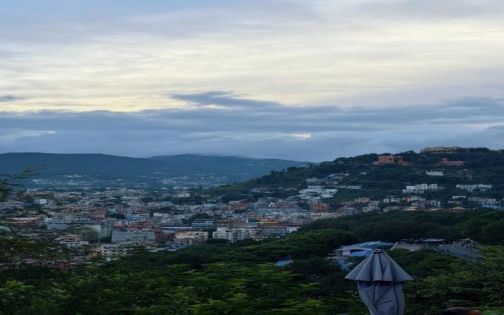
Kathmandu
Alternative Option: Direct Shared Van from Lhasa to Nyalam
Travelers who want to save time can choose a shared vehicle directly from Lhasa to Nyalam.Estimated price:Around 400–500 RMB per person.Travel time:Approximately 10–12 hours.
Advantages:
- No transfers
- Saves time
- Easier with large luggage
Disadvantages:
- Long hours in the car
- Mountain roads can be uncomfortable
The road becomes winding after entering the mountain area, and altitude, curves, and vehicle vibration can make some travelers feel uncomfortable.If you are prone to motion sickness, choose a front seat whenever possible.
Day 3: Nyalam to Zhangmu Port and Kathmandu
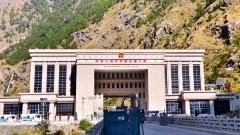
From Nyalam, travelers can take a local minibus to Zhangmu Port.Details:Ticket price: around 50 RMB,Travel time: about 1–2 hoursThe vehicle usually departs when enough passengers have arrived, so there is no need to arrive extremely early.Several border checkpoints may appear along the way. Keep your passport ready.After arriving at Zhangmu Port, complete the Chinese exit procedures first, then continue to the Nepal immigration area.Having a Nepal electronic visa prepared in advance can significantly speed up the process.After entering Nepal, travelers can exchange a small amount of Nepalese rupees for transportation and daily expenses.
Transportation from Zhangmu Port to Kathmandu
There are two main options:
Local Bus
Price:Around 550 Nepalese rupees,Approximately 25 RMB,This is the cheapest option.However, the journey can take much longer than expected.
Although the distance is not very far, the trip may require:
- 6 hours in good conditions
- 8–10 hours during road repairs or landslides
The Nepal side road is very different from Tibet. Expect mountain roads, traffic delays, and rough sections.
Jeep
Private or shared jeeps are faster and more comfortable, but more expensive.For groups, sharing a jeep can be a reasonable option.
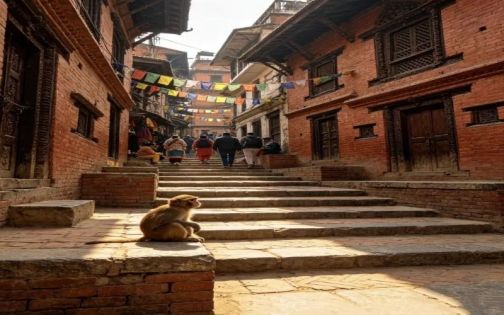
Kathmandu
Zhangmu Port vs Gyirong Port: Which One Should You Choose?
There are two main land routes from Tibet to Nepal.Zhangmu Port:
Advantages:
- More mature transportation
- Shorter distance
- Lower cost
- Easier to find travel companions
Disadvantages:
- Nepal road conditions can be affected by weather
Gyirong Port:
Advantages:
- More spectacular scenery
- Better Himalayan views
- Passes areas such as Peiku Lake and Gyirong Valley
Disadvantages:
- Fewer transportation options
- Requires more planning
For first-time travelers entering Nepal by land, Zhangmu Port is usually the easier choice. Travelers who prioritize scenery and have more time can consider Gyirong Port.
Where to Stay in Kathmandu
For first-time visitors, staying around Thamel district is the best choice.
Advantages:
- Convenient transportation
- Many restaurants
- Easy currency exchange
- Large number of hotels
Accommodation prices:
Budget hotels and guesthouses usually range from 100–400 RMB.
Nearby attractions include:
- Durbar Square
- Swayambhunath Temple (Monkey Temple)
- Pashupatinath Temple
- Traditional Nepalese restaurants
Recommended local foods:
- Momo dumplings
- Nepalese curry
- Local milk tea
Practical Tips for the Lhasa–Kathmandu Land Route
Best travel seasons:April–June,September–October,During these months, the weather is usually more stable, mountain views are clearer, and rainfall is lower.Avoid the peak monsoon period when possible, as landslides and road closures may occur.High altitude preparation:Lhasa is around 3,650 meters above sea level, and some sections of the route exceed 4,000 meters.Do not arrange intense activities immediately after arrival. Allow your body time to adapt.Road conditions:The Nepal section can be very bumpy.
Recommended:
- Sit near the front of the vehicle
- Carry a mask
- Bring snacks and water
Currency exchange:Do not exchange too much money at the border. Exchange only enough for transportation. Better rates are usually available in Kathmandu.Flexible schedule:Mountain transportation is affected by weather, road construction, and natural conditions. Leave extra time for unexpected delays.The overland journey from Lhasa to Kathmandu is not just a way to reach Nepal; it is a complete Himalayan adventure. From Tibetan monasteries and snowy peaks to Nepalese valleys and ancient cities, this route offers a travel experience that cannot be replaced by a flight. For travelers who want a deeper connection with the Himalayas, this is one of the most unforgettable cross-border journeys in the world.
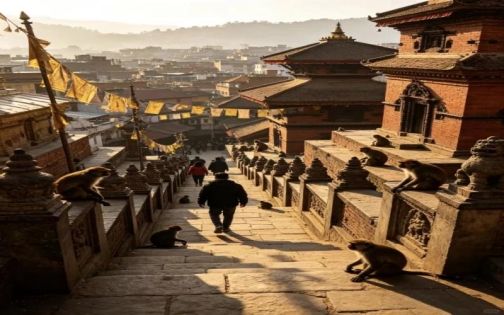
Kathmandu
📍 Lhasa to Kathmandu Overland Route – Key Takeaways
- The Lhasa–Kathmandu land route is one of the world’s most spectacular Himalayan journeys, connecting Tibet’s ancient Buddhist culture with Nepal’s vibrant heritage. The journey is not only about reaching Kathmandu, but experiencing snow mountains, highland landscapes, border villages and cultural transitions along the way.
- Recommended travel duration: 3–5 days
A slower pace allows travelers to enjoy Shigatse, Nyalam, Zhangmu Port and Kathmandu without rushing through the landscapes and border procedures. - Best route for first-time travelers:
Lhasa → Shigatse → Nyalam → Zhangmu Port → Kathmandu
This route is relatively mature, easier to arrange and offers a good balance between cost, scenery and transportation convenience. - Prepare documents before departure:
Travelers should ensure their passport is valid, prepare a Nepal visa (applying online in advance is recommended), and confirm any required Tibet travel permits or border documents before entering border areas. - Transportation options:
- Budget route: Lhasa → Shigatse train → Nyalam bus → Zhangmu Port → Kathmandu local bus
- More comfortable option: Direct shared van or private vehicle from Lhasa to Nyalam/Kathmandu route
- Public transportation is cheaper, while private transfers provide more flexibility and save time.
- Must-see highlights along the way:
- Shigatse: Tashilhunpo Monastery, one of western Tibet’s most important Buddhist monasteries.
- Nyalam Road: Himalayan scenery, Shishapangma Peak and dramatic mountain valleys.
- Zhangmu Border: Experience the transition from Tibetan plateau landscapes to Nepalese mountain roads.
- Kathmandu: Explore ancient squares, Buddhist stupas and Hindu temples.
- Zhangmu Port vs Gyirong Port:
- Choose Zhangmu Port for easier transportation, lower cost and a more convenient border crossing.
- Choose Gyirong Port for better scenery, Himalayan views and a more adventurous route.
- Best travel seasons:
April–June and September–October are ideal, with clearer mountain views, more stable weather and fewer road disruptions. - Prepare for high altitude and mountain roads:
Lhasa is around 3,650 meters above sea level, and some sections exceed 4,000 meters. Bring warm clothing, motion sickness medicine, snacks and water, and allow enough time for altitude adjustment. - Kathmandu travel essentials:
- Stay in Thamel for the best location and convenience.
- Spend 3–5 days exploring Kathmandu’s cultural highlights.
- Try local specialties such as momo dumplings, Nepalese curry and milk tea.
- Use ride-hailing apps like Pathao and inDrive for easier transportation.