Foreigners can arrange a vehicle charter in Tibet, but it is not usually a matter of hiring a car independently and driving wherever they choose. Travel rules, permits, and guide requirements depend on the destination and current regulations. The safest approach is to work with a licensed Tibet travel agency that can coordinate the itinerary, vehicle, driver, guide, and required paperwork as one plan.
Key Points
- Plan through a licensed Tibet travel agency: Foreign visitors generally need an organized tour to travel in the Tibet Autonomous Region.
- Arrange permits before confirming your itinerary: Your agency should check which travel documents are required for your route and nationality.
- Choose a vehicle to fit your group and roads: A private car or van suits many paved routes; a suitable 4WD may be needed for some remote journeys.
- Agree on inclusions in writing: Confirm the driver, guide, fuel, accommodation, meals, fees, and cancellation terms before paying.
- Build in flexibility: Long distances, altitude, weather, and road conditions can affect schedules.
Can Foreigners Charter A Vehicle In Tibet?
Foreign visitors can usually book a private vehicle with a driver through a travel agency for an organized trip. Self-drive travel in the Tibet Autonomous Region is generally not available to foreign tourists under the standard arrangements used by tour operators. A foreign visitor should not assume that an international driving permit or a rental-car booking alone is enough to travel independently in the region.
Tibet travel arrangements are regulated, and access requirements can vary by nationality, destination, and the type of travel. In many cases, visitors need to book through an authorized agency, follow an approved itinerary, and travel with a licensed guide. Some areas may require additional permits or special arrangements. Rules can change, so confirm the current requirements with the agency handling the trip before purchasing nonrefundable transport or accommodation.
A vehicle charter is therefore best understood as a private, driver-operated transport arrangement within an organized trip. You can generally discuss the pace, stops, route preferences, and vehicle category with the agency, while the agency coordinates the parts that must comply with local travel rules.
Start With Your Route And Travel Dates
Before requesting a quote, decide where you hope to go and how many days you have. A trip focused on Lhasa is different from a multi-day journey to Everest Base Camp, Nyingchi, or other destinations outside the city. Not every route is suitable for every season, and some areas may have access conditions that require additional checks.
Prepare a short itinerary brief for the agency. Include:
- Your planned arrival and departure dates
- The number of travelers and amount of luggage
- Your preferred destinations and approximate overnight stops
- Whether you want a private trip or are open to sharing transport
- Any mobility, dietary, or medical considerations relevant to the journey
- Your preferred travel pace and interest in scenic stops
If your plans are flexible, say so. An agency may recommend adjusting the order of destinations, adding a rest day, or avoiding an impractical same-day drive. The distances between major destinations can be substantial, and journey times depend on road conditions, traffic, weather, altitude, and checkpoints. A map may make two places look close while the actual drive takes much of a day.
Check Entry And Travel Documents Early
Ask the agency which documents it needs from each traveler and when it needs them. Requirements can differ for foreign passport holders, and the process may take time. The agency should explain whether your itinerary requires a Tibet Travel Permit or any additional permits, who will arrange them, and whether originals or digital copies are needed at different stages.
Do not rely on a general online checklist as confirmation that a particular route is currently open to you. Submit accurate passport details, keep your travel dates consistent across bookings, and report any changes promptly. If you are entering Tibet from another part of mainland China, ask how the permit will be delivered or checked for your transport arrangements. If you are arriving from outside mainland China, confirm the documents required for each leg of the journey.
Choose The Right Vehicle For Your Group
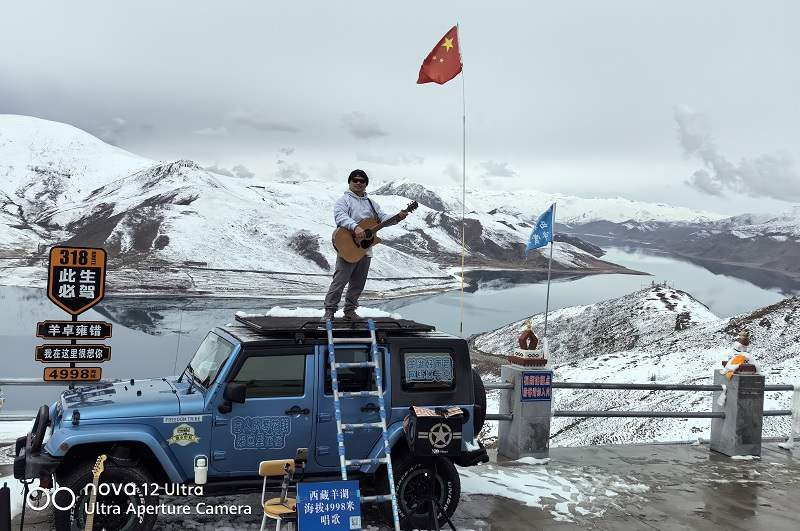
The best vehicle depends on the route, group size, luggage, road surface, and comfort preferences. A standard passenger vehicle may be suitable for urban transfers and many established paved routes. A van can make sense for a family or small group carrying several bags. A 4WD vehicle may be appropriate for certain remote or rougher routes, but it is not automatically necessary for every Tibet itinerary.
Ask the agency to recommend a vehicle for the exact route rather than choosing by vehicle name alone. Confirm how many passengers can travel comfortably with their luggage, not just the maximum number of seats. If you have large suitcases, photography equipment, child seats, or other bulky items, mention them before the booking is finalized.
Useful questions include:
- What make or category of vehicle is planned?
- How many passengers and bags can it carry comfortably?
- Is air conditioning available, and is it used on the planned route?
- Are seat belts available for every passenger?
- Is the vehicle suitable for the road conditions and season?
- What happens if the vehicle develops a problem during the trip?
Vehicle condition matters more than a premium label. Ask whether the car is regularly maintained and whether the agency has a backup plan for delays or mechanical issues. On long journeys, a clean interior, functional seat belts, adequate luggage space, and a driver familiar with the route are more useful than cosmetic upgrades.
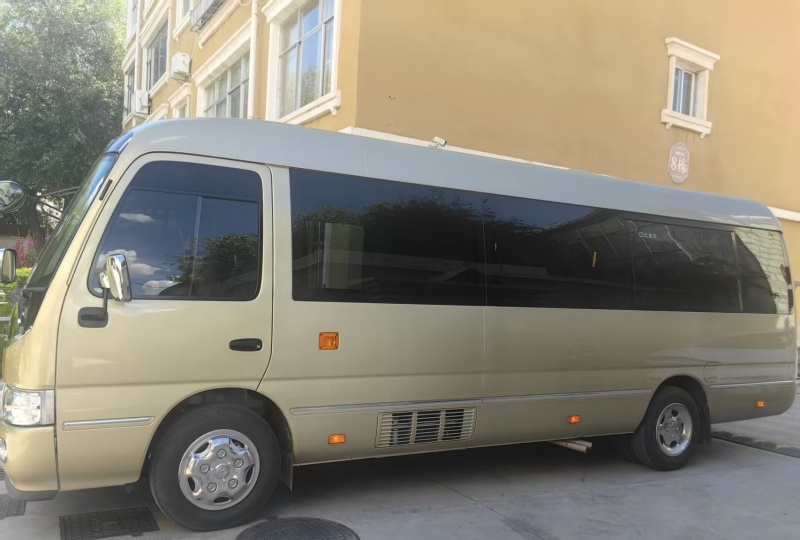
Toyota Coaster (17-seater)
Confirm The Driver And Guide Arrangement
A vehicle charter usually includes a local driver, while the guide may be a separate person or part of the package, depending on the operator and itinerary. Confirm this clearly. A driver’s role is to operate the vehicle safely and manage road logistics; a guide’s role is to support the visit, explain places, and help coordinate the tour. Do not assume that one person will perform both roles unless the agency confirms it.
Ask whether the guide speaks your preferred language and whether that language is available for all travel days. For less commonly requested languages, availability may be limited or subject to an additional charge. If you are comfortable with English, say so when requesting the quote, and check that the guide’s language ability matches your needs rather than relying on a general package description.
You can also ask how communication will work during the trip. Confirm the agency’s emergency contact number, how the driver and guide coordinate, and what to do if your flight or train is delayed. If you have a specific interest—such as architecture, photography, local food, or walking routes—tell the agency in advance so the guide can plan suitable stops where permitted.
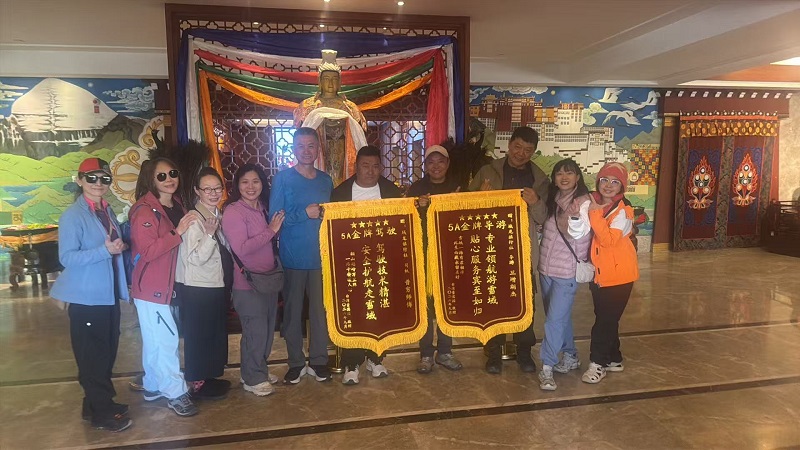
Reliable Drivers of China Dragon Travel
Request A Clear, Itemized Quote
Vehicle charter prices vary according to the itinerary, dates, vehicle category, group size, guide language, permits, accommodation arrangements, and included services. A low headline price may exclude important expenses, while a higher quote may cover more of the trip. Compare what is included rather than choosing solely by the daily vehicle rate.
Request a written quotation that specifies:
- Vehicle and driver for each travel day
- Guide services and language, if included
- Fuel, parking, tolls, and driver expenses
- Accommodation and meals, if part of the package
- Permit and administrative arrangements
- Airport or railway-station transfers
- Entrance tickets, if included or excluded
- Any supplements for remote routes or special dates
- Deposit, balance due date, cancellation rules, and refund conditions
Ask how the agency handles expenses that cannot be known in advance. For example, a route change requested by the traveler may affect fuel, accommodation, or driver costs. A weather-related change may be handled differently. Get the policy in writing so you understand which party is responsible for additional costs and how approval will be obtained.
Avoid paying an individual driver directly for a trip that requires organized travel arrangements unless the agency has explicitly authorized that payment method. Use the booking and payment process described in the contract, keep receipts, and make sure the legal name of the service provider matches the details on your confirmation.
Compare Agencies Carefully
A reliable agency should be able to explain the travel process in plain language, answer route-specific questions, and provide a detailed itinerary and quotation. Check that the company is properly authorized to arrange the kind of trip you want. Ask who will be responsible for permits, guide services, transport, and changes to the itinerary. A professional operator should not promise access to restricted places without checking the current rules.
Before booking, review the following:
- Does the itinerary match the number of days available?
- Are the vehicle, driver, and guide arrangements specific?
- Are included and excluded costs easy to identify?
- Is there a written agreement with cancellation terms?
- Does the operator explain document deadlines and permit handling?
- Is there a contact available during the trip?
- Are responses direct and consistent, rather than vague assurances?
Read recent traveler feedback with care, looking for useful details about communication, vehicle condition, itinerary management, and how problems were handled. Reviews are one signal, not a guarantee. You can also ask the agency to clarify an unexplained charge or an unusually ambitious schedule before sending a deposit.
China Dragon Travel is one option travelers may consider when comparing Tibet tour operators. As with any provider, ask for a route-specific proposal, verify which services are included, and confirm the current permit and guide arrangements in writing before booking.
Book In The Right Order
A practical booking sequence helps avoid paying for arrangements that later need to change. First, settle on approximate dates and a realistic route. Next, send the agency accurate passport information and ask it to confirm eligibility, documents, and the permit process. Once the itinerary and required arrangements are confirmed, review the contract and itemized price before paying the stated deposit.
Do not assume that an ordinary car reservation in another Chinese city can be extended into a Tibet charter. A standard rental booking may not provide the permissions, driver, guide, or route coordination needed for foreign visitors. Similarly, booking flights or trains before checking the permit process can create avoidable complications. Confirm the sequence with the agency and follow its instructions for tickets and document checks.
Keep digital and paper copies of your itinerary, agency contacts, travel documents, and booking confirmations. Share the final schedule with someone at home. Before departure, reconfirm pickup time, meeting point, driver contact details, luggage limits, and any changes to the route.
What To Confirm Before Departure
A few days before the trip, contact the agency to verify that the documents and arrangements are on track. Confirm your pickup location, the day’s schedule, the vehicle category, guide contact, and any special requests. If your arrival time changes, notify the operator as soon as possible rather than waiting until you reach the station or airport.
On the first day, check that the vehicle has seat belts for all passengers and enough room for your luggage. Keep your passport and required travel documents accessible, but secure them when they are not needed. Follow your guide’s instructions at checkpoints and visitor sites, and ask before photographing people, military or government facilities, or any location where photography may be restricted.
If a route changes, ask why and what the alternatives are. Local authorities, weather, road conditions, or permit restrictions may make an adjustment necessary. A clear agency should explain the situation and any cost implications before proceeding whenever circumstances allow.
Frequently Asked Questions about Chartering Vehicles in Tibet
How far in advance should I arrange a Tibet vehicle charter?
Start planning as early as practical, especially for peak travel periods or complex routes. The agency needs time to check documents, confirm availability, and organize permits. Ask for the current recommended lead time for your nationality and itinerary.
Can I hire a car and drive myself in Tibet?
Foreign tourists generally should not plan on self-driving in the Tibet Autonomous Region. Standard arrangements typically involve booking through an authorized operator and traveling with the required driver, guide, and permits. Confirm the rules for your route before making transport bookings.
Does every vehicle charter include a tour guide?
Not necessarily. A quote may include a driver but list the guide separately, or it may bundle both services. Confirm the guide’s availability, language, working days, and fees in writing.
What is usually included in a charter price?
Inclusions vary. Some packages cover the vehicle, driver, fuel, guide, and selected transfers, while accommodation, meals, entrance tickets, permits, or driver expenses may be separate. Request an itemized quote and check exclusions before paying.
Can the itinerary change after I arrive?
Changes may be possible, but they depend on permit conditions, road access, timing, accommodation availability, and local rules. Discuss alternatives with the agency and get approval before changing the route independently.