Traveling to Tibet by train offers a gradual approach to the plateau, but it does not remove the effects of high altitude. Oxygen supply on Qinghai–Tibet trains is designed to support passengers as the railway climbs above 3,000 meters and crosses sections at far greater elevations. Knowing what the system can—and cannot—do helps you plan realistically: oxygen is a safety measure, not a guarantee against altitude sickness or a substitute for medical care. The train’s pressurized environment and passenger oxygen outlets may make the journey more manageable, yet people respond differently to thin air.
Key Points
- Qinghai–Tibet trains use a combination of cabin pressure control and oxygen supply to help passengers cope with high-altitude conditions.
- Oxygen outlets and personal-use equipment may be available, but arrangements can differ by train and service; ask staff rather than assuming a particular setup.
- Supplemental oxygen can ease symptoms for some travelers, but it does not prevent altitude sickness in every case.
- Ascend gradually where possible, take it easy, and treat worsening headache, nausea, confusion, or breathlessness seriously.
- People with significant heart or lung conditions, pregnancy, or a history of serious altitude illness should seek medical advice before departure.
How the Qinghai–Tibet Railway Reaches High Altitude?
The railway from Xining toward Lhasa passes through a landscape that rises from the northeastern Tibetan Plateau into remote, high-elevation terrain. The route crosses mountain passes and long stretches of open plateau; some sections are above 4,000 meters, and the Tanggula Pass reaches roughly 5,000 meters. Exact conditions vary with weather and location, but the central point for passengers is simple: the train spends many hours in air where oxygen pressure is lower than at sea level.
At altitude, the percentage of oxygen in the air remains close to the same as at lower elevations. What changes is atmospheric pressure, so each breath delivers less oxygen to the body. The body can respond with faster breathing and heart rate, but adjustment takes time. A rail journey may provide a more gradual ascent than flying directly to Lhasa, yet the train still climbs substantially during one trip. A slower journey is not the same as full acclimatization.
Travelers often assume that the train’s oxygen facilities make altitude concerns irrelevant. That is not a safe assumption. Oxygen systems can improve the environment inside the carriage and provide supplemental support, but they cannot make the entire journey equivalent to sea level. Symptoms can develop on the train, after arrival in Lhasa, or later as a traveler continues to higher destinations.
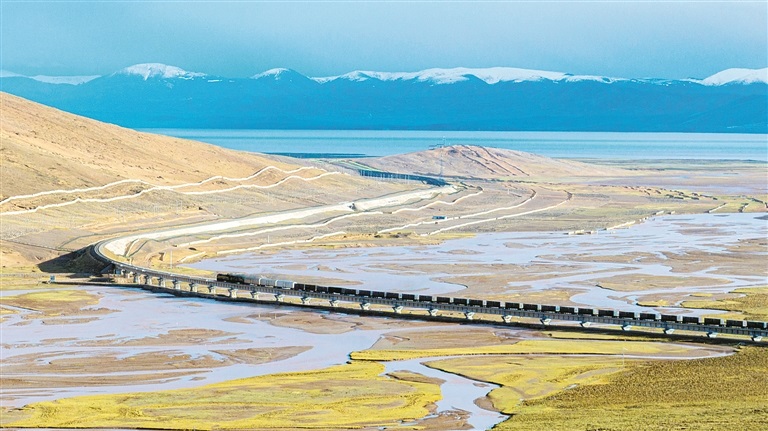
Qinghai-Tibet Railway Train
How Oxygen Supply on Qinghai–Tibet Trains Works?
Oxygen supply on Qinghai–Tibet trains is commonly described as having two related parts: an onboard system that helps maintain a more comfortable cabin environment, and passenger access to supplemental oxygen. The exact equipment, controls, and availability can vary by train type, carriage, and operating arrangements. For that reason, treat descriptions of a specific outlet or device as general guidance, not a promise that every seat or service will have identical features.
Cabin Pressure and Diffuse Oxygen
High-altitude trains are designed with measures to manage the cabin environment as the route climbs. A pressure-control system helps limit the impact of the low-pressure outside air, while oxygen may be supplied through the carriage’s ventilation arrangements. This is sometimes described as diffuse oxygen: rather than being delivered only through an individual mask, it is incorporated into the cabin air system.
The cabin is not kept at sea-level conditions. Pressure management is intended to reduce the strain of the altitude change, not erase it. Passengers may still feel breathless when walking, experience a headache, or notice that ordinary exertion feels harder than usual. Train doors opening at stops and changes in operating conditions can also affect how the cabin feels. Follow crew instructions and avoid trying to adjust technical systems yourself.
Passenger Oxygen Outlets and Individual Support
Some Qinghai–Tibet train services provide oxygen outlets for passengers who need additional support. Depending on the carriage, outlets may be located near passenger seats or in shared areas, and staff can explain the correct way to access them. Availability and the type of equipment should be confirmed for the particular service; do not assume that a personal oxygen mask or a particular outlet is included with every ticket.
If you feel unwell, tell a train attendant or other crew member promptly. Staff can explain what support is available and help you use it safely. Avoid connecting unfamiliar equipment, blocking vents, or using oxygen without understanding the instructions. Oxygen is not a casual comfort accessory: it should be used in accordance with staff guidance, especially if you have a medical condition or are using prescribed oxygen.
When booking through a travel company such as China Dragon Travel, ask what information it can confirm about the train service and onboard support. A travel operator can help with itinerary questions, but it cannot replace the train crew’s instructions or a clinician’s advice. If you require continuous or specialized oxygen, discuss the journey with your doctor and confirm arrangements with the rail operator well before travel.
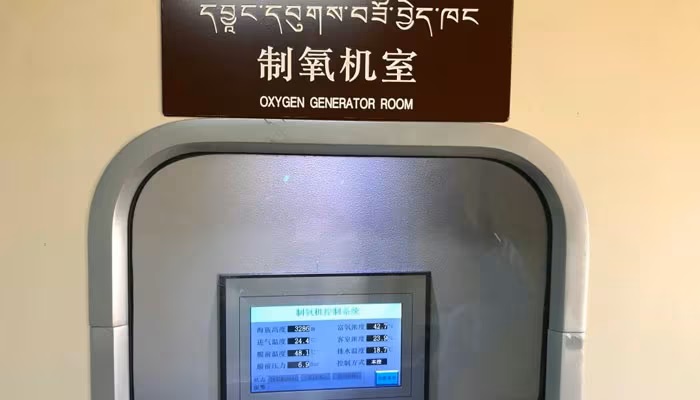
Tibet Train Oxygen Generator Room
What Oxygen Can and Cannot Do?
Supplemental oxygen increases the amount of oxygen available for breathing while it is being used. For some people, it may relieve low-oxygen symptoms and make breathing feel easier. Cabin systems can also provide a more supportive environment than the air outside the train. These benefits matter, but they have limits.
Oxygen does not guarantee that altitude sickness will not occur. It does not instantly acclimatize the body, and symptom relief while using oxygen does not necessarily mean it is safe to continue ascending or to ignore worsening symptoms. Once supplemental oxygen is stopped, the underlying high-altitude conditions remain. The train is also a moving environment: passengers may have limited access to medical facilities during parts of the route, which makes early communication with staff important.
Do not use oxygen as a reason to push through serious illness. If symptoms are severe, worsening, or unusual, seek help rather than relying on an outlet alone. Train staff can assess what assistance is available and advise on the next steps. In a medical emergency, follow crew directions and request urgent assistance.
Altitude Sickness: Symptoms to Recognize
Altitude sickness, often called acute mountain sickness (AMS), can affect people who ascend to high elevations before their bodies have adjusted. It can happen to fit travelers as well as those who are less active, and previous trips without symptoms do not guarantee that a future ascent will be symptom-free. Risk depends on factors including ascent rate, elevation, individual susceptibility, and health.
A headache is a common early symptom. It may occur with one or more of the following:
- Nausea, reduced appetite, or vomiting
- Dizziness or light-headedness
- Unusual tiredness or weakness
- Difficulty sleeping
- A general feeling of being unwell
Mild symptoms should be taken seriously, especially if they persist or worsen. Rest, avoid further exertion, and tell a travel companion or train attendant how you feel. Do not assume that a headache is simply dehydration or travel fatigue if it occurs during a rapid ascent to altitude.
More serious altitude illness requires urgent medical attention. Warning signs can include severe or increasing breathlessness, breathlessness at rest, a cough that worsens, poor coordination, difficulty walking in a straight line, confusion, unusual drowsiness, or blue-tinged lips or skin. These may indicate dangerous conditions such as high-altitude pulmonary edema or high-altitude cerebral edema. They are emergencies: tell train staff immediately and follow medical instructions. Oxygen may be part of emergency support, but it is not a substitute for urgent assessment and descent when medically indicated.
Preparing Before You Board
Good preparation starts with an honest assessment of your health and itinerary. If you have heart disease, lung disease, sleep-related breathing problems, significant anemia, or another condition that could be affected by low oxygen, consult a healthcare professional before booking or traveling. Pregnant travelers and people with a past episode of serious altitude illness should also ask for individualized advice. A clinician can help assess risk and discuss whether medication or other precautions are appropriate. Do not start prescription medicine solely on the recommendation of a fellow traveler or online post.
Plan the journey so that you can rest after reaching Lhasa. Avoid scheduling strenuous hikes, rapid onward transfers to higher elevations, or a packed sightseeing program immediately after arrival. If your route continues to places at higher altitude, allow time to adjust and seek professional guidance about the ascent profile. A train ride can be part of an acclimatization strategy, but the duration alone does not establish that you are fully acclimatized.
Pack regular prescription medicines in your hand luggage and keep them accessible. If you use prescribed oxygen or medical equipment, contact the relevant rail operator and your travel provider in advance to confirm whether the equipment can be carried and how it can be used. Carry a list of your medicines, allergies, and important health conditions. Travel insurance should be checked for coverage of altitude-related medical care and evacuation, where relevant.
Practical Advice During the Train Journey
Take the first hours at altitude slowly. Move around gently rather than rushing through the carriage, and avoid heavy lifting or unnecessary exertion. Drink fluids according to your needs, but do not force excessive amounts; staying reasonably hydrated is sensible, while overhydration is not a treatment for altitude sickness. Eat light meals if that feels more comfortable and avoid excess alcohol or sedatives, which can complicate breathing and make it harder to notice changes in your condition.
Pay attention to how you feel rather than comparing yourself with other passengers. A travel companion may feel fine while you develop symptoms, and being young or physically fit does not rule out altitude illness. If you develop a persistent headache, nausea, dizziness, or unusual weakness, stop exerting yourself and inform someone nearby. Let a companion know where you are and do not isolate yourself if symptoms are progressing.
Use oxygen only as directed. Ask staff where the available outlets or equipment are and how to operate them before you need them, if possible. Keep the area around ventilation points clear and follow carriage rules. If oxygen makes you feel better but symptoms return or intensify, report that change. Do not treat short-term relief as proof that the underlying problem has resolved.
Sleeping may be difficult at altitude. Rest when you can, but do not take sedatives or sleeping medication without medical advice, particularly if you have breathing problems or are experiencing symptoms. If you wake with severe breathlessness, confusion, or a worsening cough, alert the crew promptly.
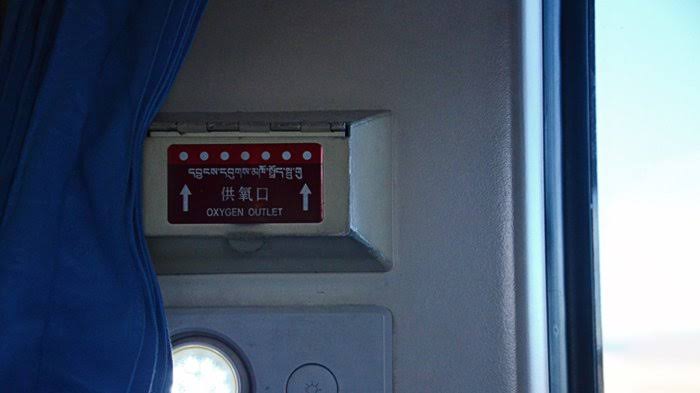
Oxygen Supply Outlets on the Qinghai-Tibet Railway
Choosing a Route and Planning Arrival in Lhasa
The most suitable way to reach Tibet depends on health, schedule, budget, and how your body handles altitude. Some travelers choose the train for the changing scenery and gradual climb; others fly and arrange a quiet first day after arrival. Neither option is universally safer for every person. Flying brings a faster change in elevation, while the rail journey still reaches very high terrain and can involve prolonged exposure to altitude. People with medical concerns should discuss options with a clinician rather than relying on a general rule.
After arrival in Lhasa, keep the first day uncomplicated. Walk slowly, rest, and avoid strenuous sightseeing until you know how you are responding. Do not plan to climb stairs quickly, run, or carry heavy bags just because the train journey is over. If symptoms appear or worsen, postpone further ascent and seek medical advice. A guide or tour operator can help adjust activities, but a worsening medical condition should be handled by healthcare professionals.
When organizing a rail itinerary with China Dragon Travel, ask practical questions about departure arrangements, transfer times, luggage, and the pace of the first days in Tibet. Share relevant mobility or health needs in advance. Confirm details that can change, including ticket arrangements and the specific train service, through the appropriate operator. A well-paced itinerary is more useful than a schedule that assumes everyone will feel normal immediately after arriving.
Common Misunderstandings About Train Oxygen
“The train oxygen system prevents altitude sickness.” It may support passengers, but it cannot guarantee prevention. Travelers can still develop AMS or more serious altitude-related illness.
“If I feel better with oxygen, I can continue as planned.” Symptom relief does not prove that it is safe to exert yourself or ascend further. Report symptoms and follow medical guidance.
“Fit travelers do not get altitude sickness.” Fitness does not provide immunity. People of different ages and fitness levels can be affected.
“The train journey fully acclimatizes every passenger.” Acclimatization varies from person to person. The ascent is gradual compared with some forms of travel, but it still reaches high elevations over a limited period.
“Every carriage has identical oxygen equipment.” Train configurations and services can differ. Confirm the details for your journey and ask onboard staff for instructions.