
If you are choosing a train to Tibet for the views, the key question is not simply which train is most beautiful, but how much of the railway’s high-altitude scenery you want to experience. Every train that reaches Lhasa from mainland China travels along the Qinghai–Tibet Railway for its final stretch, so the most dramatic landscapes are shared by the routes converging on Xining. The main difference is how long you spend on the train, where your journey begins, and whether you want the railway itself to be a central part of the trip. For many travelers, Xining is the most practical starting point for the scenic section; a longer service from Beijing, Shanghai, Chengdu, or another city offers a more gradual rail journey but takes substantially more time. The right choice depends on your schedule, comfort preferences, and appetite for slow travel.
Key Takeaways
- Best overall for scenery and time: Board in Xining to focus on the high-altitude railway section.
- Best for a long rail adventure: Take a through train from a major mainland city and watch the landscapes change over a longer journey.
- Best for flexible planning: Travel to Xining separately, then connect to a Lhasa-bound train, allowing for a stop before the plateau.
- Best views are not guaranteed by a particular train number: Weather, daylight, seat position, and the direction of travel all affect what you see.
- Plan for altitude and demand: Book through official channels where possible, confirm current schedules, and allow time to acclimatize in Lhasa.
Which Tibet Train Offers the Best Scenery?
For most travelers whose priority is scenery, the strongest choice is a Lhasa-bound train departing from Xining. Xining is close to the point where the route climbs onto the Qinghai–Tibet Plateau, so boarding there means you can spend a greater share of your time awake and watching the landscape during the most distinctive part of the journey. You also avoid spending a full day or more on the train before reaching the high plateau.
This is a practical recommendation, not a claim that one service has uniquely beautiful scenery. Trains traveling to Lhasa over the Qinghai–Tibet Railway follow the same broad route across the plateau, though their timetables, stops, and operating details can differ. The scenery is shaped more by the railway corridor and the conditions on your travel day than by a particular departure city or train number.
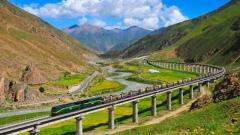
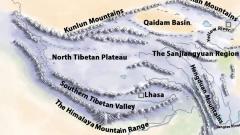
The route from Xining passes through a sequence of changing environments: settled areas and open country, expansive grasslands, mountain ranges, high-altitude basins, and stretches of sparse terrain. The most talked-about section includes the Tanggula Mountains and the approach across the plateau toward Lhasa. Snow may be visible on distant peaks, but it is not guaranteed, and the landscape can look dramatically different under cloud, sunshine, or falling snow.
If your idea of a beautiful train journey includes watching the scenery transform over many hours, a longer through service from a city such as Beijing or Shanghai may suit you better. You see more of mainland China before the train reaches Qinghai, but you also spend longer aboard and may pass some plateau scenery at night. For a focused trip, Xining is generally the more efficient choice.
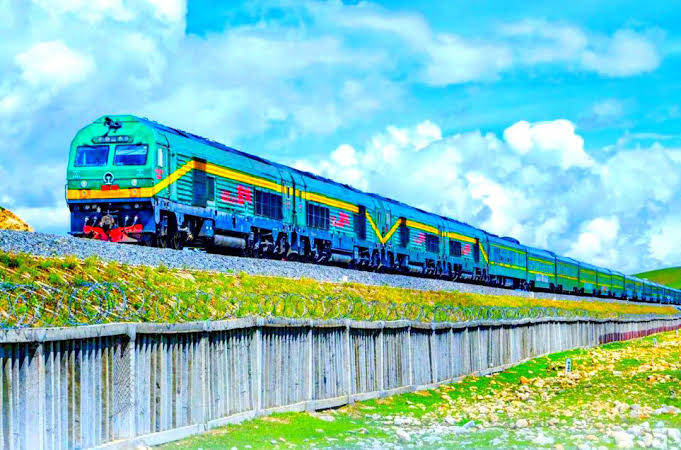
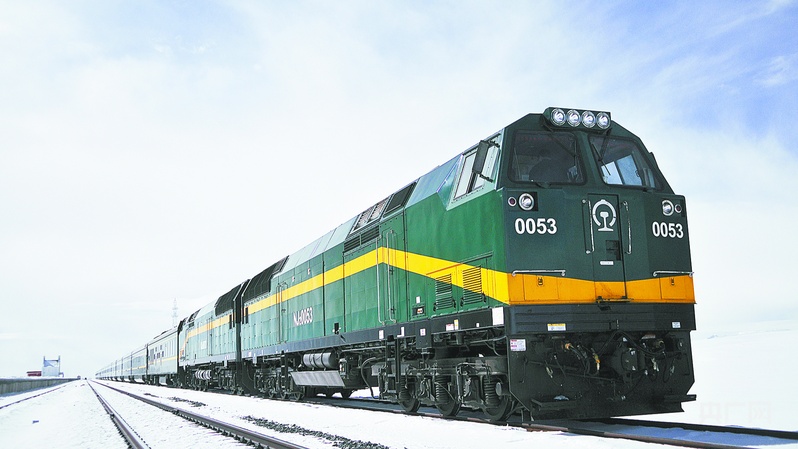
Qinghai-Tibet Railway Train
The Scenery You Can Expect on the Qinghai–Tibet Railway
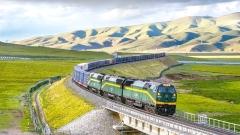
The Qinghai–Tibet Railway is notable for crossing a very high, remote region. It links Xining in Qinghai with Lhasa in the Tibet Autonomous Region, with the route traversing open plateau landscapes and high mountain terrain. Travelers often remember the scale of the surroundings more than any single landmark: wide skies, long horizons, sparse settlements, and vast stretches where the railway seems to run through an almost uninterrupted natural landscape.
As the train travels west from Xining, the view changes gradually. Agricultural land and populated areas give way to more open country. At higher elevations, the scenery becomes less wooded and more expansive. Depending on the season and local weather, you may see grasslands in muted green or gold, snow on distant ridges, and water or wetlands in low-lying areas. There is no single “perfect” color palette: light, cloud cover, and time of year make each trip look different.
The section around the Tanggula Mountains is a highlight for many passengers because of the elevation and the sense of remoteness. The railway crosses high terrain where the air is thin and conditions can be harsh. From the train, you may notice broad uplands and mountains on the horizon rather than close-up alpine scenery. Keep expectations realistic: the train does not stop at every scenic point for sightseeing, and views from the window can be affected by weather, reflections, and the position of your berth or seat.
Wildlife is sometimes visible in the plateau region, but sightings are never assured. Do not treat the journey as a wildlife tour or expect animals to appear on cue. If you do spot wildlife, enjoy it from the train and follow any onboard guidance. The route is a working railway through a sensitive environment, not a staged attraction.

Hoh Xil Nature Reserve
Recommended Train Options by Travel Style
Xining to Lhasa: The Best Balance for a Scenic Trip
For travelers who want to experience the plateau without committing to an exceptionally long rail journey, Xining to Lhasa is often the best balance. You can reach Xining by air or rail from other parts of China, spend time in the city if your itinerary allows, and then board a train for the journey to Lhasa. This approach concentrates your rail time on the section most travelers are eager to see.
An overnight or extended journey from Xining can still be tiring, particularly because of the altitude. Check the actual timetable and duration for your travel date rather than assuming all departures take the same amount of time. Train services and availability may vary, and schedules can change. When comparing options, look at departure time as well as arrival time: a departure that places more of the high-altitude section in daylight may be preferable if viewing is your main reason for taking the train.
Xining is also useful as a transition point. Spending a night there before boarding may make the travel day more manageable and gives you a chance to organize supplies, confirm your ticket details, and rest. It does not guarantee that you will avoid altitude-related symptoms later, but breaking up the trip can make the itinerary feel less rushed.
Beijing to Lhasa: A Classic Long-Distance Rail Experience
The Beijing–Lhasa service appeals to travelers who want the journey itself to be part of a broader China itinerary. It offers a long passage from the capital toward the plateau, with a gradual transition from urban and agricultural landscapes to the open terrain of Qinghai and Tibet. For rail enthusiasts, the appeal is the sense of crossing a large part of the country by train rather than simply taking the shortest route to the plateau.
The trade-off is time. A through journey takes considerably longer than boarding in Xining, and some of the Qinghai–Tibet Railway section may fall outside the best daylight viewing window, depending on the timetable and season. If you are choosing this route mainly for scenery, compare the scheduled passage through the plateau with your available travel dates. Do not assume that a longer ticket automatically means more daylight views of the most dramatic section.
This route is best for travelers who enjoy long-distance rail travel, have several spare days, and want to avoid arranging a separate connection through Xining. It is less suitable if you are working with a tight holiday schedule or would rather spend your time exploring destinations than staying aboard.
Shanghai to Lhasa: A Long Journey with a City-to-Plateau Contrast
A Shanghai departure can be appealing if your trip begins in eastern China and you want a direct rail itinerary toward Lhasa. The contrast between a large coastal metropolis and the high, open plateau is part of the experience. However, the route is long, and its value depends on whether you enjoy spending extended time on a train.
If the plateau scenery is your main goal, traveling to Xining first and taking a Lhasa-bound train from there is usually more focused. If you want a continuous rail journey and have enough time, a through service from Shanghai can be an immersive way to cross the country. Before booking, check the exact route, journey duration, and timetable for your intended date; do not rely on old schedule information or assume that every service runs daily.
Chengdu and Other Departure Cities: Check the Current Route Carefully
Travelers may also look for services from Chengdu or other mainland cities. Train routes, operating patterns, and timetables can change, so a city’s historical association with a Lhasa train does not establish that a particular departure is available on your date. Confirm the current service through an official booking channel or a reputable travel provider before building an itinerary around it.
Even when a direct train is available, the same decision applies: choose a through route if you value the long rail experience, or travel to Xining if you want to focus on the plateau section. Consider transfer time, overnight stops, and the possibility of schedule changes. A route that looks convenient on a map may not be the best option if it leaves you with a rushed connection or too little time to rest.
How to Choose the Right Departure?
Start with the Time You Can Spare
The most important practical difference between train options is total journey time. A Xining departure gives you a shorter rail journey to Lhasa, while a through train from a distant city uses more of your itinerary. Count not only the time onboard but also travel to the departure station, possible stopovers, and time needed to recover after arrival.
If you have a limited number of days, it may be more rewarding to travel to Xining efficiently and reserve your energy for Lhasa and the surrounding region. If the train is one of your main travel experiences and your schedule is flexible, a longer departure can be worthwhile even if it is not the fastest way to reach Tibet.
Compare Daylight, Not Just Distance
A route can be long without offering more useful viewing time. Check the timetable to estimate when the train will pass through the high plateau, and consider the local time of sunrise and sunset for the season. Exact visibility cannot be predicted: cloud, precipitation, haze, and window conditions all matter. Still, daylight timing is a sensible factor when scenic views are central to your decision.
If you cannot find reliable information about the expected timing of a particular section, ask the booking provider or railway staff rather than relying on forum posts from a different season. Timetables may be revised, and a train number or departure time can change.
Choose Your Seat or Berth with Comfort in Mind
On a long train journey, comfort can matter as much as the view. Soft sleepers offer more privacy and a place to rest, while hard sleepers and seats may suit travelers who prioritize price or availability. The names describe accommodation categories; they do not guarantee a particular view or a specific side of the train.
Window access is valuable, but no seat selection can guarantee the best scenery throughout the route. The track changes direction, and the landscape appears on both sides at different points. Keep your window clean where possible, minimize reflections, and avoid leaning out or interfering with railway equipment. If you are sensitive to noise or altitude-related discomfort, choose the accommodation that gives you the best chance of sleeping and staying hydrated.
Is the Train Better than Flying to Lhasa?
The train and the plane serve different travel priorities. Flying is much faster and may be the better choice for travelers with limited time or a preference to avoid a lengthy rail journey. A train offers a slower introduction to the high-altitude region and a continuous view of the changing landscape, but it is not automatically the best choice for everyone.
Altitude deserves careful consideration. A train journey does not eliminate the risk of altitude sickness, and travelers can still experience symptoms after reaching Lhasa. The train’s gradual climb may feel more comfortable for some people, but individual responses vary, and it should not be treated as medical protection. If you have a health condition or concerns about traveling at altitude, seek advice from a qualified medical professional before your trip.
Some visitors choose to fly to Lhasa and take a train back, or do the reverse, to combine time savings with the rail experience. Whether this is feasible depends on ticket availability, schedules, and your itinerary. Allow enough time between separate bookings, especially if missing a connection would disrupt the rest of your trip.
Qinghai-Tibet Railway Train
Practical Planning for a Tibet Train Journey
Book Early and Verify the Ticket Rules
Demand for popular routes can be high, especially during busy travel periods. Book as early as the applicable rules allow, and use official railway booking channels where available. If you use an agency, clarify whether it is providing a confirmed ticket, a booking service, or itinerary assistance. Do not make important onward arrangements based on an unconfirmed reservation.
Travel requirements for Tibet may include documents or permits in addition to ordinary identification, depending on your nationality and itinerary. Rules can differ by traveler and may change. Confirm the requirements with the relevant authorities or a qualified travel provider before departure, and carry the documents required for your specific journey. Do not rely on generic advice that may not apply to your circumstances.
Prepare for the Long Ride
Bring water, any personal medication you normally use, a warm layer, and simple snacks that suit your dietary needs. Train facilities and meal options can vary, so it is sensible to have a modest supply of essentials rather than assume every preferred item will be available. Keep documents, valuables, and necessary medicine within easy reach, and follow onboard instructions.
Stay hydrated, rest when you can, and avoid strenuous activity when you arrive. High-altitude symptoms may include headache, nausea, dizziness, or unusual fatigue. Seek medical help promptly if symptoms are severe or worsening. An itinerary should allow room to slow down rather than scheduling demanding excursions immediately after arrival.
Choose the Season for Your Priorities
There is no single season that guarantees the best views. Weather and visibility vary from day to day, and the plateau can experience rapid changes in conditions. Summer may bring greener grasslands in some areas, while colder months can create a stark, open landscape and greater chances of snow in the wider region. These are broad seasonal tendencies, not promises for any particular train date.
When choosing dates, consider the entire trip: weather, crowds, accommodation availability, and the activities you want to do in Lhasa. Pack layers because temperatures can differ between sunny daytime conditions and colder evenings. Always check reliable local forecasts close to departure and follow travel advisories where relevant.
Using China Dragon Travel to Plan the Journey
China Dragon Travel can be considered if you want help comparing departure cities, arranging a broader itinerary, or checking how a rail journey fits with your time in Tibet. Before using any travel agency, confirm exactly what is included, which tickets or services are actually secured, what documents are needed for your route, and how changes or cancellations are handled. Ask for the current timetable and a clear written itinerary rather than relying on general descriptions.
An agency can help coordinate logistics, but it cannot guarantee clear weather, a particular wildlife sighting, or a specific view from your window. Keep the decision centered on your own priorities: travel time, comfort, budget, altitude preparation, and how much of the journey you want to spend on the train. If you already know your preferred departure city, compare that option with a separate journey through Xining before committing.
Frequently Asked Questions
Which train route has the best scenery for Tibet?
For most travelers, the Xining–Lhasa section is the most efficient way to focus on the plateau scenery. Through trains from cities farther away follow the same broad railway corridor for the final part of the journey, but take longer overall.
Is the train from Xining to Lhasa the shortest option?
It is generally a much shorter rail journey than traveling all the way from a distant mainland city. Check the timetable for your travel date, since duration and service availability can vary.
Can I see the Tanggula Mountains from the train?
The railway passes through the high Tanggula region, and passengers may see surrounding mountain terrain from the train. Visibility depends on weather, daylight, and the view from your particular seat or berth.
Is taking the train safer from altitude sickness than flying?
A train’s gradual ascent does not guarantee protection from altitude sickness. People respond differently to high altitude, so plan time to rest in Lhasa and seek medical guidance if you have health concerns.