
Key Takeaways
- G109 is one of the most spectacular routes for exiting Tibet, crossing the Kunlun Mountains, Hoh Xil, Fenghuo Mountain and Tanggula Mountain before reaching Nagqu and eventually Lhasa or Golmud.
- Expect rough and variable road conditions in 2026, as major sections of G109 are still undergoing upgrading and may use temporary construction roads.
- An SUV is recommended, although a well-maintained sedan can pass many sections if driven carefully and at a controlled speed.
- Allow extra time for the journey. Dust, potholes, uneven surfaces, construction traffic and temporary traffic controls can make the drive much slower than expected.
- Hoh Xil is the highlight for wildlife lovers, with opportunities to see Tibetan antelopes and other high-altitude wildlife. Always slow down and give animals the right of way.
- High altitude is the biggest challenge. The route includes several sections above 4,500 meters, with Fenghuo Mountain reaching around 5,010 meters.
- Prepare your vehicle and supplies before entering remote areas. Carry a spare tire, basic repair tools, warm clothing, food, water and offline navigation maps.
- Avoid unnecessary night driving, especially through remote and construction-heavy sections where wildlife, road hazards and sudden weather changes can create additional risks.
- Check the latest road and weather conditions before departure, as construction schedules and temporary traffic controls can change.
- The journey is about the experience, not speed: if you want vast wilderness, snow-covered mountains, wildlife and one of China’s most remote road-trip experiences, the Qinghai-Tibet Highway is well worth the effort.
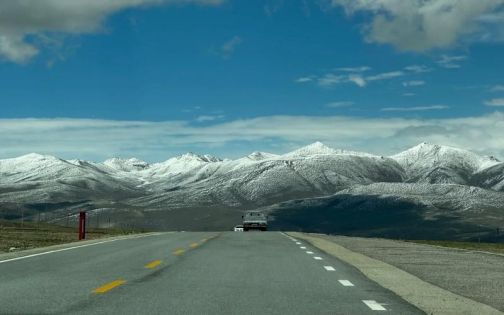
Qinghai-Tibet Highway
Why “Enter Tibet via Sichuan, Exit via Qinghai” Is So Popular
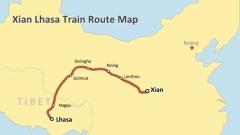
“Enter Tibet via Sichuan and exit via Qinghai” is one of the classic self-drive routes for exploring Tibet. Travelers enter Tibet from Sichuan and then return to Qinghai along the Qinghai-Tibet Highway. When people talk about “exiting via Qinghai,” there are generally two options. One follows National Highway 109 from Nagqu through Amdo, Tanggula Mountain, Hoh Xil and the Kunlun Mountains before reaching Golmud. The other crosses the mountains from Nagqu toward Yushu.For first-time travelers, the G109 route is arguably the most iconic choice. It crosses the northern Tibetan Plateau and Hoh Xil, passes over Tanggula Mountain and the Kunlun Mountains, and runs for hundreds of kilometers through high-altitude wilderness. Unlike the Sichuan-Tibet Highway, where towns and settlements appear relatively frequently, this route is dominated by snow-covered mountains, open wilderness, ancient lakes, permafrost landscapes and wildlife.The road is also undergoing major improvements in 2026. The G109 upgrading project in Nagqu stretches for roughly 814 kilometers, with the main construction work scheduled for completion in September 2026. This means the experience of driving the route during construction can be very different from what travelers will experience once the upgraded highway is fully completed.
G109 Qinghai-Tibet Highway Self-Drive Route
Golmud to Budaquan: Entering the Kunlun Mountains
After leaving Golmud, the landscape gradually changes from urban areas and desert to the true high plateau. Driving south along G109, you will pass through the Budaquan area, where snow-covered mountains begin to appear in clear weather.
Xidatan: A Classic Snow Mountain Photography Stop
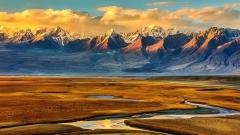
Xidatan is one of the favorite photography spots along the Qinghai-Tibet route. On a clear morning, Yuzhu Peak and the surrounding mountains rise behind the highway, creating one of the most impressive road-trip compositions on the entire journey.It is a good place to stop for photographs, but never park in the main traffic lane or an active construction area simply to get a better shot.Continuing south brings you toward Kunlun Pass, approximately 4,768 meters above sea level. It is one of the major high-altitude points along the route. When you first arrive, avoid running, jumping or spending too much time taking photographs. A short stop is more sensible.
Kunlun Pass – Hoh Xil – Wudaoliang: One of the Most Spectacular Sections
After crossing Kunlun Pass, the landscape becomes increasingly wild and open. The vast wilderness of Hoh Xil is one of the defining highlights of the Qinghai-Tibet Highway.Hoh Xil is not a conventional sightseeing destination filled with developed attractions. Its appeal lies precisely in its untouched character. Snow mountains, blue skies, grasslands, lakes and an almost complete absence of urban development create the distinctive atmosphere of the northern Tibetan Plateau.
Seeing Tibetan Antelopes: Patience Matters More Than Timing
Wildlife sightings in Hoh Xil cannot be guaranteed at a specific time. It is better not to assume that Tibetan antelopes will necessarily appear at a certain hour.From May to July, Tibetan antelopes enter important migration and calving periods. In late July 2026, antelope migration back toward the Wudaoliang area was already being observed, and temporary traffic controls may be implemented depending on animal movements.If Tibetan antelopes cross the road, slow down immediately and follow instructions from wildlife protection personnel, traffic police or patrol teams. Stop and switch off the engine if necessary. Do not honk, chase the animals or get out of the vehicle to surround them for photographs.Hoh Xil is a critical wildlife habitat. The most responsible way to experience it is to give the animals the right of way.
Wudaoliang – Fenghuo Mountain – Tuotuo River: The High-Altitude Challenge
After leaving Hoh Xil, the route continues across the vast northern Tibetan Plateau. Wudaoliang, the Tuotuo River area and Fenghuo Mountain are important landmarks along the journey.Fenghuo Mountain Pass reaches approximately 5,010 meters above sea level and is one of the most recognizable high-altitude sections of the Qinghai-Tibet Highway. The air is extremely thin and temperatures can change quickly. Even in summer, travelers may encounter cold temperatures, strong winds, rain or snow.The goal here should not be to “conquer” the altitude. Instead, reduce physical exertion as much as possible. Avoid strenuous exercise, running or jumping for photographs, and do not stay unnecessarily long at very high elevations.
Tanggula Mountain – Amdo – Nagqu: Gradually Returning to Lower Elevations
Continuing south, the road reaches the Tanggula Mountain region before passing through Tanggula Mountain Town and Amdo toward Nagqu.Tanggula Mountain is an important geographical landmark and one of the major gateways from Qinghai into the heart of Tibet. The attraction of this section is not one particular sightseeing spot, but the continuous high-altitude landscape stretching for hundreds of kilometers.If you continue from Nagqu toward Lhasa, the elevation gradually decreases and road services and supplies become more accessible.
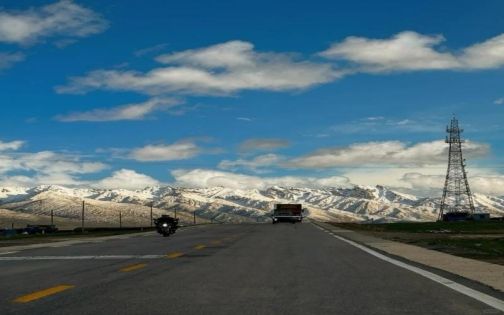
Qinghai-Tibet Highway
G109 Road Conditions in 2026: Can You Drive It Now?
The Main Challenge Is Construction, Not a Complete Road Closure
If you are planning to drive the Qinghai-Tibet Highway in 2026, one thing is important to understand: G109 should not currently be thought of simply as a conventional paved national highway.The G109 upgrading project is ongoing, and temporary traffic routes are being used in many sections. Construction traffic, heavy vehicles and breakdowns can also cause delays.Some sections use the existing road for traffic, some use one side of the highway while the other side is under construction, while others rely on temporary access roads. As a result, actual driving conditions can vary significantly from one section to another.
What Is a Temporary Access Road?
A temporary access road is built or maintained to keep traffic moving during construction. Some sections can be surprisingly firm and stable, while others may contain loose gravel, potholes, uneven surfaces, ruts and sudden changes in elevation.Therefore, even if your navigation app shows G109 as “open,” this does not mean the entire route consists of normal paved highway.According to information released in June 2026, the G109 upgrading project in Nagqu was scheduled for completion in September, although some sections may still be subject to phased construction and traffic management.
Can a Sedan Drive G109?
If your vehicle is in good mechanical condition, you have reasonable driving experience and you are not in a hurry, some ordinary sedans can theoretically pass through open sections. However, “can pass” should not be confused with “ideal for every sedan.”An SUV will generally provide a more comfortable margin, particularly one with adequate ground clearance and good-condition tires. What matters most is not simply the type of vehicle but the condition of the tires, underbody, spare tire and the driver’s ability to handle rough roads.For sedans, slow down well before potholes, uneven road foundations and sudden changes in road height. Never assume that because the vehicle ahead passed quickly, you should do the same.
Essential Driving Tips for the Qinghai-Tibet Highway
Controlling Your Speed Matters More Than Driving Fast
Some temporary roads may look smooth, while potholes and uneven surfaces are hidden beneath dust. Large trucks can create thick clouds of dust, and low evening sunlight can make changes in the road surface particularly difficult to see.Do not focus on maintaining a high average speed. If you cannot clearly judge the road ahead, ease off the accelerator, slow down and stop if necessary.
Be Careful When Passing Oncoming Vehicles
On construction sections, vehicles traveling in both directions may share temporary roads. When there is no oncoming traffic, choose the firmer and smoother side of the road. When approaching large trucks, slow down early and leave plenty of space.The biggest mistake is hitting potholes at speed. A puncture is inconvenient, but damage to the oil pan, suspension or underbody can become a serious problem when you are hundreds of kilometers from the nearest town.
Avoid Using Night Driving to Catch Up on the Schedule
Some sections of the Qinghai-Tibet route have very little traffic at night, but that does not make them suitable for night driving. Wildlife, construction areas, uneven surfaces, loose stones and rapidly changing weather can all increase the risk.For first-time drivers, it is better to complete the majority of the day’s journey during daylight and leave enough time for traffic congestion, construction delays and temporary road controls.
Preparing for Altitude Sickness
The biggest physical challenge on the Qinghai-Tibet Highway is prolonged exposure to high altitude rather than simply reaching one 5,000-meter mountain pass.
Do Not Treat Medication as a Guarantee Against Altitude Sickness
Oxygen, glucose and common high-altitude travel supplies can be useful for emergencies, but no “anti-altitude-sickness” product can guarantee that you will not develop symptoms, and such products should never replace proper medical assessment.If you experience persistent or worsening severe headache, difficulty breathing, confusion, impaired coordination or severe vomiting, stop ascending and seek medical assistance as soon as possible.At high altitude, walk slowly and minimize strenuous activity. Drink water regularly but do not force yourself to consume excessive amounts. Keep meals relatively light and easy to digest.
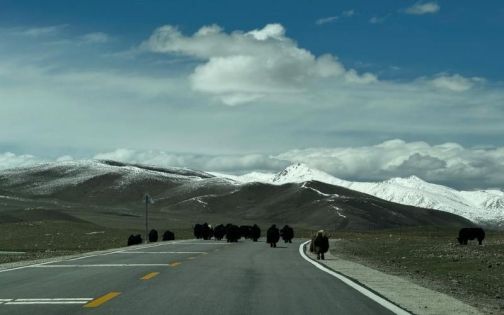
Qinghai-Tibet Highway
What to Prepare for a G109 Road Trip
Vehicle Equipment
Before departure, check the tires, brakes, engine oil, coolant, windshield wipers and battery, and make sure the spare tire is usable.For an SUV, it is also sensible to carry basic tire-repair equipment, an air compressor, tow rope, jumper cables and a flashlight.If your vehicle has low ground clearance or low-profile tires, be especially cautious when evaluating current construction conditions.
Fuel, Supplies and Communications
There are long stretches between Golmud and Nagqu where fuel and other supplies are limited. Do not use the same approach you would use for driving around a city and simply wait until the fuel gauge is almost empty.Fill the tank before entering long remote sections and plan fuel stops according to your vehicle’s actual range. Carry drinking water, energy food, warm clothing, basic medicines and emergency supplies.Do not rely entirely on mobile coverage or a single navigation app in remote areas. Download offline maps in advance and save your planned accommodation, fuel stations and supply points.
When Is the Best Time to Drive the Qinghai-Tibet Highway?
May to July is an important period for Tibetan antelope migration and calving, making wildlife encounters particularly rewarding. However, animal movements can also lead to temporary traffic controls.In late July 2026, official information indicated that Tibetan antelopes had already begun moving back toward the Wudaoliang area.July to September is generally one of the more popular periods for driving the Qinghai-Tibet route, but high-altitude weather can change rapidly. Summer does not eliminate the possibility of snow, rain, strong winds or sudden temperature drops.If your priorities are snow mountains, lakes and wildlife, pay close attention to weather forecasts and wildlife activity rather than choosing your departure date based on the calendar alone.
Is the Qinghai-Tibet Highway Worth Driving?
The Qinghai-Tibet Highway is not an easy road trip.If you want smooth pavement, frequent service areas and a relaxed drive, the G109 during its current construction period may disappoint you. But if you want to experience a genuine high-altitude road journey, see Tibetan antelopes in Hoh Xil, cross the Kunlun Mountains, Fenghuo Mountain and Tanggula Mountain, and experience hundreds of kilometers of open wilderness on the roof of the world, this remains one of China’s most memorable self-drive routes.Because G109 is undergoing major upgrades in 2026, always check the latest construction information and traffic restrictions before departure. Temporary closures and detours have been announced for some sections, while other areas are using half-width construction and temporary traffic arrangements.Ultimately, a successful Qinghai-Tibet road trip does not require the most powerful off-road vehicle. What you need is enough time, a reliable vehicle, sensible supplies, calm driving habits and genuine respect for the high-altitude environment and wildlife.Once the road upgrades are fully completed, the driving experience along G109 should become considerably easier. Until then, if you choose to take this route, treat it as a genuine high-altitude road adventure rather than an ordinary highway journey.
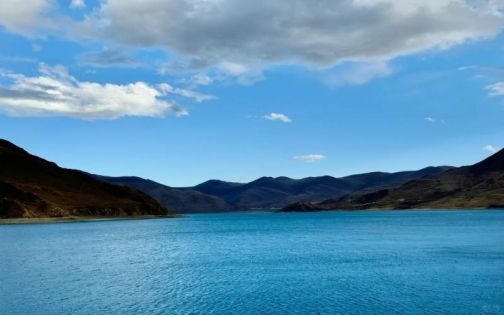
Qinghai-Tibet Highway