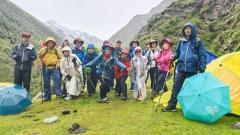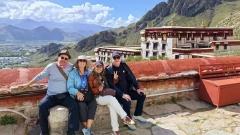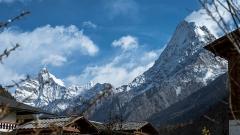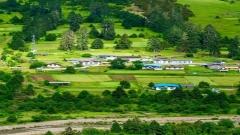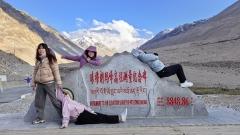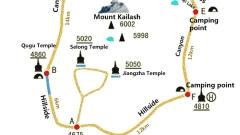

1. Introduction: Why Visiting Sapu Mountain Was Worth the Journey
Sapu Mountain is one of the spectacular destinations in northern Tibet that many travelers dream of visiting. However, unlike more popular destinations such as Lhasa and Nyingchi, getting to Sapu Mountain requires careful planning, especially if you prefer public transportation over private cars or organized tours.For this trip, I started in Lhasa and took a train to Nagqu, followed by a local bus, a long-distance coach and another bus to reach Biru County and Baiga Township. From there, I arranged a shared ride to Sapu Mountain.The journey involved hours on the road, unexpected hail and rain, and a few memorable encounters with kind local people. Although the weather did not turn out exactly as I had hoped, standing in front of the magnificent snow-covered peaks made the entire journey worthwhile.Sapu Mountain had been on my Tibet travel bucket list for a long time. I was worried that the weather might ruin the experience after such a long journey, but I decided to take the chance anyway. Fortunately, even though the sky was overcast when I arrived, the mountain scenery was still breathtaking.I had originally planned to explore the Inner Lake as well, but heavy rain and falling temperatures eventually forced me to change my plans.This guide combines my personal travel experience with practical information about transportation, entrance tickets, accommodation, food, sightseeing and budgeting. If you are planning an independent trip to Sapu Mountain or want to explore northern Tibet on a relatively modest budget, I hope this guide helps you prepare for the journey.
2. Sapu Mountain Travel Guide: Key Information at a Glance
- Location: Near Yangxiu Township, Biru County, Nagqu City, Tibet, China.
- Main peak: Approximately 6,956 meters above sea level.
- Public transportation route: Lhasa → Nagqu → Biru County → Baiga Township → Sapu Mountain.
- Transportation costs: My recorded fares included RMB 50 for the train from Lhasa to Nagqu, RMB 1 for the local bus, RMB 110 for the coach to Biru County, RMB 2 in booking fees and RMB 40 for the bus to Baiga Township. These are historical personal expenses, not guaranteed current prices.
- Entrance tickets: Ticket prices and seasonal discounts may change. Confirm the latest official rates before departure.
- Outer Lake: Best for mountain views, lakeside scenery and the popular wooden bridge.
- Inner Lake: Offers a more adventurous experience, subject to access restrictions, weather and physical fitness.
- Accommodation: Options include budget lodgings near Biru County Bus Station, hotels in Baiga Township and basic guesthouses closer to the scenic area.
- Food: Restaurants are available in Biru County and Baiga Township. Bring snacks, drinking water and food for the journey.
- Budget: Account for transportation, accommodation, entrance tickets, sightseeing buses, shared rides, meals and unexpected expenses.
- Altitude: The Outer Lake area is approximately 4,700–4,800 meters above sea level, while parts of the Inner Lake area approach 5,000 meters.
- Travel advice: Confirm local bus schedules, return transportation, scenic-area access rules and weather conditions in advance.
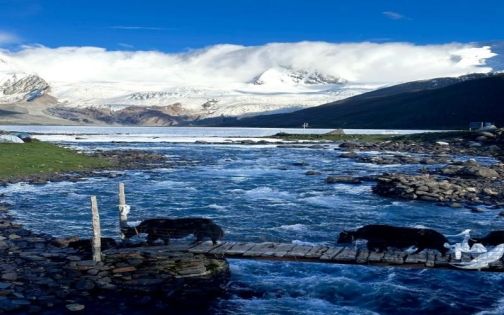
Sapu Mountain
3. Where Is Sapu Mountain, and When Is the Best Time to Visit?
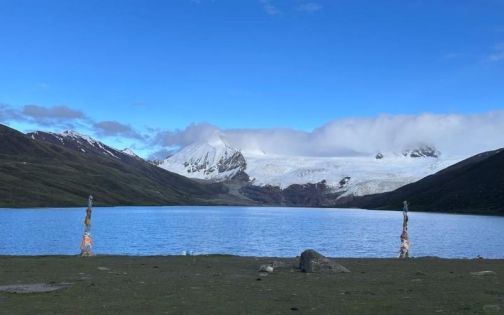
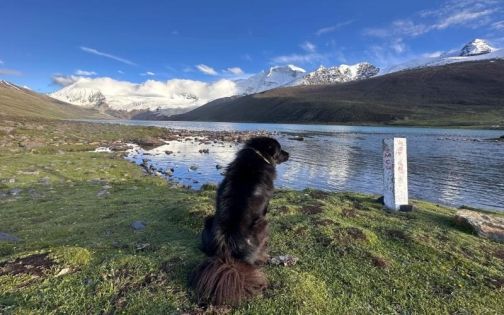
Sapu Mountain is located near Yangxiu Township in Biru County, Nagqu City, in northern Tibet.Its main peak rises to approximately 6,956 meters above sea level, surrounded by a dramatic range of snow-covered mountains. At the foot of the peaks lies Sapu Tso, a beautiful alpine lake that adds another dimension to the scenery.The combination of snow-capped mountains, lakes, glaciers and high-altitude grasslands makes this area particularly attractive to photographers and travelers seeking a quieter side of Tibet.Visitors commonly divide the sightseeing area into the Outer Lake and Inner Lake sections.The Outer Lake is the more accessible area for enjoying panoramic mountain views, lakeside scenery and the popular wooden bridge. The Inner Lake area appeals to travelers hoping to explore farther and see glacial landscapes more closely, although access depends on local regulations and conditions.
Basic Information
- Destination: Near Yangxiu Township, Biru County, Nagqu City, Tibet
- Main peak elevation: Approximately 6,956 meters
- Outer Lake elevation: Approximately 4,700–4,800 meters, depending on the exact location
- Inner Lake elevation: Approaching 5,000 meters in some areas
- Main attractions: Snow-covered peaks, Sapu Tso, lakeside paths, wooden bridges and glacial scenery
- Travel characteristics: Long travel times, high altitude and rapidly changing weather
Sapu Mountain is not a destination I would recommend visiting without preparation. If you rely on public transportation, you need to plan your connections carefully and leave enough time for weather-related delays, local transfers and altitude acclimatization.
4. How to Get to Sapu Mountain: My Public Transportation Route
Many travelers visit Sapu Mountain by joining a three- or four-day tour from Lhasa, renting a vehicle or driving themselves.I chose a combination of public transportation and a local shared ride. If you enjoy long-distance bus travel and do not mind spending extra time getting around, this route is worth considering.The departure times and fares below are based on my own travel experience. They should not be treated as guaranteed current schedules, so check the latest information before setting off.
Step 1: Take the Train from Lhasa to Nagqu
I took a train from Lhasa to Nagqu.Departure: Around 9:50 a.m.Arrival: Around 1:40 p.m.Recorded fare: RMB 50If the train is delayed, arrival may be pushed back to around 2 p.m.Taking the train is a relatively convenient way to cover this part of the journey. Once you arrive at Nagqu Railway Station, you still need to transfer to a local bus to reach Nagqu Bus Terminal.
Step 2: Take Bus No. 1 to Nagqu Bus Terminal
Bus No. 1 can be found near the exit of Nagqu Railway Station. The journey to Nagqu Bus Terminal takes approximately 30 minutes, and the fare I paid was RMB 1.This short ride became one of the most memorable moments of my trip.I was carrying several bags and struggling to move around comfortably when a kind Tibetan local offered to pay my bus fare.It was a small gesture, but it made me feel genuinely welcome. Traveling alone often comes with unexpected moments, and sometimes the kindness of a stranger becomes one of the memories you treasure most.
Step 3: Take a Long-Distance Coach from Nagqu to Biru County
After arriving at the bus terminal, I took a break before boarding a coach to Biru County.Departure: Around 4 p.m.Arrival: Around 9 p.m.Recorded fare: RMB 110Booking fee: RMB 2Booking method: I used the Xizang Piaowutong mini-programThe journey took approximately five hours, and by the end of it, sitting for so long had become exhausting.We also encountered hail and rain along the way. Weather in the Tibetan Plateau can change quickly, and good conditions at departure do not guarantee a smooth journey.I recommend bringing drinking water, bread, biscuits and other easy-to-carry snacks. Long-distance coaches do not always stop at convenient times for meals, especially when you leave in the afternoon and arrive at night.
Step 4: Travel from Biru County to Baiga Township
The following day, I went to Biru County Bus Station around noon to buy a ticket to Baiga Township.Based on my experience:Biru County to Yangxiu Township: RMB 30Biru County to Baiga Township: RMB 40Departure: Around 2 p.m.Journey time: Approximately two hoursThe ticket seller, a woman named Zhuoma, was incredibly friendly. When she heard that I had traveled so far alone, she repeatedly reminded me to take care of myself.She recommended staying in Baiga Township because the accommodation options were generally better, so I bought a ticket there.The bus terminal was small, with relatively few passengers, and the vehicle was not full. The road conditions were generally manageable, although the mountain roads were bumpy. Our driver drove slowly, which I appreciated.Along the way, I could see traditional Tibetan courtyards, small villages and the distinctive landscapes of the northern Tibetan Plateau.For me, this is part of the appeal of traveling by public transportation. You are not simply trying to reach a destination; you also get to observe the everyday surroundings and local life along the way.Bus schedules and fares may change according to the season and local operating arrangements. It is best to confirm departure times directly with the bus station.
Step 5: Arrange a Shared Ride from Baiga Township to Sapu Mountain
Once I arrived in Baiga Township, I needed to arrange transportation to Sapu Mountain.I asked the owner of my accommodation to help me find a shared ride.Before agreeing to a ride, I recommend confirming the following:Whether you can share a vehicle with other travelers or need to hire one privately.Whether the quoted price covers a one-way trip or a return journey.Whether the driver will wait while you explore the scenic area.Whether the vehicle can access the Outer Lake and whether Inner Lake access is permitted.What happens if bad weather or temporary access restrictions disrupt your plans.Baiga Township is a practical base for visiting Sapu Mountain, but reaching the township does not mean you have reached the scenic area itself. You still need to arrange local transportation.If you prefer a more comfortable option, consider joining a multi-day tour from Lhasa or arranging a private vehicle in advance.
5. How Much Are Sapu Mountain Tickets? Checking Costs for 2026
Entrance fees are one of the most important expenses to confirm before your trip.The travel records and information I collected contain different price references. Some travelers reported a combined entrance ticket and sightseeing bus cost of RMB 183, while other sources listed an entrance ticket of RMB 138 plus RMB 45 for the sightseeing bus. Some travelers also mentioned multi-day tickets.These figures may refer to different dates, ticket types or discount arrangements. I would not recommend treating any one figure as the guaranteed standard price for all of 2026.Before visiting, check the official scenic-area information or ticket office for the following:
- The current entrance fee for your travel dates.
- Whether the sightseeing bus is compulsory and included in any ticket package.
- Whether tickets are valid for one day or multiple days.
- Whether student or other eligible discounts are available.
- Whether additional transportation or service fees apply to the Inner Lake area.
Some travel materials describe approximately April to November as the peak season and December to March as the off-season. However, the exact seasonal dates and ticket policies may change, so always follow the latest official announcements.Visitors are generally required to transfer to designated sightseeing buses at the scenic-area visitor center. Whether private vehicles are allowed into specific areas must also be confirmed locally.
Budget tip: Remember to calculate the cost of transportation between Baiga Township and the scenic area separately from the entrance ticket. You may also need to budget for Inner Lake transport, accommodation, meals and other personal expenses.
Sapu Mountain
6. Exploring the Outer Lake: Mountain Views and Photography
The Outer Lake is the classic sightseeing area at Sapu Mountain and is a good starting point for first-time visitors.
1. Enjoy the Panoramic Mountain Views
Once you reach the Outer Lake, take your time to appreciate the scenery.On a clear day, you can photograph the snow-covered peaks, lake and surrounding terrain in a single composition. If clouds cover the mountains, do not be too disappointed. Moving clouds and mist can create a dramatic atmosphere of their own.When I visited, the sky was overcast. Although I did not get the perfect blue sky I had hoped for, seeing the mountains so close was still an incredible experience.
2. Take Photos at the Popular Wooden Bridge
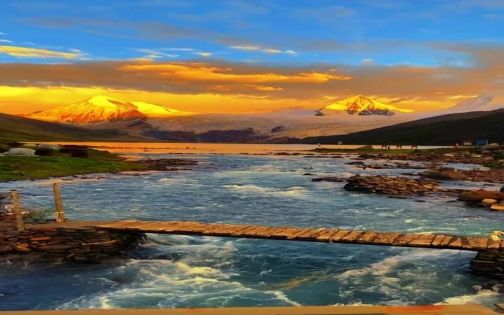
The wooden bridge near the Outer Lake is one of the most popular photography spots.If you want the mountains to appear clearly in the background, observe the lighting and the number of visitors before choosing your angle.Overcast conditions can be suitable for atmospheric landscape photography, while clearer weather may offer stronger contrasts between the snow, water and surrounding terrain.If you plan to use a drone, check the scenic area’s current flight rules and local restrictions. Do not assume that drone flights are permitted everywhere.
3. Look for Reflections in the Morning or Evening
Whether the mountains are reflected in the lake depends on wind, clouds and lighting.Early morning or late afternoon may offer calmer water, but this is never guaranteed. Adjust your plans to the actual conditions, and do not remain in unsafe locations simply to wait for a perfect reflection.
7. How to Reach the Inner Lake: Local Vehicles, Horse Riding and Hiking
If the Outer Lake offers the classic Sapu Mountain experience, the Inner Lake is more suitable for travelers who want to venture farther and have enough time and physical stamina.However, one important point comes first: access to the Inner Lake, hiking routes, local vehicle services and horse riding arrangements depend on current scenic-area rules and local conditions.Travelers’ experiences do not necessarily represent official regulations, and arrangements that were possible on one visit may not be available on another.
1. Arrange Local Transportation
According to travel accounts I collected, some visitors have arranged rides with local residents near the Outer Lake to reach the Inner Lake. One account mentioned approximately RMB 100 for a return trip, while another reported around RMB 40 for a one-way ride.These are informal reference prices, not guaranteed current rates. Actual costs may depend on the season, number of passengers, road conditions and local arrangements.Before accepting a ride, confirm whether the vehicle is authorized to use the route, whether waiting time is included and where the driver will collect you.Do not assume that every service offered on-site can access all parts of the scenic area.
2. Consider Horse Riding
Some travel accounts have mentioned approximately RMB 500 for a return horse-riding trip.This is a relatively expensive option, and you should confirm the route, duration, safety arrangements and weather conditions before deciding.Do not assume that a service is available simply because someone has quoted a price online.
3. Hiking to the Inner Lake
Hiking allows you to appreciate the landscape at a slower pace. Depending on the route, you may see different perspectives of the mountains, lakes and surrounding high-altitude terrain.However, parts of the Inner Lake area approach 5,000 meters above sea level. Trails may include muddy sections, standing water, loose stones and uneven ground. Some routes may have no facilities or resupply points.One travel guide mentions a round-trip distance of approximately five kilometers and a duration of 1.5–3 hours. Treat this only as a reference for a particular route, not a universal estimate.If you have only recently arrived at high altitude, are prone to altitude sickness or are carrying heavy bags, do not push yourself to hike.Stop ascending and seek assistance if you develop significant headaches, nausea, dizziness or breathing difficulties.
4. Is the Inner Lake Glacier Worth Seeing?
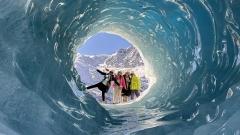
If the weather, your physical condition and access arrangements allow, the glacial scenery around the Inner Lake can be a memorable part of the trip.However, glacier edges, ice caves, crevasses and unstable ice formations can present serious risks, including falling ice, collapse, slipping and falling into water.Never cross barriers, enter closed areas or approach unstable ice just to take photographs.If access to the Inner Lake is restricted on the day of your visit, enjoy the Outer Lake instead. The goal is not to check off every attraction, but to experience the landscape safely.
8. Where to Stay Near Sapu Mountain: Baiga Township, Biru County or the Scenic Area
During this trip, I stayed one night in Biru County and another night in Baiga Township. Each location has different advantages depending on your budget, comfort preferences and itinerary.
1. Near Biru County Bus Station: Best for a Simple Overnight Stay
I arrived in Biru County at night while it was raining. I was exhausted and did not want to drag my luggage around looking for a hotel.The driver told me that there was accommodation near the bus station for RMB 50 per night, so I decided to stay there.The location was convenient, and the room was reasonably clean, but the facilities were basic. There was no shower room, so I had to make do with washing up in the bathroom.It was suitable for a quick overnight stop before continuing the next day.I later learned that the accommodation was also used by drivers staying overnight.If you are traveling on a tight budget and arrive late, simple lodging near the bus station may be worth considering. However, confirm whether the room has a private bathroom, hot water and heating before checking in.
2. Jintai Hotel in Baiga Township: My Preferred Stay on This Trip
After arriving in Baiga Township, I stayed at Jintai Hotel.Recorded room rate: RMB 180 per night for a single roomLocation: Across the road from the bus drop-off pointNearby facilities: Several restaurants, including Sichuan-style restaurantsThe accommodation was much better than I had expected. The room was spacious and clean, and the surrounding area had plenty of places to eat.This made it convenient to buy food before visiting Sapu Mountain and return for a proper meal and rest afterward.Personally, I think Baiga Township is a practical choice if you plan to spend a day exploring Sapu Mountain and want more comfortable accommodation at night.However, room rates can change depending on the season, holidays and room type. RMB 180 was the price I paid, not a guaranteed current rate.
3. Staying Near the Scenic Area: Better for Early-Morning Views
Some travelers choose local Tibetan guesthouses or simple lodgings near the scenic area. Travel accounts have mentioned prices of around RMB 100 per night, but the actual facilities and rates should be confirmed in advance.Staying closer to the mountains may make it easier to enjoy early-morning or evening scenery and reduce some of the driving time.However, accommodation near the scenic area may be basic. Nights can be very cold, and heating, hot water and electricity cannot be taken for granted.Wildlife may also be active in the surrounding area. Avoid going out alone at night and never approach or feed wild animals.
4. Staying in Biru County: A More Comfortable Base
If you place greater importance on accommodation facilities, restaurants and a comfortable night’s rest, staying in Biru County may be a good option.Other travel accounts mention that driving from Biru County to the scenic area takes approximately 2.5 hours, although actual travel time depends on the route, road conditions and weather.If you choose to stay in the county, confirm the road conditions and leave enough time for the journey. Do not rely solely on the distance shown on a map.
Sapu Mountain
9. Where to Eat Near Sapu Mountain: My Food Experiences
Although this trip involved plenty of time on the road, finding food was easier than I had expected.
Nagqu Bus Terminal: Bring Your Own Snacks
I rested at Nagqu Bus Terminal for about two hours. I did not have much of an appetite, so I ate instant noodles.If you are taking a long-distance coach to Biru County, I recommend carrying bread, biscuits, chocolate or other easy-to-store snacks.Do not rely entirely on finding food along the way, especially if you are traveling on an evening bus or during unstable weather.
Biru County: Restaurants Near the Bus Station
After arriving in Biru County, I ate dumplings at a Sichuan-style restaurant downstairs from the bus terminal. The meal cost RMB 25 and tasted quite good.The following morning, I walked around the county and found plenty of restaurants and snack shops. Getting breakfast was not difficult.I eventually stopped at a small bun shop for rice noodles and congee.
Baiga Township: Plenty of Sichuan-Style Food
Baiga Township had more dining options than I had expected, including Sichuan-style restaurants and malatang shops.I ate at Yudu Sichuan Cuisine Restaurant, where I ordered cold pork knuckle and stir-fried vegetables. The flavors suited my taste, the portions were generous, and the other dishes also looked reasonably priced.I even reserved a fish in advance because I planned to return for another meal after visiting Sapu Mountain.If you are unfamiliar with food options in high-altitude areas, or are worried about finding meals near the scenic area, buy bread, instant food, drinking water and snacks in Baiga Township before setting off.Instant noodles, hot water and snacks may be available within parts of the scenic area, but supplies around the Inner Lake should not be relied upon. Availability can also change with the season and weather.
10. How Much Does a Trip to Sapu Mountain Cost?
If you want to estimate the cost of a trip like mine, start by listing the transportation and accommodation expenses you know, then calculate the scenic-area transport, meals and other costs separately.The following table summarizes some of the expenses from my trip. It is not a complete travel budget.
| Expense | Recorded or Estimated Cost |
|---|---|
| Train from Lhasa to Nagqu | RMB 50 |
| Local bus from Nagqu Railway Station to the bus terminal | RMB 1 |
| Coach from Nagqu to Biru County | RMB 110 |
| Booking fee | RMB 2 |
| Bus from Biru County to Baiga Township | RMB 40 |
| Basic accommodation near Biru County Bus Station | RMB 50 per night |
| Single room at Jintai Hotel, Baiga Township | RMB 180 per night |
| Dumplings in Biru County | RMB 25 |
| Sapu Mountain entrance ticket and sightseeing bus | Check current official prices |
| Shared ride from Baiga Township to the scenic area | Confirm locally |
| Inner Lake transport or horse riding | Depends on access and local prices |
Based on these records, the one-way public transportation cost from Lhasa to Baiga Township was approximately RMB 203:RMB 50 + RMB 1 + RMB 110 + RMB 2 + RMB 40 = RMB 203.Adding the RMB 50 overnight stay in Biru County, the RMB 180 room in Baiga Township and the RMB 25 dumpling meal brings the recorded subtotal to approximately RMB 458.This RMB 458 figure only covers the listed expenses. It is not the total cost of the trip and does not include breakfast, other meals, entrance tickets, shared rides to the scenic area, Inner Lake transportation, the return journey or personal purchases.To keep your budget under control, confirm local bus schedules in advance, share rides where possible, choose accommodation according to your itinerary and set aside extra money for weather-related delays or unexpected transportation changes.
11. Important High-Altitude Travel Tips for Sapu Mountain
Sapu Mountain offers incredible scenery, but high altitude, unpredictable weather and road conditions require careful preparation.
1. Be Aware of Altitude Sickness
The Outer Lake is already at a high elevation, and parts of the Inner Lake area approach 5,000 meters above sea level. Even people who are usually healthy can experience altitude sickness.When you first arrive at high altitude, take it slowly and avoid strenuous activity. Do not push yourself simply to stay on schedule.Learn about the common symptoms of altitude sickness and prepare any personal medication you may need.Portable oxygen and glucose should not be treated as substitutes for proper prevention or medical care. If symptoms become severe, you experience breathlessness at rest or develop confusion, seek urgent medical assistance and descend to a lower altitude as soon as possible.Whether you shower or wash your hair should depend on your condition and accommodation facilities. If you have only recently arrived at high altitude or feel unwell, prioritize rest.
2. Prepare for Rapid Weather Changes
Even in summer, Sapu Mountain can experience rain, strong winds and sudden temperature drops.
Recommended items include:
- A windproof and waterproof jacket
- Warm insulating layers and, when appropriate, a down jacket
- Comfortable shoes with good grip
- Sunglasses, a hat and sunscreen
- Rain protection and spare clothing
During my trip, the sky was overcast and heavy rain eventually forced me to abandon my original plan to explore the Inner Lake.Avoid overloading your itinerary. When the weather changes, adjusting your plans is often a better decision than insisting on visiting every attraction.
3. Do Not Underestimate Road Conditions
Road conditions between Biru County, Baiga Township and Sapu Mountain may change with the season, rainfall and maintenance work.Travel times and road descriptions found online should be treated as estimates. Mountain roads, gravel sections and waterlogged surfaces can become more dangerous in rain or snow.If you are driving yourself, choose a vehicle appropriate for the current conditions. Do not assume that a road is suitable for every vehicle and every season simply because another traveler managed to complete the journey in a regular sedan.
4. Follow Scenic-Area Regulations
Access to the Outer Lake and Inner Lake, vehicle restrictions, hiking routes and drone rules may change according to local management decisions.Confirm the latest rules with scenic-area staff before entering restricted areas. Never cross barriers or take unnecessary risks to photograph glaciers or lake reflections.
5. Keep Your Distance from Wildlife
Wild animals may be active in parts of northern Tibet, including areas near accommodation.Avoid walking alone at night, and never feed or approach wild animals. If you encounter wildlife, keep your distance and follow the instructions of local staff.
6. Leave Enough Time for Public Transportation Connections
If you choose a route like mine, avoid scheduling your train arrival, bus transfer and township bus too tightly.Train delays, weather changes and revised local bus schedules can affect the rest of your itinerary. Allow sufficient time for important connections, and confirm your return transportation and departure point in advance.
Sapu Mountain
12. Is Sapu Mountain Suitable for Independent Travel?
My answer is yes, but it depends on the type of independent trip you prefer.If you enjoy trains, buses and local public transportation, do not mind spending extra time transferring between vehicles, and are happy to stay in small towns along the way, combining public transportation with a local shared ride is worth considering.One advantage is the opportunity to experience everyday life in northern Tibet while traveling at your own pace.However, there are disadvantages. The journey is long, township buses may not run frequently, transportation within the scenic area requires additional planning, and bad weather can disrupt your schedule.If you have limited time, prefer greater comfort or are unfamiliar with high-altitude driving and local roads, joining a multi-day tour that includes Sapu Mountain or arranging a private vehicle in advance may be easier.For first-time visitors, I recommend making sure the Outer Lake visit goes smoothly before deciding whether to continue to the Inner Lake. Your decision should depend on the weather, your physical condition and current access rules.You do not need to push yourself to visit every location to have a memorable experience.
13. Final Thoughts: Is Sapu Mountain Worth the Journey?
For me, absolutely.I left Lhasa by train, transferred to a bus in Nagqu, continued by coach to Biru County and finally reached Baiga Township.Along the way, I experienced the exhaustion of long-distance travel, unexpected hail and rain, the kindness of strangers and the warmth of local people who reminded me to stay safe.Travel is not always about blue skies and perfect weather. Not every destination will look exactly as it does in photographs.During this trip, I did not get the perfect blue sky I had hoped for, and I could not complete every part of my original itinerary. Yet when the mountains finally appeared in front of me, the experience of seeing these immense peaks up close was enough to make the entire journey worthwhile.If you are planning a trip to Tibet, consider adding Sapu Mountain to your itinerary. Check transportation, tickets and accommodation in advance, allow room for changing weather, and give yourself time to slow down and enjoy the journey.Sometimes, the most memorable part of traveling is not simply where you arrive, but the people you meet and the unexpected moments that stay with you long afterward.