
Many overseas Chinese travelers feel excited but also nervous when planning their first trip to Tibet.
They often ask:
“Is altitude sickness really that serious?”
“What should I bring to Tibet?”
“Will everyone suffer from altitude sickness?”
“What clothes should I prepare?”
“Should I take a flight or train into Tibet?”
Tibet has an average altitude of more than 3,500 meters. Lhasa is located at around 3,650 meters above sea level, while destinations such as Mount Everest Base Camp, Namtso Lake, and Ali can exceed 4,500-5,000 meters.
The biggest differences between Tibet and low-altitude regions are not only the scenery, but also:
- Lower oxygen levels
- Strong ultraviolet rays
- Large temperature differences between day and night
- Dry climate
- Long travel distances
However, traveling to Tibet is not as difficult as many people imagine.
With proper preparation, a reasonable schedule, and respect for your body’s adjustment process, most travelers can successfully complete their Tibet journey.
This guide summarizes the most practical preparation tips for first-time Tibet visitors, from before departure to arrival in Tibet.
Tibet
The Most Important Thing Before Going to Tibet: Prepare Your Body
Many people think altitude sickness happens suddenly, but in reality, it usually develops gradually.
Common symptoms include:
- Mild headaches
- Dizziness
- Poor sleep
- Chest tightness
- Loss of appetite
- Fatigue
Most travelers experience symptoms within 6-24 hours after arriving in Lhasa. Some people only begin feeling uncomfortable the next day.
Therefore, do not assume you are fine just because you feel normal immediately after landing.
For your first day in Tibet, avoid:
- Intensive sightseeing
- Climbing too many stairs
- Running for photos
- Staying up late
The best first-day schedule:
Check in → Rest → Drink water → Take a slow walk nearby
Give your body time to adjust.
Essential Packing List for Tibet (Based on Importance)
Altitude Sickness Preparation
These items are not guaranteed to prevent altitude sickness, but they can help you feel more prepared.
Rhodiola and Tibetan Altitude Supplements
Many travelers prepare rhodiola before entering Tibet.
Some people take rhodiola several days before departure as part of their preparation.
After arriving in Tibet, some travelers use altitude-related supplements such as Gaoyu’an.
Important:
Always purchase products from reliable sources and check official labeling.
No supplement can completely prevent altitude sickness.
The most effective methods are still:
- Rest properly
- Adapt slowly
- Avoid overexertion
Portable Oxygen Canister
For first-time Tibet visitors, carrying portable oxygen is highly recommended.
Especially when traveling to:
- Namtso Lake
- Mount Everest Base Camp
- Ali region
- High mountain passes
Choose:
- A model with a mask
- Easy-to-carry size
- Reliable medical-grade oxygen products
The correct principle:
Use oxygen when necessary, but do not rely on it excessively.
If symptoms are mild, allow your body to gradually adapt instead of using oxygen continuously all day.
Glucose Drinks
Many travelers prepare glucose drinks.
During high-altitude travel, especially when:
- Skipping meals
- Sitting in vehicles for long periods
- Feeling physically tired
You may experience weakness or low energy.
Glucose can provide quick energy.
However, do not avoid carbohydrates.
Foods such as:
- Rice
- Noodles
- Bread
can actually help your body adapt better to high altitude.
Blood Oxygen Monitor
A small fingertip pulse oximeter is highly recommended, especially for:
- Elderly travelers
- Family trips
- High-altitude routes
It helps you monitor your physical condition.
If your oxygen level remains low together with:
- Severe chest tightness
- Difficulty breathing
- Increasing dizziness
You should rest, use oxygen if needed, and seek medical help if necessary.
Do not force yourself to continue.
Humidifier and Dry Climate Protection
One of the biggest challenges in Tibet is:
Dryness.
Many visitors experience:
- Dry nose
- Cracked lips
- Sore throat
- Tight skin
Recommended items:
✅ Small USB humidifier
✅ Lip balm
✅ High-moisture face cream
✅ Hydrating facial masks
✅ Nasal moisturizing products
Moisturizing before sleep can make a big difference the next morning.
Tibet Clothing Guide: Do Not Pack Only for Photos
Many first-time female travelers make the same mistake:
They bring many beautiful outfits but forget warm clothing.
Tibet is not cold all the time.
The reality is:
Hot under the sun during the day, cold after sunset.
Especially:
Lhasa:
Warm during the day, cool at night.
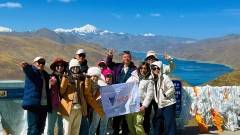
Yamdrok Lake:
Strong winds and lower temperatures.
Mount Everest and Namtso:
Even in summer, nights can approach freezing temperatures.
The best method is the “layering system.”
Inner layer:
Thermal clothing or comfortable base layers.
Middle layer:
Sweater, fleece jacket, sweatshirt.
Outer layer:
Windproof jacket or down jacket.
Essential items:
✅ Windproof jacket
✅ Down jacket or warm coat
✅ Thick socks
✅ Anti-slip shoes
✅ Hat
✅ Gloves
For photography:
You can bring:
- Long dresses
- Colorful scarves
- Traditional-style clothing
But never sacrifice warmth just for pictures.
Tibet
Sun Protection in Tibet Is More Important Than You Think
Many travelers think:
“I don’t usually get sunburned, so I will be fine.”
After arriving in Tibet, many realize:
The sunlight is extremely strong.
Essential items:
✅ SPF50+ sunscreen
✅ Sunglasses
✅ Wide-brim hat
✅ Face covering
✅ UV protection sleeves
Your:
- Nose
- Cheeks
- Lips
- Hands
are especially vulnerable.
Sunglasses are not only for photos. They protect your eyes from strong sunlight and reflection from snow and lakes.
Recommended Medicine List for Tibet Travel
Besides altitude-related items, prepare some basic medicine.
Cold and Fever Medicine
Bring:
- Cold medicine
- Fever medicine
Catching a cold at high altitude can make adjustment much harder.
Digestive Medicine
Tibet food is different from what many travelers are used to.
Possible issues:
- Different diet
- Long-distance travel
- Change of water and food
Recommended:
- Anti-diarrhea medicine
- Digestive aids
- Stomach medicine
Other Useful Items
Recommended:
- Band-aids
- Iodine wipes
- Motion sickness medicine
- Nasal spray
- Lip balm
If you travel on Sichuan-Tibet routes or long mountain roads, motion sickness medicine is especially useful.
Things You Should Avoid During Your First Days in Tibet
Avoid Intense Exercise
After arriving:
Do not:
- Run
- Climb quickly
- Carry heavy luggage
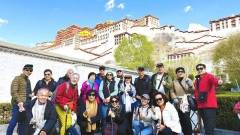
Many visitors become excited at Potala Palace and rush up the stairs, only to become exhausted minutes later.
Slow walking is the correct approach.
Avoid Alcohol During the First Few Days
Tibetan barley wine is a local specialty, but do not rush to try it immediately after arrival.
Alcohol can:
- Increase heart stress
- Affect sleep
- Make altitude symptoms worse
Enjoy it only after your body has adapted.
Avoid Staying Up Late
Sleep quality is already affected by high altitude.
Recommendation:
Sleep before 10-11 PM if possible.
Reduce phone usage.
Even lying down with your eyes closed helps your body recover.
Avoid Heavy and Spicy Food
Tibet has many delicious foods:
- Yak meat
- Tibetan cuisine
- Hot pot
However, during the first days:
Choose lighter meals.
Avoid:
- Excessive hot pot
- Fried food
- Too much alcohol
A comfortable stomach makes altitude adjustment easier.
Can You Shower After Arriving in Tibet?
Many first-time visitors ask:
“Can I shower after arriving in Lhasa?”
There is no absolute rule.
If you:
- Feel normal
- Have no dizziness
- Have no chest discomfort
- Stay in a good hotel
A short shower is usually fine.
Remember:
- Do not shower for too long
- Avoid getting cold afterward
- Dry your hair completely
If you already have headaches or feel exhausted, rest first.
Documents and Transportation Tips for Overseas Chinese Travelers
Overseas Chinese travelers should confirm Tibet travel requirements before departure.
Different traveler identities may require different documents, including:
- Hong Kong and Macau residents
- Taiwan residents
- Overseas Chinese
- Foreign passport holders
For destinations such as:
- Mount Everest
- Ali region
- Border areas
additional permits may be required.
Always confirm the latest requirements with your travel agency before departure.
Tibet
Should You Fly or Take the Train to Tibet?
Flying to Tibet
Advantages:
- Saves time
- More convenient
Disadvantage:
Your body reaches high altitude quickly.
For first-time visitors:
Do not schedule a busy itinerary immediately after arrival.
Taking the Train to Tibet
The Qinghai-Tibet Railway is a popular choice.
Advantages:
- Gradual altitude increase
- Easier adaptation
- Incredible scenery
You can see:
- Hoh Xil
- Kunlun Mountains
- Grasslands and lakes
It is suitable for travelers with enough time.
Tibetan Cultural Etiquette
Tibet is not only about natural landscapes. It is also a region with deep cultural traditions.
When visiting monasteries:
- Keep quiet
- Do not photograph restricted areas
- Do not step on door thresholds
When walking around religious sites:
Follow local customs and walk clockwise.
When photographing local people:
Especially:
- Pilgrims
- Elderly people
- Religious activities
Ask for permission first.
Respecting local culture will make your travel experience much better.
Tibet
Final Advice for First-Time Tibet Travelers
Tibet is absolutely worth visiting, but it is not an ordinary destination.
Do not plan too many attractions every day.
Do not try to visit the maximum number of places in the shortest time.
The most important rule for Tibet travel is:
Slow down.
Spend your first day adapting to the altitude. Start exploring gradually and give your body time.
Prepare:
- Sun protection
- Warm clothing
- Basic medicine
- Oxygen supplies
Remember:
- Avoid intense exercise
- Avoid staying up late
- Avoid alcohol
- Do not ignore serious altitude symptoms
Altitude sickness itself is not the biggest problem.
The real problem is being unprepared.
With proper preparation and a relaxed pace, Tibet’s snow mountains, lakes, monasteries, and starry skies will become one of the most unforgettable travel experiences of your life.
recommend route: