
Introduction
There are places you visit for the scenery, and there are places you travel thousands of miles to feel something words can hardly describe. Everest Base Camp is one of them. The journey from Shigatse toward Mount Everest is not simply a road leading to the world’s highest peak. It is a gradual passage through vast plateaus, barren valleys, prayer-flag-covered mountain passes and endless Himalayan landscapes, where every turn seems to bring you closer to the roof of the world.But here is something many first-time visitors do not realize: the most spectacular view of Mount Everest may not actually be at Everest Base Camp. On a clear day, Gyawula Pass offers an extraordinary panoramic view of several 8,000-meter peaks, while the famous winding road below creates one of the most dramatic landscapes along the entire journey.This Everest Base Camp travel guide is based on real experience and focuses on the practical details that matter most: how to plan the route, what permits you need, how much the trip costs, where to stay, how to deal with high altitude, and whether paying to enter Everest Base Camp is actually worthwhile.
Key Takeaways Before You Go
- Plan at least 2 days and 1 night. The journey from Shigatse to Everest Base Camp is long, and a rushed one-day trip leaves little time for weather changes or sightseeing.
- Carry your original ID and the required border permit. Border-control requirements can change, so always confirm the latest rules before departure.
- Gyawula Pass is one of the most important viewpoints. At around 5,198 meters, it offers a wide panorama of the Himalayas and several 8,000-meter-class peaks on clear days.
- Everest Base Camp currently costs around RMB 280 per person based on the entrance ticket and environmental shuttle fee described in this guide. Fees and regulations can change, so confirm before visiting.
- Weather matters more than almost anything else. Even after traveling all the way to Everest, clouds can completely hide the summit.
- Consider staying around Tashi Dzom or Tingri rather than sleeping at 5,000+ meters. Lower-altitude accommodation with oxygen facilities is generally more practical for most travelers.
- Prepare seriously for altitude. Everest Base Camp is around 5,200 meters above sea level. Warm clothing, sunscreen, water, high-calorie snacks and appropriate oxygen supplies are worth preparing.
- If your priority is photography, you may not need to enter the base camp. Gyawula Pass and other viewpoints can offer broader mountain panoramas without the additional entrance and shuttle fees.
- If reaching Everest Base Camp itself is part of your dream, go for the experience. The value is not only in the view, but also in standing at one of the highest accessible points on Earth.
Everest Base Camp
Everest Base Camp Travel Guide: What to Know Before You Go
For travelers visiting Tibet, Mount Everest is one of the places that is almost impossible to leave off the itinerary. But after actually traveling from Shigatse to Everest Base Camp, you may discover that the base camp itself is not the only highlight of the journey.The road from Shigatse toward Tingri gradually takes you through vast plateaus, barren valleys, snow-covered mountains and winding mountain roads. Among all the viewpoints along the way, Gyawula Pass is particularly impressive. On a clear day, it offers an exceptionally wide view of the Himalayan range and several of the world’s highest peaks.
How to Travel from Shigatse to Everest Base Camp
Why Two Days and One Night Is Recommended
The journey from Shigatse to Everest Base Camp is roughly 300 kilometers one way and can take close to six hours of driving without counting stops. Along the way, you will pass through checkpoints, mountain passes and winding sections of road.Trying to complete the trip as a day trip is therefore not recommended. The driving is tiring, and you will have almost no flexibility if the weather changes.A more practical itinerary is two days and one night. On the first day, travel from Shigatse toward Tingri and Everest, stopping at Gyatso La Pass, Gyawula Pass and other viewpoints before staying overnight around Tingri or Tashi Dzom. On the second day, continue toward Everest Base Camp, depending on the weather, and then return to Shigatse or continue with the rest of your Tibet itinerary.
A Special Route We Took to Reach Everest
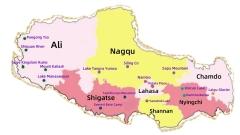
During our trip, there were changes to the availability of border permits for the Shigatse route. Our travel companion researched an alternative route in advance.On September 10, we traveled from Langkazi County through Saga County and Dinggye County before reaching Chacun Border Checkpoint. On our trip, we were able to pass through the checkpoint with our ID cards and the border permit we held, and then continue toward the Everest area.However, this is important: border-control policies, checkpoint requirements and permitted destinations can change. A route that worked during one trip should not be treated as a permanent rule.Before traveling, check the latest requirements with the local authorities, border checkpoints or your travel agency. Travelers should generally carry their original ID cards and obtain the required border permit before heading toward Everest.
Everest Base Camp Entrance Fees
Tickets and Shuttle Bus
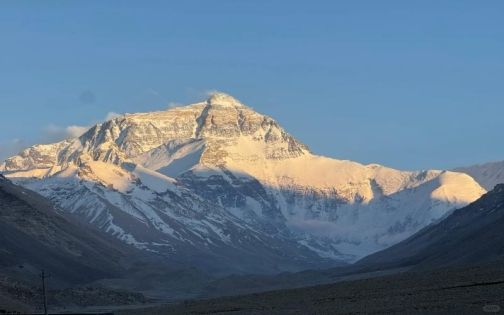
Based on the prices we encountered during our trip, the entrance ticket to the Everest scenic area was approximately RMB 160 per person, while the mandatory environmental shuttle bus cost around RMB 120 per person. That brings the basic cost to approximately RMB 280 per person.Additional vehicle-related fees may apply depending on the current regulations and whether vehicles are permitted to enter certain sections.Private vehicles generally cannot drive directly to the 5,200-meter Everest Base Camp viewing area. Travelers normally park at the Tashi Dzom transfer center and continue by scenic-area shuttle bus.The shuttle ride takes roughly 40–50 minutes, although actual travel time can vary depending on traffic and weather.If the weather is poor, it may be worth checking the conditions before committing to the full visit. Everest weather can change rapidly, and paying for the entrance only to find the summit completely hidden by clouds can be disappointing.
Everest Base Camp
Gyawula Pass: One of the Best Viewpoints on the Route
A High-Altitude Viewpoint Over the Himalayas
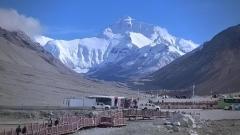
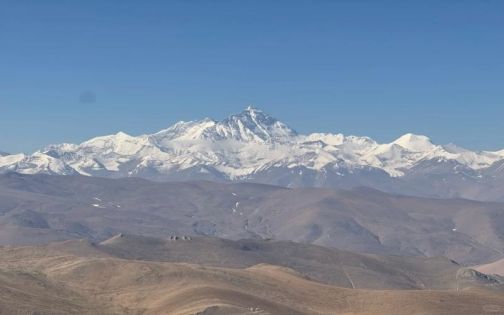
If there is one place along the route that deserves extra time, it is Gyawula Pass.At an elevation of around 5,198 meters, the pass is one of the major viewpoints on the road toward Everest. On a clear day, visitors can see several 8,000-meter-class peaks, including Mount Everest, Lhotse, Makalu, Cho Oyu and Shishapangma.The viewpoint also overlooks the famous winding road often known as the “108 bends” toward Everest.This is one of the biggest differences between Gyawula Pass and Everest Base Camp itself. Gyawula offers a much wider panoramic perspective, while the base camp provides a closer and more symbolic experience.However, weather is everything here. We waited at the viewpoint for several hours during our visit, but the clouds never completely cleared. We therefore did not get a perfect view of Everest that day.When planning an Everest trip, it is important to accept one simple fact: there is no guarantee that you will see the summit.
Best Photography Stops Along the Way
From Shigatse to Everest Base Camp
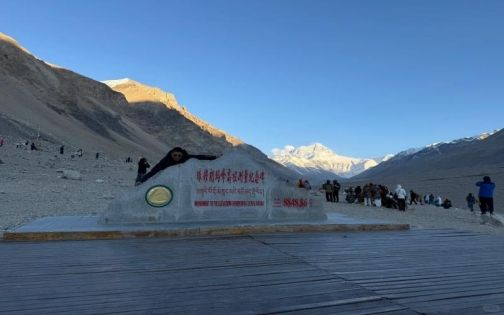
There are several worthwhile photography stops along the route, including the G318 5,000-kilometer milestone near Lhatse, Gyatso La Pass, Lulu Border Checkpoint, Gyawula Pass, the Red Flag Tunnel, Tashi Dzom transfer center and the 5,200-meter Everest Base Camp viewing area.Gyatso La Pass sits above 5,200 meters and offers views of prayer flags and surrounding mountains.Gyawula Pass is ideal for photographing the Himalayan peaks and the winding road below. The “Love Everest” frame at Ququla Pass is another popular photo spot.At Everest Base Camp, visitors can photograph the iconic Everest markers and the 8,848.86-meter monument.Bright-colored clothing works particularly well against the blue sky, snow and barren plateau. Red, yellow and orange jackets create strong contrast in photographs. Sunglasses, hats and scarves are also useful for both sun protection and photography.Always stay away from moving vehicles when taking photos, especially on mountain roads and near bends.
Is Everest Base Camp Worth the Entrance Fee?
The Answer Depends on What You Want From the Trip
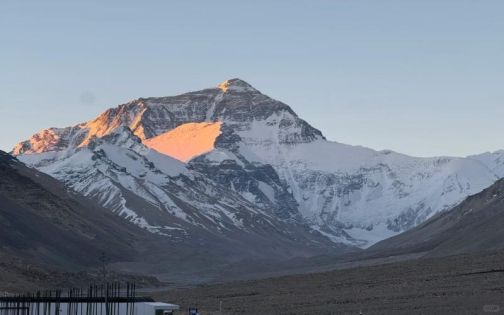
This was probably the biggest question we had after completing the journey.The main advantage of entering Everest Base Camp is that you get closer to Mount Everest and can experience the 5,200-meter viewing area. If the weather is clear, you may also have the chance to photograph the summit, sunset and, under good conditions, the night sky.For travelers who have always wanted to say “I have been to Everest Base Camp,” the experience has its own symbolic value.But from a pure scenery perspective, the base camp is not necessarily the best viewpoint on the entire route.Gyawula Pass has a much wider panorama and allows you to see several Himalayan peaks at once. By comparison, entering the base camp involves paying the entrance fee and shuttle fee, waiting for the scenic bus and spending considerable time traveling back and forth at very high altitude.During our trip, the weather was cloudy and the summit was hidden for much of the day. Considering the cost and the uncertain visibility, we decided not to enter the base camp at that time.The following day, the weather improved and we finally managed to see the summit.So, if your main goal is landscape photography, you may be perfectly satisfied with the viewpoints outside the base camp. If visiting the actual Everest Base Camp is an important personal goal, however, the experience can still be worthwhile.
Everest Base Camp
Where to Stay Near Everest Base Camp
Tashi Dzom and Tingri Are More Practical Options
For most travelers, staying overnight at around 5,000 meters is not the most comfortable option.Although there are tents and other accommodation options closer to Everest Base Camp, the altitude, cold temperatures, strong winds and basic facilities can make sleeping difficult.Tashi Dzom, also known as the Everest Town area, is a more practical place to stay. Some hotels and guesthouses offer oxygen facilities, making it easier for travelers to rest before or after visiting the base camp.During our trip, we stayed at Luozifeng Oxygen-Rich Hotel in Tingri. Our double room cost around RMB 105 including breakfast, while a three-person room was around RMB 168. The room was clean and comfortable, with a smart toilet. Breakfast included Tibetan sweet tea and traditional sweet pastries.Prices vary according to the season and room type, so always confirm the latest rate before booking.
Altitude and Safety Tips for Everest
Always Wear Your Seat Belt
One practical lesson from our trip was surprisingly simple: wear your seat belt.Three passengers sitting in the back of our vehicle were not wearing their seat belts and were each issued a traffic ticket.Regardless of whether you see traffic police along the way, everyone in the vehicle should wear a seat belt. The roads around Everest contain many bends, steep sections and mountain passes, so this is about safety rather than simply avoiding a fine.
Bring Enough Warm Clothing
The weather at Everest can change quickly.Even when the sun is shining, mountain passes can be extremely cold and windy. A lightweight down jacket, thermal base layer, windproof jacket, gloves and warm hat are all recommended.Do not forget sunglasses and sunscreen. UV exposure is particularly strong at high altitude.
Take Altitude Sickness Seriously
Everest Base Camp is around 5,200 meters above sea level. Even travelers who feel fine at lower elevations may experience symptoms after arriving at the base camp.A portable oxygen concentrator or portable oxygen cylinder can be useful for travelers who are concerned about altitude sickness.After getting off the shuttle bus, there is still some walking involved before reaching the main photo areas. Move slowly and avoid running or jumping simply for photographs.Do not use a blood oxygen reading alone to judge whether your body is adapting well. If you develop severe or worsening symptoms such as significant difficulty breathing, confusion or severe headache, stop sightseeing and seek medical assistance immediately.It is also useful to keep chocolate, energy bars and other high-calorie snacks in the vehicle, along with drinking water, wet tissues and garbage bags.Public toilets on the plateau can be basic, so whenever you find a relatively comfortable restroom, it is better to use it rather than wait for the next stop.
When Is the Best Time to Visit Everest Base Camp?
The most important factor is not simply the month you visit, but the weather on the actual day.Clear weather can reveal the summit, Himalayan range and spectacular sunset colors. On cloudy or snowy days, the entire mountain can disappear behind clouds even when you have already reached the viewing area.If your schedule allows, plan at least two days and one night rather than rushing the trip into a single day.Having some flexibility means you can adjust your sightseeing according to weather conditions and gives you a better chance of seeing Mount Everest.
Everest Base Camp
Final Tips for Visiting Everest Base Camp
A trip to Everest is better understood as a complete Himalayan road journey rather than simply a visit to one attraction.The landscape begins changing long before you reach the base camp: vast plateaus, barren valleys, snow-covered mountains, prayer flags, mountain passes and the winding road toward Everest gradually build the experience.If your priority is scenery and photography, spend more time at Gyawula Pass and other viewpoints along the way, and decide whether to enter the base camp according to the weather.If you have always wanted to stand at Everest Base Camp itself, the entrance fee and shuttle cost can be considered part of the experience rather than simply a sightseeing expense.Most importantly, do not sacrifice your safety just to get a photograph. Everest will still be there. The most memorable part of the journey may not be the final sign saying “Everest Base Camp,” but the moment the clouds suddenly open and the world’s highest mountain appears in front of you.