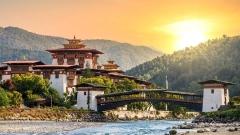

Bhutan is known for its monasteries, mountain scenery, and traditional architecture, but its religious festivals offer a deeper look at local culture. Colorful costumes, masked dances, traditional music, and community gatherings bring monastery courtyards to life. Festivals such as Tshechu are important religious occasions when Bhutanese people gather to pray, receive blessings, and celebrate their Buddhist heritage. For travelers, attending a festival can be a highlight of a Bhutan trip. Since dates follow the Bhutanese lunar calendar and vary by location and year, check the schedule before booking your journey.
Key Takeaways
- Bhutanese festivals combine religious ceremonies, masked dances, music, and community gatherings.
- Paro Tshechu and Thimphu Tshechu are among the best-known festivals for international visitors.
- Festival dates change each year because they follow the Bhutanese lunar calendar.
- Some festivals last several days, and individual performances take place at specific times.
- If attending a festival is a priority, plan your itinerary around confirmed dates rather than assuming the event will coincide with your travel period.
What Are Bhutanese Festivals?
Many of Bhutan’s most famous festivals are known as Tshechus, religious celebrations held at monasteries, dzongs, and other important Buddhist sites.
Tshechu means the tenth day of the lunar month and is associated with Guru Rinpoche, also known as Padmasambhava, who played a major role in establishing Buddhism in the Himalayan region. Tshechu celebrations commonly commemorate aspects of his life and teachings through religious ceremonies and ritual dances.
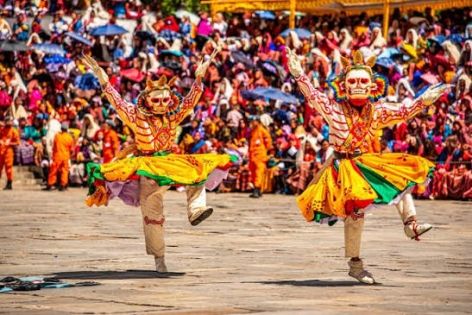
During a festival, monks and trained performers may wear elaborate masks and colorful costumes to perform traditional cham dances. These dances have religious symbolism and are intended to communicate Buddhist teachings, represent protective deities, and illustrate the triumph of good over evil.
The program varies between festivals. Some celebrations also feature folk dances, traditional music, ceremonial processions, and the display of large religious scroll paintings known as thongdrels.
For Bhutanese communities, these events are both spiritual occasions and important social gatherings. Families may travel from surrounding villages to attend, meet relatives, and receive blessings.
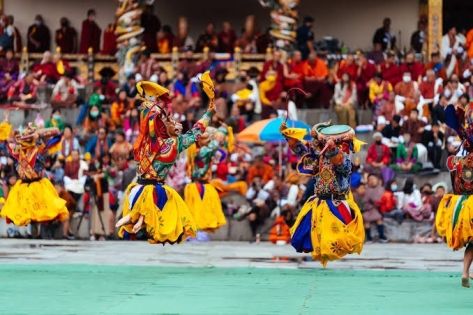
Thimphu Tshechu Festival
What Makes Bhutanese Festivals Special?
Masked Dances With Religious Meaning
Masked dances are among the most recognizable elements of Bhutanese festivals.
Performers wear masks representing different deities, animals, spiritual figures, or characters from Buddhist stories. Their costumes may include bright silk fabrics, intricate embroidery, and elaborate accessories.
Although the performances are visually striking, they are not simply entertainment. Many dances form part of religious rituals, with movements, music, and symbolic characters carrying specific meanings.
You do not need to understand every story to appreciate the performances. Watching the dancers move through the courtyard, hearing the traditional instruments, and observing how local people respond can make the experience memorable.
A Chance to See Bhutanese Culture in Daily Life
Festivals also bring together people from different communities and generations.
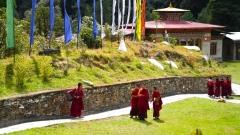
Many Bhutanese attend in traditional clothing, including the gho worn by men and the kira worn by women. Families gather in the courtyard, children watch the performances, and people move between religious ceremonies and social conversations.
For visitors, this provides an opportunity to see traditions practiced by local communities rather than presented exclusively for tourists.
The Thongdrel Unfurling
Some of Bhutan’s major festivals include the display of a thongdrel, a large religious appliqué or scroll painting depicting Buddhist figures.
At certain festivals, it is unfurled before dawn on a designated day. The display is an important religious occasion, and devotees may gather to receive blessings by viewing it.
Not every festival includes a thongdrel display, and the timing depends on the individual event. If this is something you hope to witness, confirm the festival program in advance and be prepared for an early start.
Which Bhutanese Festivals Should Travelers Know About?
Bhutan has festivals throughout the year, and each region has its own calendar and traditions. The following are some of the best-known events to consider when planning a cultural trip.
Paro Tshechu
Paro Tshechu is one of Bhutan’s most famous religious festivals and a popular choice for first-time visitors.
Held at Rinpung Dzong in Paro, the festival features masked dances, religious ceremonies, and traditional performances in a historic fortress setting.
Its location makes it relatively easy to combine with other Paro attractions, including Ta Dzong, Kyichu Lhakhang, and the famous Tiger’s Nest hike.
The festival generally takes place in spring, although the exact dates vary each year.
Paro can become especially busy during the celebration, so accommodation and transportation should be arranged well in advance. If you want to experience the festival without spending every day in a crowd, consider balancing festival attendance with quieter sightseeing elsewhere in the valley.
Thimphu Tshechu
Thimphu Tshechu is another major festival, held in Bhutan’s capital at Tashichho Dzong.
It draws large numbers of local people and visitors, making it one of the country’s most prominent public cultural events.
The festival provides opportunities to watch religious dances and observe how people gather to participate in an important part of Bhutanese religious life. The atmosphere can be lively, with traditional clothing adding color to the courtyard.
Thimphu Tshechu usually takes place in autumn. Its timing makes it an option for travelers who want to combine festival attendance with Bhutan’s clearer autumn mountain views, although weather conditions can still vary.
Because the capital is a major travel hub, the festival can often be included in a broader western Bhutan itinerary connecting Thimphu, Punakha, and Paro.
Punakha Drubchen and Punakha Tshechu
Punakha is home to two important religious celebrations: Punakha Drubchen and Punakha Tshechu.
Punakha Drubchen is particularly known for reenactments inspired by Bhutan’s historical military conflicts and the defense of the country. Participants wear traditional warrior attire and perform scenes associated with Bhutanese history.
Punakha Tshechu, held at Punakha Dzong, features religious masked dances and other ceremonial activities.
These events offer a different perspective from the better-known festivals in Paro and Thimphu because they combine religious practice with historical narratives connected to the region.
Punakha is also known for its river scenery and historic dzong, making it a rewarding destination even outside festival dates.
Jambay Lhakhang Drup
Jambay Lhakhang Drup takes place at Jambay Lhakhang in Bumthang, one of Bhutan’s important religious regions.
The festival is known for its traditional dances and distinctive nighttime rituals. One of the best-known events is the Mewang, a fire ceremony in which participants pass through or leap across a burning structure as part of the ritual.
The festival also includes masked dances and religious performances.
Because Bumthang is farther from Bhutan’s main western tourist circuit, visiting this festival usually requires more time than attending events in Paro or Thimphu. For travelers who want to explore more of central Bhutan and its religious heritage, however, it can be a worthwhile addition.
Tshechu Festivals
Haa Summer Festival
The Haa Summer Festival differs from the major religious Tshechu celebrations.
Held in the Haa Valley, it focuses more on local culture, pastoral traditions, traditional sports, food, music, and community activities.
Depending on the program, visitors may see local performances, traditional clothing, regional cuisine, and demonstrations connected to rural life.
It is a useful option for travelers who want to experience Bhutanese culture outside a primarily religious setting. However, it is a seasonal event, and the schedule and activities should be checked before planning a visit around it.
When Is the Best Time to Visit Bhutan for Festivals?
There is no single festival season that covers all of Bhutan. Celebrations take place at different times throughout the year.
Spring: Paro Tshechu is a major highlight, and the season can be combined with visits to Paro, Thimphu, and Punakha.
Summer: Travelers may find local cultural events and seasonal festivals, including the Haa Summer Festival in years when it is scheduled.
Autumn: Thimphu Tshechu is a key event for travelers interested in religious masked dances and traditional gatherings.
Late autumn and winter: Some regional festivals take place during the cooler months, including Jambay Lhakhang Drup in Bumthang, depending on the annual calendar.
The most important point is that festival dates are based on the Bhutanese lunar calendar. Their Gregorian calendar dates therefore change from year to year.
Before booking flights or accommodation, check the officially announced dates for the specific festival you want to attend. Avoid relying entirely on dates listed for a previous year.
How Long Should You Spend at a Bhutanese Festival?
The ideal amount of time depends on how closely you want to follow the program.
A few hours may be enough to experience part of a festival, watch selected dances, and observe the atmosphere.
One full day gives you more time to watch several performances and understand how the event unfolds.
Two or more days may be worthwhile for major festivals that last several days, particularly if you want to see different ceremonies rather than only the most famous performance.
You do not necessarily have to attend every day. If your trip includes several destinations, you can choose a day that features the ceremonies or performances that interest you most.
Before deciding, check the published schedule. Important events, including thongdrel displays at festivals where they occur, may take place at specific times and should not be assumed to happen every day.
What Should You Wear to a Bhutanese Festival?
There is no need to wear traditional Bhutanese clothing as a visitor, but respectful attire is important.
Choose clothes that cover your shoulders and knees, particularly when the festival takes place inside a monastery or dzong. Avoid clothing that is excessively revealing, and bring an extra layer if the event is held outdoors in cool weather.
Some travelers choose to wear local clothing purchased or borrowed during their trip, but this is entirely optional.
Comfortable shoes are useful because you may need to stand or walk around the festival grounds for several hours.
If you plan to attend an early-morning ceremony, bring warm clothing. Temperatures can be low, particularly during autumn and winter festivals or at higher elevations.
Can You Take Photos During Bhutanese Festivals?
Photography is often possible in designated areas, but rules vary by festival, venue, and ceremony.
Some outdoor dances may be photographed, while certain indoor or sacred areas may prohibit photography or video recording. Rules can also differ for specific religious displays.
Before taking photos, look for signs and follow instructions from festival staff or local authorities. If you have a guide, ask them to clarify the rules.
It is also important to be considerate of people attending for religious reasons. Avoid blocking their view, stepping into performance areas, or using flash if it is not permitted.
When photographing local people, especially children or close-up portraits, asking permission is a respectful approach.
What Should Travelers Know About Crowds?
Major festivals can attract large crowds, particularly Paro Tshechu and Thimphu Tshechu.
You may find it difficult to move freely through the courtyard during popular performances, and viewing areas can fill up early.
A few practical steps can make the experience easier:
- Arrive early to find a suitable viewing position.
- Carry water and dress for the weather.
- Keep valuables secure in crowded areas.
- Follow designated access routes and the instructions of festival staff.
- Allow extra time for traffic and transportation after the event.
If you prefer a quieter cultural experience, consider a smaller regional festival or visit Bhutan outside the busiest festival dates. These options may offer a different atmosphere, although local festivals can still attract substantial community attendance.
How to Combine a Festival With a Bhutan Itinerary
Festival travel works best when the rest of your itinerary is planned around the event rather than squeezed into the same day.
For example, travelers attending Paro Tshechu can explore Paro’s cultural landmarks before or after the festival and dedicate a separate day to Tiger’s Nest.
A Thimphu Tshechu trip can be combined with sightseeing in the capital, followed by a visit to Punakha and its historic dzong.
If you plan to attend Jambay Lhakhang Drup in Bumthang, allow additional travel time for central Bhutan rather than trying to fit it into a short western Bhutan itinerary.
For first-time visitors with limited vacation time, a route connecting Paro, Thimphu, and Punakha is often a practical starting point. The exact festival date will determine how the order of destinations should be arranged.
The key is to leave enough time for both the festival and the rest of Bhutan. A religious celebration is often most rewarding when you can observe it without worrying about rushing to the next attraction.
Are Bhutanese Festivals Suitable for Families?
They can be a rewarding experience for families who want to introduce children to Bhutanese culture.
The colorful costumes, rhythmic music, masked dances, and large communal gatherings can be engaging for visitors of different ages. Children can also learn about Buddhist traditions and how festivals remain part of community life.
However, major festivals can be crowded, and some ceremonies involve long periods of standing or sitting outdoors. Families should consider their children’s comfort, bring suitable clothing and water, and avoid trying to attend every performance.
If you are traveling with very young children, choosing a convenient viewing position and keeping the rest of the day flexible can make the experience more comfortable.
Are Bhutanese Festivals Worth Planning a Trip Around?
For travelers interested in religion, history, performing arts, photography, and local traditions, a Bhutanese festival can become one of the highlights of the trip.
The masked dances are visually striking, but their deeper appeal lies in their religious meaning and their continuing role in Bhutanese society. Festivals also bring together local communities, traditional clothing, music, and centuries-old customs in a setting that is difficult to experience through ordinary sightseeing alone.
The best choice depends on the kind of journey you want. Paro Tshechu and Thimphu Tshechu are strong options for first-time visitors, while Punakha’s celebrations and Jambay Lhakhang Drup offer other perspectives on Bhutanese history and religious traditions. The Haa Summer Festival, meanwhile, provides a more community-focused cultural experience.
Plan around confirmed festival dates, allow enough time to enjoy the ceremonies, and approach the event with respect for its religious significance. That way, a festival visit can offer more than a memorable photograph; it can help you understand the culture and traditions that make Bhutan distinctive.