
Bhutan is full of remarkable monasteries, temples, and dzongs, but two landmarks tend to stand out more than most: Tiger’s Nest and Punakha Dzong. One is dramatically perched on a forested cliff above the Paro Valley; the other sits at the meeting point of two rivers in one of Bhutan’s most beautiful valleys.
They are very different experiences. Tiger’s Nest is associated with a memorable mountain hike and one of Bhutan’s most important Buddhist sites, while Punakha Dzong offers grand architecture, history, and a more relaxed visit.
So, which one should you choose?
The answer depends less on which landmark is more famous and more on what kind of Bhutan experience you are looking for. Understanding the differences in scenery, walking, history, atmosphere, and travel time can make your decision much easier.
Key Takeaways
- Tiger’s Nest is ideal for travelers who want iconic mountain scenery, a hiking experience, and one of Bhutan’s best-known religious landmarks.
- Punakha Dzong is a better fit for travelers interested in architecture, history, riverside scenery, and a less physically demanding visit.
- The Tiger’s Nest excursion usually takes several hours because of the uphill hike.
- Punakha Dzong is much easier to access and can be comfortably combined with other attractions in Punakha.
- The two landmarks offer very different experiences, so many travelers choose to visit both rather than treat them as alternatives.
What Makes Tiger’s Nest So Special?
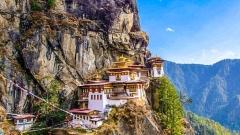
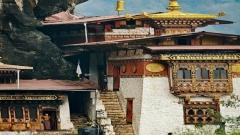
Taktshang Monastery, widely known as Tiger’s Nest, is perhaps the image most closely associated with Bhutan.
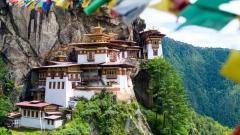
The monastery is built into the cliffs above the Paro Valley, surrounded by forests and steep mountain slopes. Its location alone makes it extraordinary. Long before you reach the entrance, you can already see the white buildings clinging to the mountainside.
But Tiger’s Nest is more than a scenic viewpoint.
According to Bhutanese Buddhist tradition, Guru Rinpoche, also known as Padmasambhava, is believed to have arrived at this location on the back of a tigress and meditated here. The site later developed into an important Buddhist sacred place.
For visitors, the experience begins long before reaching the monastery. The trail climbs through forest, opens onto mountain viewpoints, and eventually reaches the famous section where Tiger’s Nest appears across the ravine.
That gradual approach is part of what makes the visit memorable.
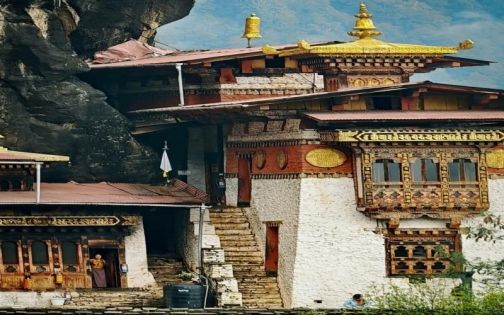
Tiger’s Nest
Tiger’s Nest Is as Much About the Journey as the Destination
Unlike many sightseeing attractions, you cannot simply drive up to Tiger’s Nest.
You have to walk.
The round trip commonly takes several hours, depending on your pace, rest stops, and how much time you spend at the monastery. The trail includes sustained uphill sections, so comfortable walking shoes and plenty of water are important.
For travelers who enjoy hiking, this can make the experience even more rewarding.
For those who prefer easy sightseeing, however, the hike is the main factor to consider.
What Makes Punakha Dzong Different?
If Tiger’s Nest is about dramatic elevation and a memorable hike, Punakha Dzong is about architecture, history, and landscape.
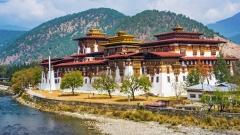
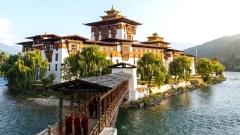
The dzong stands at the confluence of the Pho Chhu and Mo Chhu rivers, surrounded by mountains and fertile valleys. Its setting is striking without requiring a strenuous climb.
Punakha Dzong was built in the 17th century under Zhabdrung Ngawang Namgyal, an important figure in Bhutanese history. Punakha itself served as Bhutan’s capital until 1955, and the dzong remains an important religious center.
It is also known as the winter residence of the Central Monastic Body.
Walking through the complex, visitors can see massive exterior walls, traditional Bhutanese wooden details, courtyards, temples, and intricately decorated interiors.
Compared with Tiger’s Nest, the experience feels more architectural and historical.
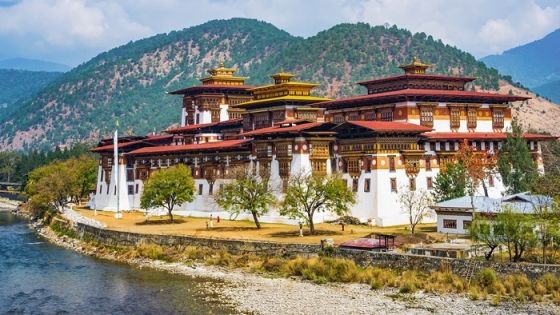
Punakha Dzong
The Surrounding Landscape Is Part of the Attraction
Punakha Dzong is not an isolated building.
The rivers, agricultural land, surrounding hills, and valley setting all contribute to the experience. Depending on the season, the area can look particularly green, while the dzong itself creates a strong contrast against the surrounding landscape.
For photographers, this creates more possibilities than simply photographing the building from inside. The exterior can be framed against the rivers, trees, bridges, and mountains.
Tiger’s Nest vs Punakha Dzong: What Is the Biggest Difference?
The simplest way to understand the two is to think about the kind of experience each one provides.
| Tiger’s Nest | Punakha Dzong |
|---|---|
| Cliffside monastery | Historic fortress-monastery |
| Located above Paro Valley | Located at a river confluence |
| Requires several hours of walking | Much easier to access |
| Strong focus on pilgrimage and landscape | Strong focus on history and architecture |
| Dramatic mountain views | River, valley, and mountain scenery |
| More physically demanding | More relaxed sightseeing |
| Located in Paro | Located in Punakha |
Neither experience is simply a shorter or easier version of the other. They offer different reasons to visit.
Which Is Better for Scenery?
If your main priority is dramatic mountain scenery, Tiger’s Nest has a clear advantage in terms of visual impact.
The monastery itself is built into a steep cliff, and the trail provides changing perspectives as you climb. The combination of forest, cliffs, distant valley views, and traditional architecture creates the kind of landscape that often becomes the defining image of a Bhutan trip.
Punakha offers a different kind of beauty.
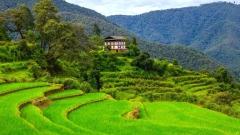
Its landscape is broader and softer, with rivers winding below the dzong and green valleys extending toward the surrounding mountains.
So the choice depends on your photography or sightseeing style.
Tiger’s Nest: cliffs, mountains, forests, elevation, dramatic viewpoints.
Punakha Dzong: rivers, valleys, architecture, gardens, and broader landscapes.
Which Is Better for History and Architecture?
Both are culturally important, but Punakha Dzong offers a particularly strong architectural experience.
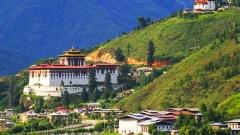
The scale of the dzong is impressive, especially when you first approach it from the valley. Inside, the courtyards and religious spaces reveal Bhutanese construction techniques and decorative traditions.
Tiger’s Nest, meanwhile, is deeply connected to Bhutanese Buddhist traditions and sacred geography. Its importance comes not only from the buildings themselves but also from the religious history associated with the site.
Travelers interested in Buddhist pilgrimage and sacred places may find Tiger’s Nest especially meaningful.
Those more interested in fortress architecture, Bhutanese history, and traditional design may enjoy Punakha Dzong more.
Which One Requires More Physical Effort?
This is probably the easiest part of the comparison.
Tiger’s Nest requires significantly more walking.
The monastery sits high above the valley and can only be reached through the hiking trail. Even travelers who are generally active should expect a steady uphill climb and should allow enough time to rest.
The route can feel more demanding depending on weather, fitness, and how comfortable you are walking at altitude.
Punakha Dzong is much more accessible.
There is still walking once you arrive, but you do not need to spend several hours climbing a mountain to see the main attraction.
This makes Punakha a practical choice for travelers who prefer a slower sightseeing pace.
Which Is Better for Families and Older Travelers?
This depends on the individual, but the physical difference between the two should be taken seriously.
For families with young children, Punakha Dzong is generally easier to enjoy because there is no long uphill hike required to reach the main site.
For older travelers, mobility and fitness are particularly important when deciding whether to do the Tiger’s Nest hike. Some older travelers complete the hike successfully, while others may prefer to experience Paro through easier cultural attractions.
Punakha is usually easier to include in a relaxed itinerary, especially when combined with scenic stops and short village walks.
This does not mean Tiger’s Nest is unsuitable for families or older travelers. It simply means the hiking portion needs to be considered when planning the day.
Which One Is Better for a Short Bhutan Trip?
For a trip of only a few days, both landmarks can fit into a western Bhutan itinerary because they are in different destinations that are commonly visited together.
A typical route can connect:
Paro → Thimphu → Punakha → Paro
Tiger’s Nest can be explored during your time in Paro, while Punakha Dzong becomes the main cultural highlight after traveling from Thimphu.
This is one reason many first-time visitors do not actually have to choose between the two.
Instead, the landmarks can form two different highlights of the same journey.
Tiger’s Nest gives the trip its most memorable hike and mountain setting, while Punakha provides a slower cultural and architectural experience.
Can You Visit Both in One Trip?
Yes, and for many travelers this is one of the best ways to experience Bhutan’s western region.
The two sites complement each other particularly well.
After spending time in the high mountain environment around Tiger’s Nest, Punakha provides a noticeably different atmosphere. The valley is warmer, greener, and shaped by rivers and agriculture.
Likewise, after exploring Punakha Dzong and its historic surroundings, returning to Paro for Tiger’s Nest shifts the focus back toward mountain scenery and pilgrimage.
Rather than repeating the same type of sightseeing, the two landmarks add contrast to the itinerary.
What Kind of Traveler Would Prefer Tiger’s Nest?
Tiger’s Nest may appeal more to you if:
You enjoy hiking.
The journey to the monastery is part of the attraction.
You want Bhutan’s most iconic landscape.
The cliffside setting is difficult to confuse with anywhere else.
You are interested in Buddhist sacred sites.
The monastery has major religious significance in Bhutan.
You enjoy photography.
The trail offers multiple viewpoints and changing perspectives.
You like experiences that feel earned.
Reaching the monastery after the uphill walk creates a different feeling from simply arriving by vehicle.
What Kind of Traveler Would Prefer Punakha Dzong?
Punakha Dzong may be more appealing if:
You prefer architecture and history.
The scale, design, and historical importance of the dzong make it a strong cultural attraction.
You want a more relaxed sightseeing day.
There is no long mountain hike before you can enjoy the site.
You enjoy rivers and valley landscapes.
The location at the meeting point of two rivers is one of its defining features.
You are traveling with family.
The accessibility makes it easier to include in a varied family itinerary.
You want to understand Bhutan’s historical development.
Punakha’s former role as the capital adds another layer to the visit.
How Long Should You Stay Around Each Landmark?
Tiger’s Nest deserves most of a day because the hike, time at the monastery, photography stops, and return journey can take several hours.
It is better not to schedule too many other major attractions on the same day.
Punakha Dzong is easier to combine with other nearby experiences. A visit can be included alongside Dochula Pass, Chimi Lhakhang, village walks, and scenic drives through the Punakha Valley.
That makes Punakha particularly useful for travelers trying to get a lot out of a relatively short Bhutan itinerary.
The Two Landmarks Tell Different Stories About Bhutan
The most interesting thing about this comparison is that Tiger’s Nest and Punakha Dzong represent two different sides of Bhutan.
Tiger’s Nest shows Bhutan as a mountain pilgrimage destination, where religion and landscape are closely connected.
Punakha Dzong shows Bhutan through its history, architecture, political heritage, and river valleys.
One asks you to climb into the mountains.
The other invites you to slow down and explore a historic complex surrounded by a fertile landscape.
That contrast is useful to remember when planning a Bhutan trip. A journey built entirely around dramatic viewpoints can miss the cultural depth of the country, while visiting only historic buildings may leave out some of Bhutan’s extraordinary mountain scenery.
Should You Visit Tiger’s Nest or Punakha Dzong?
For travelers with enough time, there is little reason to treat Tiger’s Nest and Punakha Dzong as mutually exclusive.
Choose Tiger’s Nest when your priority is a famous mountain landmark, Buddhist pilgrimage, hiking, and dramatic scenery.
Choose Punakha Dzong when your priority is architecture, history, river landscapes, and a more relaxed sightseeing experience.
And for a first trip to Bhutan, visiting both can provide a much broader picture of the country. One takes you high into the mountains of Paro, while the other brings you into the historic heart of Punakha.
That difference is exactly what makes the two landmarks worth comparing in the first place.