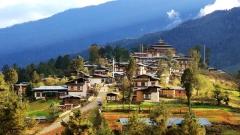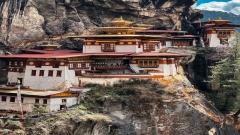

Hidden in the mountains of central Bhutan, Phobjikha Valley is a peaceful highland destination known for its wide open meadows, traditional villages, and dramatic mountain scenery. It is also one of the most important winter habitats for the black-necked crane, which migrates to the valley from the Tibetan Plateau each year.
Unlike Paro or Thimphu, where major cultural landmarks are often the focus, Phobjikha offers a slower experience. You can walk across the valley, visit the historic Gangtey Monastery, learn about the cranes, and spend time surrounded by forests and traditional Bhutanese homes. For travelers who want to see a quieter and more natural side of Bhutan, Phobjikha Valley is a rewarding addition to a western or central Bhutan itinerary.
Key Takeaways
- Phobjikha Valley is a scenic highland valley in central Bhutan and an important habitat for black-necked cranes.
- Gangtey Monastery is the valley’s main cultural landmark.
- The Black-Necked Crane Visitor Centre offers an introduction to the birds and the valley’s conservation efforts.
- Walking is one of the best ways to experience the landscape, with trails passing through meadows, forests, and villages.
- The crane season generally runs from late October to February, making winter a particularly interesting time to visit.
- Phobjikha is ideal for travelers who enjoy nature, photography, village life, and a slower pace.
Where Is Phobjikha Valley?
Phobjikha Valley is located in Wangdue Phodrang District in central Bhutan, at an elevation of roughly 3,000 meters.
The valley sits below the Black Mountains and is surrounded by forested hills. Its broad floor is quite different from the steeper landscapes found in many parts of Bhutan.
There is no major city in the valley. Instead, the landscape is shaped by open meadows, farmland, scattered houses, monasteries, and winding roads.
The main settlement is Gangtey, which is closely associated with the valley’s most important monastery.
Because of its location, Phobjikha is commonly visited as part of a route connecting destinations such as Thimphu, Punakha, Gangtey, and Paro.
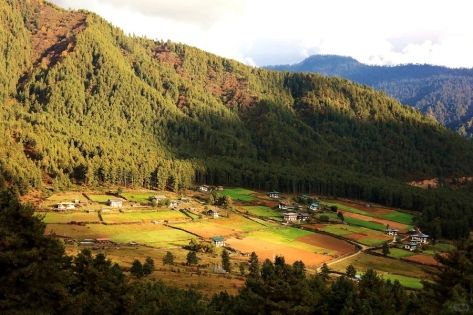
Phobjikha Valley, Bhutan
Why Is Phobjikha Valley Famous?
There are several reasons travelers come to Phobjikha, but three stand out: the black-necked cranes, Gangtey Monastery, and the valley itself.
The landscape is unusually open for Bhutan. Instead of narrow mountain valleys covered mainly by forests, Phobjikha spreads out into a broad grassland basin.
This makes it especially attractive to photographers.
In the distance, you can see layers of mountains, while the valley floor is dotted with traditional farmhouses and fields. During different seasons, the colors change considerably, from green summer meadows to the more muted tones of winter.
The arrival of black-necked cranes adds another dimension to the valley and has become an important part of its identity.
See the Black-Necked Cranes
The black-necked crane is perhaps the most famous visitor to Phobjikha Valley.
These high-altitude birds migrate to Bhutan during the winter, arriving after spending the warmer months in breeding grounds on the Tibetan Plateau and in surrounding highland regions.
They usually begin arriving around late October or early November, and many remain through the winter before departing around February.
The exact timing can vary from year to year, so visitors hoping to see the cranes should treat these months as a seasonal window rather than guaranteed dates.
During the winter season, the birds can often be seen feeding and moving across the valley’s open grasslands.
Because they are protected wildlife, visitors should observe them from designated areas and avoid getting too close or disturbing them.
Black-Necked Crane Visitor Centre
The Black-Necked Crane Visitor Centre is one of the best places to learn about the birds before exploring the valley.
The center provides information about black-necked cranes, their migration patterns, their habitat, and conservation work in Bhutan.
Even if you visit outside crane season, the center can help you understand why Phobjikha is environmentally important.
For families, it is also a useful stop because it makes the wildlife experience more informative and easier to understand.
Visit Gangtey Monastery
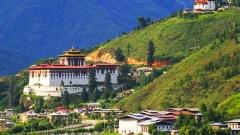
The valley’s most important cultural landmark is Gangtey Monastery, also known as Gangteng Monastery.
The monastery overlooks the Phobjikha Valley and has deep connections with Bhutan’s Nyingma Buddhist tradition.
Its elevated position provides a broad view across the valley, making the monastery interesting both as a religious site and as a scenic viewpoint.
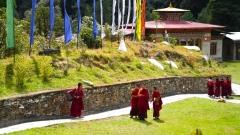
Visitors can explore the monastery’s traditional architecture, courtyards, religious spaces, and surrounding grounds.
The experience is quite different from visiting a major attraction in a city. The monastery feels closely connected to the surrounding landscape and to the local communities living in the valley.
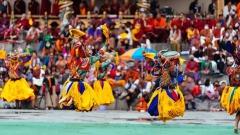
If you visit during a religious festival, the atmosphere can be especially lively, with traditional ceremonies, music, dances, and local participation.
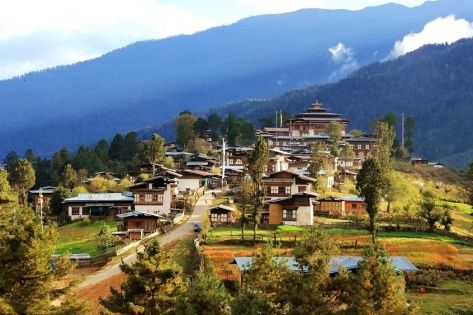
Gangtey Monastery, Bhutan
Walk the Gangtey Nature Trail
One of the best ways to experience Phobjikha is simply to walk.
The Gangtey Nature Trail is a relatively gentle route through the valley and surrounding landscape. It passes through forests, open meadows, and areas overlooking the valley.
Compared with a demanding Himalayan trek, this is a much more relaxed walking experience.
The trail is particularly enjoyable for travelers who want to spend time outdoors without committing to a full-day mountain hike.
Along the way, you may see farmhouses, grazing animals, birds, and changing views of the valley.
The landscape is especially attractive in the morning when the light falls across the grasslands and surrounding mountains.
Explore Traditional Villages and Farmhouses
Phobjikha is not only a nature destination. It is also a place where you can observe traditional Bhutanese rural life.
The valley is home to farming communities, and traditional houses are scattered throughout the landscape.
A village walk allows you to see a side of Bhutan that can be missed when traveling only between major cultural attractions.
Look for traditional house designs, fields, prayer flags, agricultural activity, and mountain views.
Depending on the time of year, you may see different stages of farming and seasonal work.
Travelers should always be respectful when photographing homes or local residents, particularly when entering private areas.
Experience Phobjikha in Different Seasons
Phobjikha changes dramatically throughout the year.
Autumn
Autumn is one of the most interesting periods because it overlaps with the arrival of the first black-necked cranes.
The valley begins to take on a warmer, more muted color palette, while clear weather can provide excellent mountain views.
Winter
Winter is the key season for crane watching.
From around late October or November through February, migratory cranes can be seen in the valley when conditions are suitable.
Temperatures can be cold, especially in the morning and evening, so warm clothing is essential.
The winter landscape can feel particularly peaceful, with fewer distractions and broad open views across the valley.
Spring
Spring brings gradual changes to the valley as temperatures rise and vegetation begins to recover.
This can be a pleasant time for walking and photography, although the cranes generally begin leaving by this stage.
Summer
Summer is greener and generally more humid, with lush vegetation across the valley.
Rain can affect roads and walking conditions, but the landscape can look beautifully fresh after wet weather.
For travelers focused on greenery rather than cranes, summer offers a different reason to visit.
How Much Time Do You Need in Phobjikha Valley?
Phobjikha does not require a long stay to appreciate, but an overnight visit is often more rewarding than a quick stop.
A few hours can work if your main goal is visiting Gangtey Monastery and seeing the valley.
One night gives you enough time to explore the monastery, walk through the valley, visit the crane center, and enjoy the scenery without rushing.
Two nights can be useful for photographers and nature lovers who want more flexibility for weather, sunrise, walking, or wildlife observation.
For most travelers, one or two nights is enough.
How Do You Get to Phobjikha Valley?
Phobjikha is a road-trip destination rather than a place you normally visit as a quick side trip from Paro.
The valley is often incorporated into routes between Punakha and central Bhutan.
From Punakha, the drive toward Phobjikha takes several hours and includes mountain roads and changing elevations. The journey itself is part of the experience, with forests, mountain passes, and rural scenery along the way.
From Thimphu, the journey is longer, so it makes more sense to include Phobjikha as part of a multi-day itinerary rather than trying to make it a short excursion.
Road conditions and travel times can vary, particularly during the rainy season or winter.
What Should You Bring to Phobjikha?
Phobjikha’s elevation means that the valley can be significantly cooler than lower destinations in Bhutan.
Pack warm layers, particularly if you are visiting in autumn or winter.
Comfortable walking shoes are also important, especially if you plan to follow the nature trail or explore villages on foot.
Sun protection remains useful even when temperatures are low. Sunglasses, sunscreen, and a hat can be helpful during daytime activities.
A camera with a telephoto lens is useful during crane season because the birds should be observed from a respectful distance.
It is also worth carrying some basic personal supplies because Phobjikha is much quieter and less developed than Bhutan’s main towns.
Is Phobjikha Valley Suitable for Families?
Phobjikha can work very well for family travel because the experience is not built around difficult trekking.
Children can learn about black-necked cranes, walk through open meadows, visit Gangtey Monastery, and experience traditional village landscapes.
The open valley also provides plenty of space to explore compared with a busy city.
During winter, however, cold temperatures should be taken into account, especially for younger children.
Families who want to see the cranes should also understand that wildlife sightings cannot be guaranteed on a specific day or at a specific location.
Is Phobjikha Suitable for Older Travelers?
For older travelers, Phobjikha can be a comfortable destination as long as the itinerary is planned at a relaxed pace.
Most sightseeing does not require strenuous hiking, and the valley can be enjoyed through scenic drives, easy walks, and cultural visits.
The main consideration is altitude. At around 3,000 meters, Phobjikha is significantly higher than many of Bhutan’s lower valleys.
Travelers should allow themselves time to adjust to the altitude and avoid overexertion, particularly during the first day.
Those who prefer easy walking can skip longer trails and focus on Gangtey Monastery, the visitor center, scenic viewpoints, and village surroundings.
Why Is Phobjikha Great for Photography?
Phobjikha offers a different type of photography from Bhutan’s famous architectural landmarks.
Instead of focusing mainly on monasteries and dzongs, you can work with large landscapes and natural layers.
A single image can include:
- Open meadow + traditional farmhouse + mountain backdrop
- Black-necked cranes + winter grassland
- Gangtey Monastery + valley landscape
- Prayer flags + forested mountain slopes
The broad valley also makes it easier to experiment with panoramic compositions.
For wildlife photography during crane season, a longer lens is preferable because maintaining distance is important.
Early morning and late afternoon can provide softer light and more pronounced shadows across the hills and valley floor.
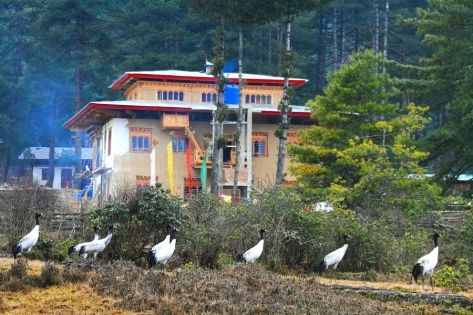
Bhutan Black-Necked Cranes
Can You Combine Phobjikha With Punakha?
Yes, and this is one of the most natural ways to include Phobjikha in a Bhutan itinerary.
A route such as:
Thimphu → Punakha → Phobjikha → Paro
creates a good progression from the capital to river valleys and then into a highland landscape.
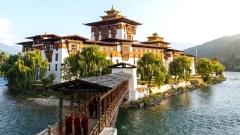
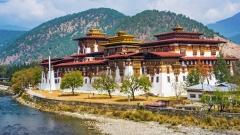
Punakha offers a warmer environment, rice fields, rivers, and Punakha Dzong, while Phobjikha provides a colder, broader mountain valley with forests and open grasslands.
The contrast between the two destinations makes the journey more varied.
Is Phobjikha Worth Visiting Outside Crane Season?
Yes.
The black-necked cranes are one of Phobjikha’s biggest attractions, but they are not the only reason to visit.
Outside winter, you can still enjoy the valley’s natural scenery, Gangtey Monastery, village life, walking trails, and changing seasonal landscapes.
Spring and summer can be particularly attractive for travelers who prefer greener scenery and outdoor walks.
Autumn offers a nice balance between changing vegetation and the beginning of the crane season.
So while winter is especially appealing for wildlife enthusiasts, Phobjikha remains a scenic destination throughout the year.
What Makes Phobjikha Different From Bhutan’s Other Destinations?
Phobjikha feels different because it is less about individual monuments and more about the relationship between landscape, wildlife, religion, and rural life.
Paro has Tiger’s Nest and a concentration of historic sites.
Thimphu offers the country’s urban and cultural center.
Punakha combines rivers, fertile valleys, and one of Bhutan’s most important dzongs.
Phobjikha is quieter and more open.
Here, you can spend the morning visiting Gangtey Monastery, walk through the valley in the afternoon, and simply watch the mountains change color as the light moves across the meadows.
During crane season, the experience becomes even more distinctive as migratory birds return to the valley.
Planning a Phobjikha Valley Visit
Phobjikha Valley is best suited to travelers who want to slow down and experience a quieter side of Bhutan.
For nature lovers, the valley offers open mountain landscapes and seasonal wildlife. For photographers, it provides traditional villages, expansive scenery, monasteries, and birds. For culture-focused travelers, Gangtey Monastery and local traditions add another layer to the visit.
The most famous reason to come is the black-necked crane, particularly from late autumn through winter, but the valley has much more to offer beyond birdwatching.
Whether you stay for one night or two, Phobjikha can add a completely different rhythm to a Bhutan journey: fewer major attractions, more open space, and more time to simply observe the landscape and the life within it.