
For many first-time visitors to Tibet, Nyingchi and Everest Base Camp are both high on the wish list. Nyingchi offers forests, alpine lakes, valleys, and the dramatic Namcha Barwa, while Everest Base Camp provides an entirely different experience beneath the world’s highest mountain. The good news is that you do not have to choose between them. With the right itinerary, it is possible to combine both in one trip and experience two very different sides of Tibet. The key is allowing enough days for transportation and altitude acclimatization rather than trying to squeeze everything into a rushed schedule.
Key Takeaways
- Nyingchi and Everest Base Camp can be combined in one Tibet itinerary.
- A route such as Nyingchi → Lhasa → Shigatse → Everest Base Camp works well for first-time visitors.
- Nyingchi offers lower-altitude forests and lakes, while Everest provides high-altitude Himalayan scenery.
- 10–12 days is a comfortable length for combining both destinations; 8 days is possible but more tightly paced.
- Starting in Nyingchi can provide a more gradual increase in altitude, although it cannot guarantee that altitude sickness will be avoided.
- September and October are particularly attractive for combining Nyingchi’s autumn scenery with clearer Himalayan mountain views.
Can You Visit Nyingchi and Everest Base Camp on the Same Trip?
Yes. In fact, combining the two can create a particularly diverse Tibet experience.
Nyingchi and Everest represent two very different landscapes.
In Nyingchi, you’ll find:
- Forested valleys
- Alpine lakes
- Grasslands
- Snow peaks
- Tibetan villages
Around Everest, the scenery becomes much more rugged:
- High-altitude plateaus
- Glaciers
- Himalayan peaks
- Remote valleys
- Vast open landscapes
Instead of choosing between the green landscapes of southeastern Tibet and the dramatic mountains of the Himalayas, you can experience both on the same journey.
The main consideration is time. Nyingchi is not simply a quick detour on the way to Everest, so the itinerary needs to be designed as a proper route rather than two separate day trips.
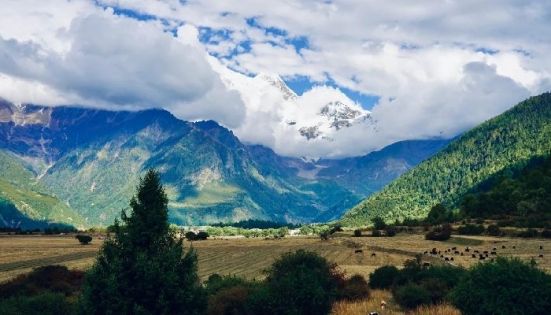
Yarlung Zangbo Grand Canyon in Nyingchi
Why Combine Nyingchi and Everest Base Camp?
Experience Two Completely Different Sides of Tibet
Nyingchi is sometimes described as the greener side of Tibet. Its forests, rivers, and lakes create scenery that feels very different from the dry plateau around Shigatse and Everest.
Everest offers the opposite experience: huge skies, rugged mountains, and a sense of remoteness that is difficult to find elsewhere.
Putting the two together creates an itinerary with much more variety.
A More Gradual Introduction to the Plateau
Altitude is an important consideration when traveling in Tibet.
Nyingchi is generally at a lower elevation than Lhasa, at around 3,000 meters, while Lhasa is about 3,650 meters. The Everest region is much higher, with Everest Base Camp on the Tibet side at around 5,200 meters.
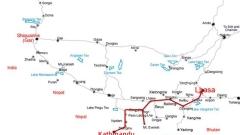
This means an itinerary such as: Nyingchi → Lhasa → Shigatse → Everest
allows travelers to move toward higher elevations progressively.
This does not mean starting in Nyingchi will prevent altitude sickness. Individual responses vary, and proper acclimatization remains important. But a gradual route can give the body more time to adapt.
What Can You See in Nyingchi?
Nyingchi is one of the best places to experience the more lush and scenic side of Tibet.
Basum Tso
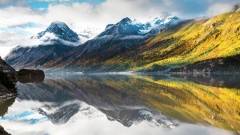
Basum Tso is a beautiful alpine lake surrounded by forests and mountains.
The lake’s turquoise water, wooded shores, and peaceful atmosphere make it very different from the vast high-altitude lakes of central and western Tibet.
Lulang
Lulang is known for forests, alpine meadows, and traditional Tibetan scenery.
It is a good place to slow down and enjoy the landscape rather than rushing from one attraction to another.
Namcha Barwa
At 7,782 meters, Namcha Barwa is one of the most spectacular peaks in eastern Tibet.
It is also famously difficult to see clearly because clouds often gather around the summit. When the weather cooperates, the view is unforgettable.
For photographers, Nyingchi offers some of the best opportunities in Tibet to combine forests, villages, rivers, and snow mountains in a single frame.
What Can You See on the Way to Everest Base Camp?
Once you leave Nyingchi and continue toward central and southern Tibet, the scenery gradually changes.
Yamdrok Lake
One of Tibet’s most famous sacred lakes, Yamdrok Lake is known for its striking turquoise-blue water and surrounding mountains.
It is usually one of the highlights of the journey from Lhasa toward Shigatse.
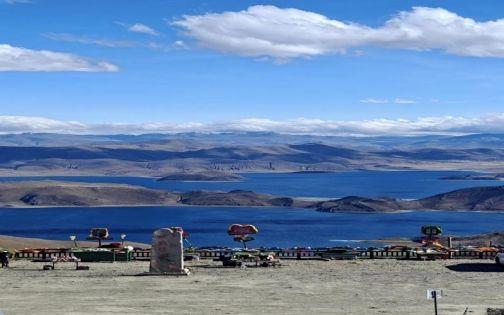
Yamdrok Lake
Shigatse
Shigatse is Tibet’s second-largest city and home to Tashilhunpo Monastery, one of the most important monasteries in the region.
A stop here adds an important cultural element to an otherwise nature-focused journey.
Everest Base Camp
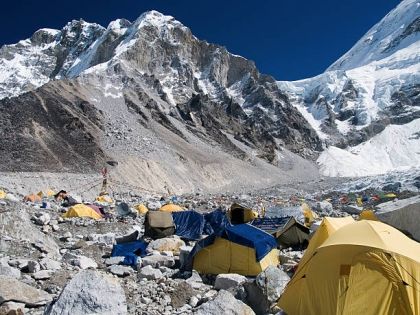
The final goal is Everest Base Camp on the northern side of Mount Everest.
Standing beneath the world’s highest peak is the obvious highlight, but the journey to get there is almost as memorable.
The road passes through some of Tibet’s most dramatic high-altitude scenery, and the combination of glaciers, valleys, snow mountains, and open plateau landscapes makes the destination feel even more remote.
Rongbuk Monastery
Near Everest Base Camp, Rongbuk Monastery offers an unusual combination of Tibetan Buddhist culture and Himalayan scenery.
The monastery sits at around 5,000 meters and provides another memorable perspective on Everest.
How Many Days Do You Need?
The ideal length depends on how much time you have and how relaxed you want the journey to be.
8 Days: Possible, but Fairly Fast
An 8-day itinerary can combine the main highlights:
Nyingchi → Lhasa → Yamdrok Lake → Shigatse → Everest Base Camp → Lhasa
This works for travelers with limited vacation time, but the schedule will involve relatively long travel days.
10–12 Days: The Better Balance
For most travelers, this is a more comfortable option.
You can include more of Nyingchi, for example:
Nyingchi → Basum Tso → Lulang → Namcha Barwa → Lhasa → Yamdrok Lake → Shigatse → Everest Base Camp → Lhasa
This gives you more time to enjoy the scenery and avoids turning every day into a race against the clock.
13–15 Days: For a Deeper Experience
With more time, you can add additional cultural or natural stops, spend longer around Everest, or build in more rest days.
This is particularly useful for travelers who enjoy photography or simply prefer a slower pace.
Should You Visit Nyingchi or Everest First?
For first-time visitors, I would generally favor:
Nyingchi → Lhasa → Shigatse → Everest Base Camp
The main reason is the gradual change in altitude.
Starting in Nyingchi gives you time to begin adapting before moving to Lhasa and eventually much higher elevations near Everest.
There are other ways to arrange the trip, especially if flights or other travel plans require a different order, but there is no real advantage to rushing into the highest destinations at the start.
How Long Does It Take to Travel from Nyingchi to Everest Base Camp?
This is not really a simple point-to-point transfer.
There is no reason to think of Nyingchi and Everest Base Camp as two neighboring attractions that you can connect in a few hours.
The more practical approach is to treat the journey between them as part of the itinerary:
Nyingchi → Lhasa → Yamdrok Lake → Shigatse → Everest
That way, the long-distance travel is broken up by sightseeing and acclimatization stops.
This is one of the reasons a well-designed multi-day tour works better than trying to arrange the route as a series of independent transfers.
Is This Route Suitable for Families and Older Travelers?
It can be, provided the itinerary is designed around comfort rather than speed.
Starting in Nyingchi can be particularly attractive for families and older travelers because the elevation is lower than Lhasa, and the scenery can be enjoyed without demanding trekking.
However, Everest is a different story.
The altitude around Everest Base Camp is extremely high, so travelers should consider their health condition carefully and allow enough time for acclimatization.
A slower itinerary, comfortable transportation, and regular rest breaks can make a significant difference.
When Is the Best Time to Combine Nyingchi and Everest?
March to April
This is an especially attractive period for Nyingchi because of the famous peach blossom season.
The contrast between pink blossoms, green valleys, and snow-covered mountains around Namcha Barwa is spectacular.
May to June
The weather becomes more stable, while Nyingchi’s forests and meadows become increasingly green.
This is a good period for travelers who want a combination of mountains and fresh spring scenery.
July to August
Summer brings lush landscapes, but parts of Tibet are affected by the rainy season.
Mountain views can become less predictable, particularly in the afternoon.
September to October
This is arguably the strongest all-around period for this combined itinerary.
You can experience:
- Autumn colors in Nyingchi
- Clear mountain views
- More stable weather
- Excellent conditions around Everest
For photographers, September and October are particularly appealing.
What Should You Prepare for This Route?
A Nyingchi-to-Everest itinerary is not a difficult hiking expedition, but it does require sensible preparation for high-altitude travel.
Bring:
- Warm layers
- A windproof jacket
- Comfortable walking shoes
- Sunglasses
- Strong sun protection
- Personal medications
More importantly, don’t treat the first few days as a race.
Rest when needed, avoid strenuous activity immediately after reaching higher elevations, and pay attention to how your body feels.
Why This May Be One of the Best Ways to See Tibet
Combining Nyingchi and Everest is not simply about checking two destinations off a list.
The real appeal is the transformation of the landscape as you travel.
You can begin among the forests and lakes of Nyingchi, continue through the cultural heart of Lhasa, cross the sacred landscapes around Yamdrok Lake, explore Shigatse, and finally reach the stark high-altitude world beneath Mount Everest.
In one journey, you experience green valleys, alpine lakes, ancient monasteries, highland plateaus, glaciers, and the world’s highest mountain.
For travelers who want a broad introduction to Tibet without limiting themselves to either the greener east or the dramatic Himalayas, this combination is well worth considering.