Bhutan is not a destination where you need to spend several weeks to understand its charm. For travelers with limited vacation time, a well-planned six-day trip can cover many of the country’s most recognizable landscapes, monasteries, dzongs, and cultural experiences without making the journey feel rushed.
A six-day route through Paro, Thimphu, and Punakha offers a good introduction to Bhutan. You can explore the capital, cross a Himalayan mountain pass, visit historic fortresses and temples, walk through rural villages, and still have enough time for the famous Tiger’s Nest hike. For a first visit, six days gives you a practical balance between sightseeing and travel time.
Key Takeaways
- Six days is enough to experience the main highlights of western Bhutan.
- Paro, Thimphu, and Punakha each offer a different side of Bhutan.
- The route combines monasteries, dzongs, mountain scenery, villages, and local culture.
- Tiger’s Nest is the most physically demanding part of the trip and needs a full day.
- A short Bhutan trip works best when you focus on a compact route rather than trying to cover too much of the country.
Why Is 6 Days a Good Length for a Short Bhutan Trip?
One of the biggest advantages of a six-day Bhutan trip is that you can explore several major destinations without constantly changing hotels or spending your entire holiday on long road transfers.
A practical route follows:
Paro → Thimphu → Punakha → Paro
These three destinations are relatively close compared with trying to travel deeper into Bhutan, but they have noticeably different landscapes and experiences.
Paro introduces you to Bhutan through its traditional valley scenery, ancient temples, historic dzongs, and of course Tiger’s Nest.
Thimphu shows a different side of the country. As Bhutan’s capital, it is the center of government and modern urban life, while traditional architecture and Buddhist practices remain part of the city.
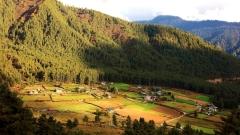
Punakha feels quieter and greener, with river valleys, rice fields, villages, and one of Bhutan’s most impressive dzongs.
The route therefore gives you variety without trying to squeeze too many destinations into a short holiday.
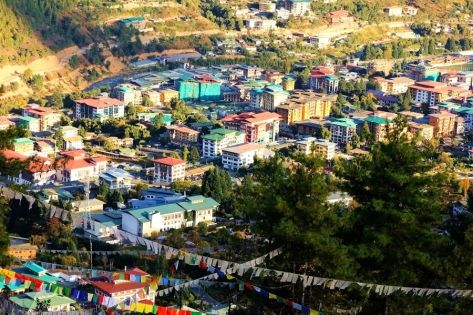
Thimphu, Bhutan
What is the 6-day itinerary like?
Start in Paro and Head to Bhutan’s Capital
Your journey begins when you arrive in Paro, the main international gateway to Bhutan.
The flight itself can be part of the experience. The approach to Paro takes you through the Himalayan landscape before the aircraft lands in the valley.
After immigration and baggage collection, the journey continues toward Thimphu, around 55 kilometers away.
The drive is relatively short, leaving time for stops along the way. At Chuzom, where the Paro and Thimphu rivers meet, you can see several traditional stupas representing different Himalayan Buddhist styles.
There is also Tschogang Lhakhang, a small temple with a long religious history associated with the story of Balaha, the excellent horse.
Once you reach Thimphu, the atmosphere changes. Compared with the rural scenery around Paro, the capital feels more urban, but it remains very different from a typical modern Asian city.
One of the highlights is Tashichho Dzong, an important fortress-monastery connected with Bhutan’s government and religious institutions.
In the evening, rather than filling the schedule with more major attractions, you can simply explore Thimphu’s streets, local markets, and the Local Crafts Bazaar. It is a good opportunity to see textiles, masks, paintings, woodwork, ceramics, and other traditional handicrafts.
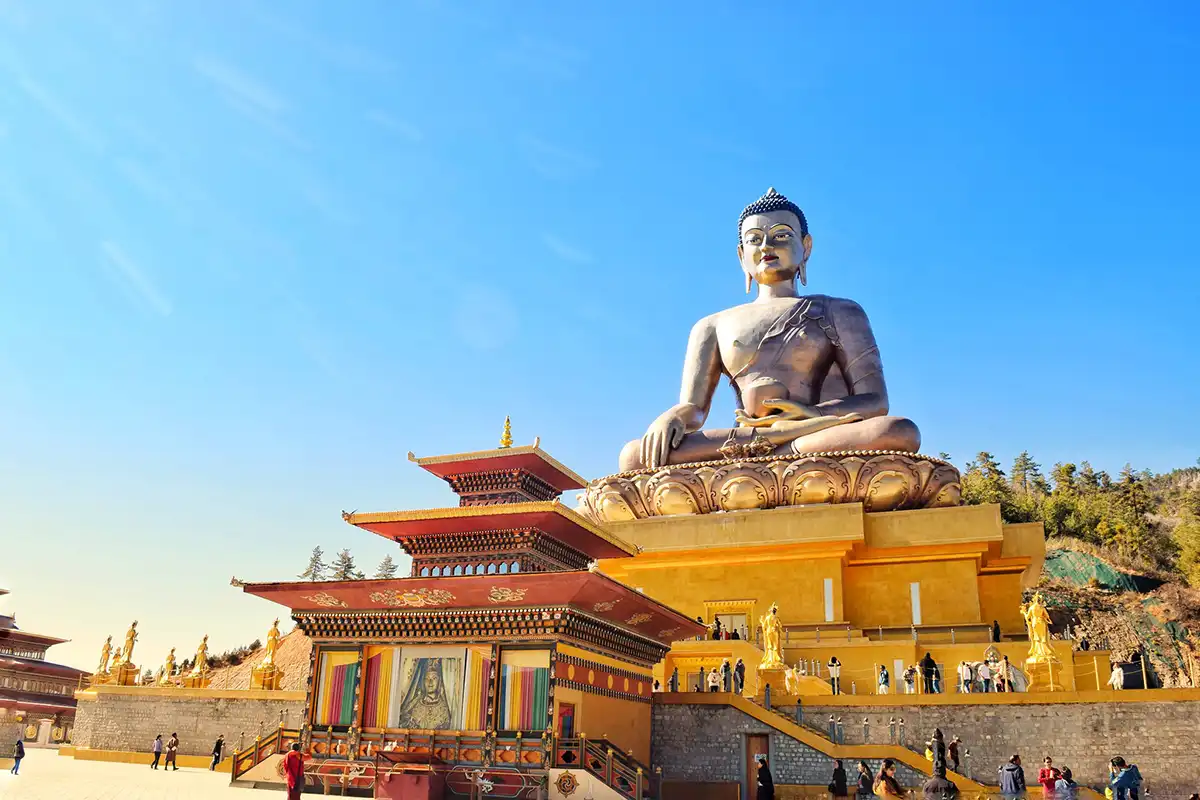
Spend a Day Understanding Thimphu
Thimphu deserves more than a quick stop because it offers a glimpse into how traditional Bhutanese culture exists alongside modern life.
The National Library provides an introduction to Bhutan’s Buddhist literary heritage, with an important collection of traditional manuscripts.
At the Institute for Zorig Chusum, also known as the Painting School, you can see how young students are trained in Bhutan’s traditional arts and crafts.
The Textile Museum offers another perspective on Bhutanese craftsmanship, particularly its long weaving and textile traditions.
For a more personal souvenir, stop at the Bhutan Post Office, where visitors can create personalized postage stamps using their own photographs.
Later, a short drive takes you to Pangri Zampa, one of the country’s older monasteries and a place associated with Buddhist studies and astrology.
Back in the city, Buddha Point at Kuensel Phodrang offers a wide view over the Thimphu Valley. The large Buddha statue is one of the most recognizable landmarks in the capital.
The King’s Memorial Chorten provides a very different experience. Instead of simply being a monument to photograph, it remains an active religious site where local people continuously walk around the chorten, turn prayer wheels, and recite prayers.
This is what makes spending a full day in Thimphu worthwhile: the city is not just about famous buildings, but about seeing how they fit into everyday Bhutanese life.
Leave Thimphu for the Green Valleys of Punakha
After Thimphu, the journey heads toward Punakha, with Dochula Pass providing one of the most scenic moments along the way.
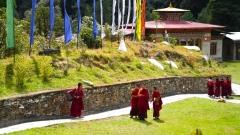
At around 3,080 meters, Dochula is surrounded by prayer flags and traditional chortens. On a clear day, the pass offers views toward the Himalayan peaks.
As the road descends toward Punakha, the scenery becomes greener and warmer. Rice fields, forests, villages, and river valleys gradually replace the higher mountain environment around Thimphu.
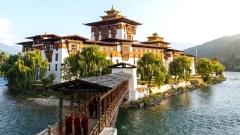
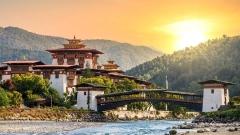
The main cultural highlight here is Punakha Dzong, dramatically situated at the meeting point of two rivers.
The dzong was built in the early 17th century and served as Bhutan’s capital until 1955. It remains an important religious center and the winter residence of the central monastic body.
Compared with the busier sightseeing environment of some Himalayan destinations, Punakha often feels slower and more peaceful.
Add a Village Walk for a Different Side of Bhutan
Punakha is also where you can step away from major monuments and experience a little more of rural Bhutan.
The excursion to Chimi Lhakhang involves walking through rice fields and villages before reaching the temple on a hill.
The walk takes about 1.5 hours in total, including the return journey. It is not a strenuous trek, but it does require comfortable walking shoes.
The surrounding villages are part of the attraction. Instead of moving directly from one tourist site to another, you get to see farmland, traditional houses, paths through the valley, and aspects of everyday rural life.
This kind of experience is particularly useful on a short trip because it adds a side of Bhutan that cannot be captured by visiting dzongs and museums alone.
Return to Paro Through Bhutan’s Historic Sites
The journey back to Paro includes another opportunity to explore Bhutanese architecture.
A stop at Simtokha Dzong introduces one of the country’s older fortress-monasteries before continuing toward Paro.
Once back in the Paro Valley, visit Ta Dzong, which was originally constructed as a watchtower and now houses Bhutan’s National Museum.
Its collections include Buddhist paintings, textiles, weapons, household objects, and historical artifacts.
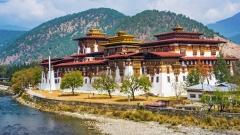
From here, a short walk leads down to Rinpung Dzong, one of Paro’s most important landmarks.
Its traditional wooden galleries, courtyards, thick walls, and Buddhist paintings make it a particularly interesting place for anyone interested in Bhutanese architecture and religious art.
By this point in the journey, you will have already seen how different Bhutan’s main valleys can feel, even though they are connected by relatively short road journeys.
Save a Full Day for Tiger’s Nest
There is one experience that should not be squeezed between several other attractions: Tiger’s Nest.
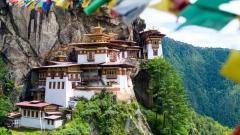
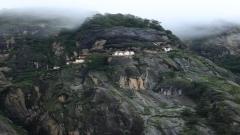
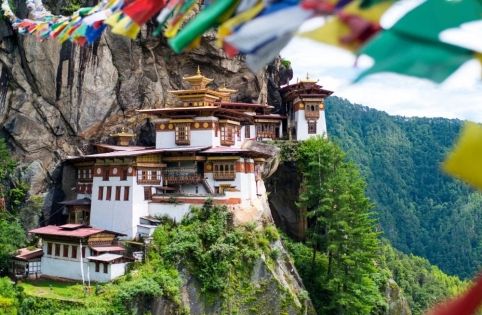
Officially known as Taktshang Monastery, it is built dramatically into a cliff above the Paro Valley and has become one of Bhutan’s defining landmarks.
According to Buddhist tradition, Guru Rinpoche is believed to have meditated here after arriving at the site on the back of a tigress.
The journey to the monastery involves a substantial uphill hike and generally takes around five hours for the full excursion, depending on pace and stops.
This is the one day of the itinerary when it makes sense to slow everything down.
You do not need to hurry toward the monastery. The trail itself offers views over the Paro Valley, and there are several places where you can stop and rest.
After returning from Tiger’s Nest, the evening can remain relatively free.
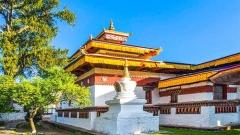
Later, visit Kyichu Lhakhang, one of Bhutan’s oldest temples and a site traditionally associated with the early spread of Buddhism in the country.
Ending the trip in Paro after Tiger’s Nest also means you are already close to the airport for your departure the following day.
What Can You Actually See in Six Days?
The biggest misconception about a short Bhutan trip is that six days may not be enough to experience much.
In reality, this route includes a surprising variety of experiences:
For history: Punakha Dzong, Rinpung Dzong, Simtokha Dzong, and Tashichho Dzong.
For Buddhist culture: Chimi Lhakhang, Pangri Zampa, Kyichu Lhakhang, and Tiger’s Nest.
For nature: Dochula Pass, Paro Valley, Himalayan mountain views, rice fields, and river valleys.
For local culture: traditional crafts, textiles, village life, markets, and religious practices in everyday settings.
That variety is exactly why a compact western Bhutan itinerary works well for a first visit.
Is a 6-Day Bhutan Trip Too Rushed?
It depends on what you want from the journey.
A six-day trip is less suitable for travelers who want to explore remote eastern Bhutan, spend several days trekking, or move slowly through many rural regions.
But for a first-time visitor who wants to understand Bhutan’s classic highlights, the pace can be quite manageable.
The key is not trying to add too many destinations.
Rather than spending six days crossing the country, this route stays focused on Paro, Thimphu, and Punakha. Most days have a clear main theme, and there is enough travel time built into the route without turning every day into a race.
How Much Walking Should You Expect?
Most sightseeing in Thimphu and Paro involves relatively easy walking around individual attractions.
The walk to Chimi Lhakhang is longer but moderate, taking about 1.5 hours in total through fields and villages.
Tiger’s Nest is the main physical challenge. The monastery is high on the mountainside, so visitors should expect sustained uphill walking and allow several hours for the excursion.
This is worth considering when choosing a short Bhutan itinerary, especially for families or travelers who are not regular hikers.
Comfortable shoes, water, sun protection, and a slower pace can make a big difference.
When Is a Short Bhutan Trip Most Enjoyable?
The best season depends on what you want to see and do.
Spring can be attractive for flowers, green valleys, and pleasant sightseeing conditions.
Summer brings lush landscapes, but rain can affect visibility and mountain roads.
Autumn is popular for clearer Himalayan views and comfortable conditions for walking.
Winter is colder, but the lower valleys around Paro and Punakha can still be visited, and the quieter atmosphere appeals to some travelers.
For a six-day trip, weather matters because the itinerary combines road travel, sightseeing, and the Tiger’s Nest hike. Choosing a season that matches your priorities can make the overall experience more comfortable.
Who Is a 6-Day Bhutan Trip Best For?
This kind of itinerary is especially suitable for first-time Bhutan visitors who want to see the country’s classic highlights within a limited vacation period.
It can also work well for couples, families, and travelers interested in culture and architecture rather than long trekking expeditions.
Older travelers can also consider this route, but the Tiger’s Nest hike should be evaluated according to individual mobility and fitness.
For photographers, the itinerary offers a useful mix of subjects, from Himalayan landscapes and mountain roads to monasteries, traditional architecture, villages, and daily life.
A Short Trip Can Still Feel Like a Real Bhutan Journey
Six days will not show you every part of Bhutan, and that is not necessarily a problem.
For a short holiday, the goal is not to collect as many destinations as possible. It is to choose a route that gives each place enough time to make an impression.
Paro brings the mountain scenery and Tiger’s Nest.
Thimphu offers the country’s modern and cultural side.
Punakha slows the journey down with rivers, rice fields, villages, and its magnificent dzong.
Put together, these three destinations create a balanced introduction to Bhutan without requiring a long vacation.
For travelers who have only a week away from work but still want to experience Himalayan landscapes, Buddhist heritage, traditional architecture, and local culture, six days can be enough to make Bhutan feel like much more than a quick stopover.