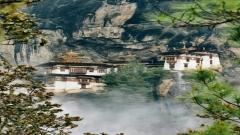

Tucked away in the peaceful Paro Valley, Kyichu Lhakhang is one of Bhutan’s oldest and most revered temples. It may not have the dramatic cliffside setting of Tiger’s Nest or the grand scale of Punakha Dzong, but its importance lies in its long history, spiritual significance, and connection to the early spread of Buddhism in Bhutan.
The temple is often included in Paro sightseeing itineraries, and it is an especially worthwhile stop for travelers interested in Bhutanese history and Buddhist culture. A visit here is less about ticking off a major attraction and more about slowing down, observing local religious practices, and experiencing a sacred place that has been active for centuries.
Key Takeaways
- Kyichu Lhakhang is one of the oldest Buddhist temples in Bhutan.
- The temple is traditionally linked to King Songtsen Gampo of Tibet and the construction of 108 temples across the Himalayan region.
- It is located in the Paro Valley, making it easy to combine with other Paro attractions.
- The temple is an important site for Tibetan Buddhist pilgrimage and religious practice.
- Kyichu Lhakhang is known for its historic architecture, sacred images, prayer wheels, and peaceful atmosphere.
Where Is Kyichu Lhakhang?
Kyichu Lhakhang is located in the Paro Valley in western Bhutan, a short drive from Paro town.
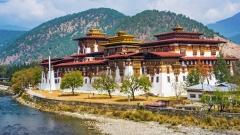
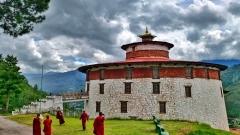
Its location makes it convenient to include in a broader Paro itinerary. Travelers often combine a visit with other local highlights such as Rinpung Dzong, Ta Dzong, Paro town, and Tiger’s Nest.
Unlike some of Bhutan’s major attractions, Kyichu Lhakhang does not require a long hike to reach. You can arrive by road and then spend time exploring the temple complex at a relaxed pace.
The surrounding valley adds to the experience. Traditional houses, farmland, mountain slopes, and quiet roads create a very different atmosphere from a busy city center.
Why Is Kyichu Lhakhang So Important?
The temple’s importance is closely connected to Bhutan’s early Buddhist history.
According to traditional accounts, Songtsen Gampo, a 7th-century Tibetan king, built 108 temples across the Himalayan region to subdue a giant demoness whose body was believed to obstruct the spread of Buddhism.
Kyichu Lhakhang is traditionally regarded as one of these temples.
The historical details surrounding the 108 temples belong to religious tradition and legend, but the association has given Kyichu Lhakhang a special place in Himalayan Buddhist history.
For visitors, this means that the temple is not simply an old building. It is part of a much larger story about the spread of Buddhism across the region.
A Temple Connected to the Early Spread of Buddhism
Kyichu Lhakhang is often described as one of the places that symbolizes the arrival and establishment of Buddhism in Bhutan.
Although Bhutan’s Buddhist traditions developed over many centuries, early temples such as Kyichu Lhakhang played an important role in the country’s religious landscape.
The temple has continued to function as a place of worship rather than becoming simply a historical monument.
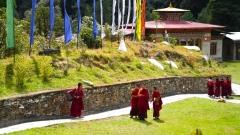
This is one reason the visit can feel different from sightseeing at a museum or archaeological site. You may see local worshippers making offerings, turning prayer wheels, lighting butter lamps, or performing circumambulation around the temple.
For travelers, observing these practices respectfully can provide a much deeper understanding of Bhutanese culture than simply taking photographs of the architecture.
What Can You See at Kyichu Lhakhang?
Kyichu Lhakhang is not enormous, but there is a lot to notice inside and around the complex.
The Main Temple
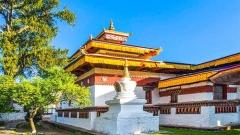
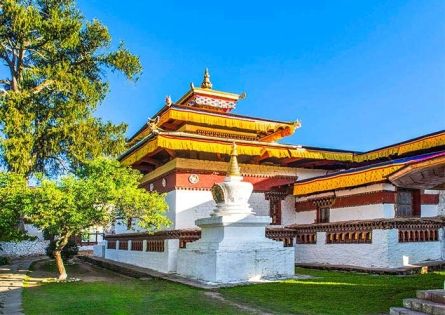
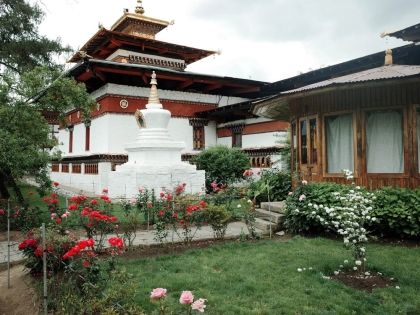
The temple’s traditional architecture reflects the religious building styles that have developed in the Himalayan region over centuries.
Inside, visitors can find sacred Buddhist images, paintings, and religious objects. The atmosphere is generally quiet and intimate, particularly compared with larger tourist attractions.
The details are worth taking time to observe rather than rushing through the interior.
Sacred Buddhist Images
The temple contains revered Buddhist statues and religious images that are central to its spiritual importance.
Visitors should remember that these are objects of worship rather than museum displays. Photography rules may apply inside religious buildings, so it is best to follow local instructions and ask before taking photographs.
Prayer Wheels
As with many Bhutanese temples, prayer wheels are part of the experience.
Visitors and local worshippers may walk around the temple while turning the wheels and reciting prayers. Watching this routine is a simple but meaningful way to see how Buddhist practice remains part of everyday life in Bhutan.
The Sacred Orange Tree
Kyichu Lhakhang is also associated with a famous orange tree that is traditionally said to bear fruit throughout the year.
Whether you view it primarily as a religious tradition or a curious feature of the temple, it has become one of the details many visitors look for when exploring the grounds.
What Makes Kyichu Lhakhang Different From Tiger’s Nest?
Travelers often compare Kyichu Lhakhang with Tiger’s Nest because both are important religious sites in the Paro area.
But they offer very different experiences.
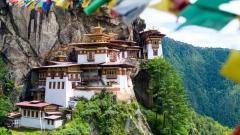
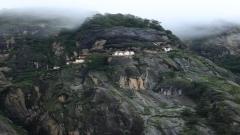
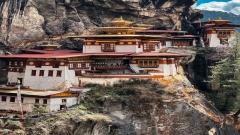
Tiger’s Nest is famous for its dramatic cliffside setting and the hike required to reach it. The journey can take several hours and is an important part of the experience.
Kyichu Lhakhang is much easier to access. There is no major mountain hike, and visitors can focus more directly on the temple itself, its history, and ongoing religious activities.
In simple terms:
Tiger’s Nest: dramatic scenery, pilgrimage, hiking, and a spectacular mountain setting.
Kyichu Lhakhang: history, spiritual atmosphere, traditional architecture, and a quieter temple visit.
That contrast is exactly why both can be worthwhile on the same Bhutan trip.
Is Kyichu Lhakhang Worth Visiting?
For travelers interested only in dramatic scenery, Kyichu Lhakhang may not create the immediate visual impact of Tiger’s Nest.
But for anyone interested in Bhutanese culture, Buddhism, architecture, or history, it can be one of the more meaningful stops in Paro.
The temple gives you the chance to slow down and experience a functioning religious site rather than simply viewing a famous landmark from the outside.
It can also help put other Bhutanese attractions into context. After visiting several dzongs and monasteries, Kyichu Lhakhang provides another example of how deeply religion is woven into the country’s cultural landscape.
How Long Should You Spend at Kyichu Lhakhang?
Most visitors do not need a full day here.
A visit of roughly 30 minutes to an hour can be enough to see the main temple, explore the grounds, observe the prayer wheels, and take in the surrounding atmosphere.
However, travelers who are particularly interested in Buddhist art or religious architecture may want to stay longer.
The temple is best treated as a calm cultural stop rather than an attraction that needs to be rushed through.
Because it is easy to combine with other Paro sights, it can fit naturally into either a half-day or full-day sightseeing itinerary.
When Is the Best Time to Visit?
Kyichu Lhakhang can be visited throughout the year, but the experience varies with the seasons.
Spring brings fresh greenery and pleasant valley scenery.
Summer can be lush and vibrant, although rain may affect outdoor conditions.
Autumn is often appealing for comfortable sightseeing weather and clearer mountain views.
Winter can be cold, but the quieter atmosphere may appeal to travelers who prefer fewer visitors.
If your trip is centered on a specific Bhutanese festival or religious event, it is worth checking the local calendar in advance, as festivals can bring a very different atmosphere to temples and monasteries.
What Should You Know Before Visiting?
Kyichu Lhakhang is an active religious site, so visitors should treat it with the same respect they would show at any functioning temple.
Dress modestly.
Shoulders and knees are generally better covered when visiting religious sites.
Follow photography rules.
Photography may be restricted in certain indoor areas.
Keep noise low.
Worshippers may be praying or making offerings.
Walk respectfully around sacred objects.
Follow the direction used by local worshippers when circumambulating religious sites.
Take your time.
The temple is small enough that a slower visit is often more rewarding than simply stopping for a quick photograph.
Can You Combine Kyichu Lhakhang With Other Paro Attractions?
Absolutely.
Its convenient location makes it easy to combine with several other destinations in the Paro Valley.
A typical sightseeing day might include Ta Dzong and Rinpung Dzong, followed by Kyichu Lhakhang and time in Paro town.
It can also be included before or after a separate day devoted to Tiger’s Nest.
For travelers with only a few days in Bhutan, this makes Kyichu Lhakhang particularly useful. You do not need to dedicate a separate day to the temple.
Instead, it can become part of a broader cultural exploration of Paro.
Kyichu Lhakhang for Photographers
The temple may appeal to photographers who enjoy architecture and cultural details more than large-scale landscapes.
Look for traditional wooden elements, painted details, prayer wheels, monastery courtyards, and the surrounding Paro Valley.
The early morning and late afternoon can provide softer natural light around the exterior, while the surrounding mountains create a broader Bhutanese landscape context.
Inside the temple, however, photography may be restricted, so it is important to prioritize respectful observation over getting a particular shot.
A Quiet Place to Understand Bhutan
Kyichu Lhakhang may not be the first Bhutan landmark you see in travel brochures, but its significance becomes clearer when you spend time there.
Its long history, religious traditions, traditional architecture, and continuing role as a place of worship make it more than just an old temple in the Paro Valley.
For first-time visitors, it provides another perspective on Bhutan beyond the famous postcard views.
Tiger’s Nest may be the dramatic image that brings many travelers to Paro, but places like Kyichu Lhakhang help explain the spiritual and cultural traditions behind Bhutan’s landscapes.
A visit here is simple, quiet, and relatively easy to fit into a short itinerary. Yet that understated quality is part of its appeal: instead of asking for your attention through size or spectacle, Kyichu Lhakhang invites you to slow down and look more closely.