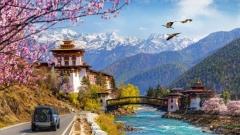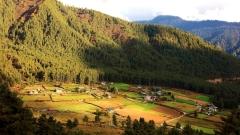

The Himalayas stretch across several countries, and each destination has its own landscapes, traditions, and history. Nepal is famous for high-altitude trekking and Everest, Tibet for its plateau landscapes and Buddhist heritage, northern India for its diverse Himalayan cultures, and Bhutan for something that can be harder to define at first glance: a particularly strong connection between traditional culture, religion, architecture, and everyday life.
In many places, Buddhist monasteries sit alongside modern roads, traditional homes are still part of ordinary communities, and national architecture follows established design traditions. Even short journeys between cities can take you through forests, mountain passes, farming valleys, and historic religious sites. So what actually makes Bhutan different from other Himalayan destinations?
Key Takeaways
- Bhutan combines Himalayan scenery with a strong emphasis on preserving traditional culture and architecture.
- Vajrayana Buddhism has a particularly visible role in Bhutanese religious and cultural life.
- Dzongs, monasteries, prayer flags, traditional homes, and festivals are closely connected to the country’s identity.
- Bhutan’s approach to tourism places more emphasis on sustainable and controlled travel than conventional mass tourism destinations.
- The country offers a different travel experience from trekking-focused destinations such as Nepal, even though both are in the Himalayas.
- A Bhutan trip is often as much about culture and atmosphere as it is about mountain scenery.
Bhutan’s Mountains Are Only Part of the Experience
The first thing that may surprise travelers is that Bhutan is not primarily a Himalayan destination in the same way that Nepal often is.
Nepal attracts large numbers of trekkers interested in routes around Everest, Annapurna, and other major mountain regions. Bhutan certainly has trekking opportunities, but many first-time visitors spend more time exploring valleys, monasteries, villages, dzongs, and cultural sites.
This changes the rhythm of the journey.
Instead of organizing the entire trip around altitude and trekking distance, you can spend one day visiting a historic monastery, another crossing a mountain pass, and the next walking through rice fields toward a small temple.
The landscape remains dramatic, but the experience is often more varied than simply moving from one trekking point to another.
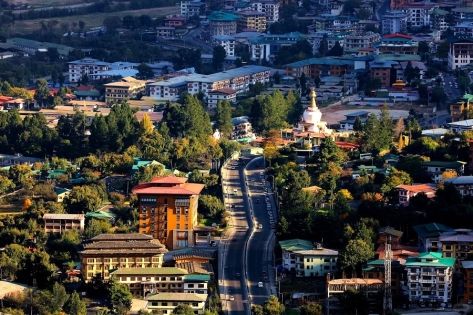
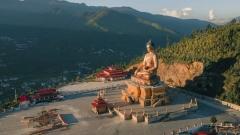
Thimphu, Bhutan
Buddhism Is Woven Into Everyday Life
Buddhism is one of the most visible parts of Bhutanese culture.
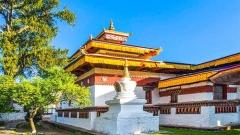
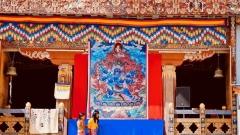
Bhutan follows a strong Vajrayana Buddhist tradition, and monasteries, temples, stupas, prayer wheels, murals, and religious symbols can be found throughout the country.
But the interesting part for visitors is that religion does not feel confined to a few major tourist attractions.
You may see local residents circumambulating a chorten, spinning prayer wheels, visiting a temple, or making offerings while going about their daily lives.
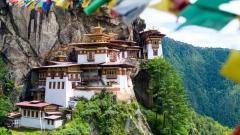
Places such as Tiger’s Nest, Punakha Dzong, Kyichu Lhakhang, and Tashichho Dzong are important landmarks, but they also help explain the wider role of Buddhism in Bhutanese society.
For travelers interested in Himalayan Buddhist culture, this creates a very different experience from simply visiting a series of historic monuments.
The Dzong Is One of Bhutan’s Most Distinctive Buildings
One of the easiest ways to recognize Bhutan is through its dzongs.
These large fortress-monasteries combine religious and administrative functions and have become an important part of Bhutan’s architectural identity.
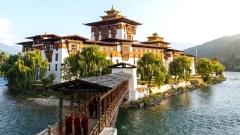
Punakha Dzong is perhaps the best-known example for many visitors. Its location at the confluence of two rivers makes it particularly striking, while its courtyards, timber details, whitewashed walls, and religious spaces show how architecture and cultural traditions are closely connected.
Tashichho Dzong in Thimphu offers another example, while Rinpung Dzong in Paro shows how these buildings can dominate the surrounding valley.
You will find fortresses and religious architecture elsewhere in the Himalayan region, but Bhutan’s dzong tradition gives the country a particularly recognizable visual identity.
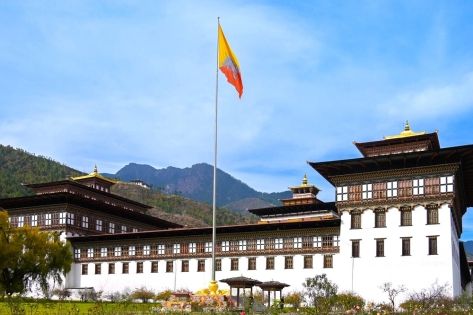
Traditional Architecture Is More Visible Than Many Travelers Expect
Another thing that stands out is the consistency of traditional architectural styles.
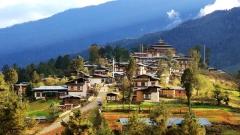
Bhutanese buildings often feature distinctive wooden windows, painted details, sloping roofs, and decorative elements. Traditional design is not limited to monasteries. It can also be seen in houses, hotels, government buildings, shops, and other structures.
For first-time visitors, this can make even an ordinary drive through a Bhutanese town feel visually different.
Instead of suddenly finding traditional architecture inside one historic area and modern buildings everywhere else, the two styles can exist much closer together.
This is one reason photographers often enjoy Bhutan. You do not always have to visit a famous monument to find an interesting subject.
Bhutan Has a Strong Cultural Identity
Bhutan has taken a distinctive approach to maintaining its cultural traditions.
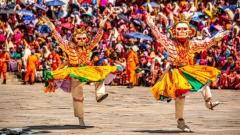
Traditional clothing, architecture, crafts, religious practices, and festivals remain highly visible aspects of Bhutanese identity. In some destinations, traditional culture can feel concentrated mainly around tourist attractions. In Bhutan, many of these traditions are still part of everyday public life.
For travelers, this means that cultural experiences can happen naturally throughout the journey.
A visit to the Institute for Zorig Chusum in Thimphu, for example, introduces traditional arts and crafts. A stop at the Textile Museum provides insight into weaving traditions. Local markets and craft centers offer another way to observe traditional materials and designs.
The goal is not simply to see old objects in a museum, but to understand how traditional skills continue to be valued.
Bhutan’s Approach to Tourism Is Different
Tourism is another area where Bhutan stands apart from many destinations in the region.
Bhutan has traditionally followed a policy centered on high-value, low-volume tourism, with the aim of managing visitor numbers and reducing some of the pressures associated with mass tourism.
The country’s tourism policies have changed over time, including changes to fees and regulations, so travelers should always check the latest requirements before booking.
What this means in practical terms is that Bhutan can feel less like a destination built around mass tourism and more like a country where tourism operates within a broader cultural and environmental framework.
You may still find hotels, restaurants, guides, vehicles, and organized sightseeing, but the overall atmosphere can feel quite different from highly developed trekking centers elsewhere in the Himalayas.
Gross National Happiness Is Part of Bhutan’s Global Image
Bhutan is also widely known for the concept of Gross National Happiness (GNH).
The idea emerged as an alternative way of thinking about national progress, emphasizing broader well-being rather than relying only on conventional economic indicators.
GNH has been associated with areas such as good governance, sustainable development, cultural preservation, environmental conservation, and social well-being.
Travelers do not necessarily encounter GNH as a separate tourist attraction. Instead, it is better understood as part of the country’s broader national philosophy and the way Bhutan presents its development priorities.
It is also important not to assume that every aspect of life in Bhutan is defined by GNH. Like any country, Bhutan has its own economic, social, and environmental challenges.
Still, the concept is unusual enough to be one of the first things many visitors associate with Bhutan.
Nature Conservation Is Highly Visible
Bhutan’s landscapes are another major part of its identity.
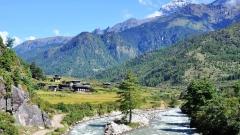
The country is known for extensive forest cover and a strong emphasis on environmental conservation. Mountains, valleys, rivers, forests, and farmland remain major parts of the travel experience.
This is especially noticeable when traveling between Thimphu, Punakha, and Paro.
A relatively short road journey can take you from an urban valley to a high mountain pass, then down into a greener agricultural region.
Dochula Pass, for example, provides views across the Himalayan landscape, while the journey toward Punakha reveals a dramatic change in vegetation and terrain.
For travelers who like scenic road trips, Bhutan can be rewarding even outside its most famous landmarks.
Bhutan Feels Different Because of Its Scale
Another difference is simply the scale of the destination.
Bhutan is much smaller than some of the other Himalayan regions that travelers commonly visit, and that makes it possible to experience a noticeable variety of landscapes and cultural sites within a relatively compact journey through the western part of the country.
A typical first-time route might connect:
Paro → Thimphu → Punakha → Paro
Within this loop, you can experience a mountain airport, the capital city, ancient temples, historic dzongs, mountain passes, agricultural valleys, traditional villages, and Tiger’s Nest.
You are not covering the entire Himalayan range, but you can experience several distinctly Bhutanese environments without needing an extended expedition.
Bhutan vs Nepal: A Different Kind of Himalayan Journey
Bhutan and Nepal are sometimes compared because both attract travelers interested in Himalayan scenery and Buddhist or Hindu cultural traditions.
The travel experience, however, can be quite different.
Nepal is particularly well known for trekking, mountaineering, adventure travel, and destinations such as the Everest and Annapurna regions.
Bhutan is often more focused on cultural sightseeing, monasteries, dzongs, mountain valleys, traditional architecture, and a slower road-based journey.
That does not mean Bhutan lacks adventure or Nepal lacks culture. Both offer a combination of experiences.
The difference is more about what dominates the typical first-time itinerary.
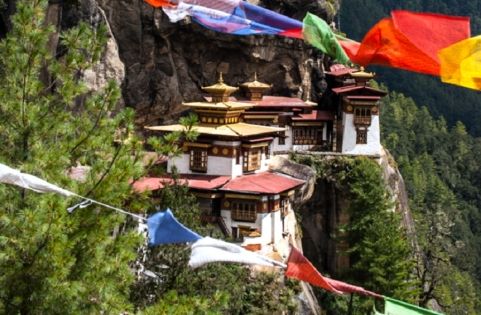
Tiger’s Nest Monastery
Bhutan vs Tibet: Mountain Culture in a Different Setting
Bhutan and Tibet share deep Buddhist connections, but their landscapes and travel experiences are noticeably different.
Tibet is famous for its vast high plateau, enormous open landscapes, sacred lakes, remote mountain regions, and destinations such as Lhasa, Mount Everest, and Mount Kailash.
Bhutan often feels greener and more enclosed by valleys and forests, especially in its western regions.
The cultural experience is also shaped by different histories and local traditions, even though Vajrayana Buddhism remains an important connection.
For travelers choosing between the two, the question is less about seeing “the Himalayas” and more about whether they prefer the high plateau environment of Tibet or the forested valleys and traditional architecture of Bhutan.
Bhutan vs Northern India: Another Layer of Cultural Diversity
The Indian Himalayas cover a huge area and include a remarkable variety of cultures, languages, landscapes, and religious traditions.
Places such as Sikkim, Himachal Pradesh, Ladakh, and Uttarakhand can all offer very different experiences.
Bhutan is much smaller, but this smaller scale also makes its national identity feel particularly cohesive.
Traditional architecture, Buddhism, handicrafts, clothing, and religious sites appear repeatedly throughout the journey, creating a strong visual and cultural continuity.
This is especially noticeable when moving between Paro, Thimphu, and Punakha.
The Journey Between Places Is Part of the Experience
One of the easiest things to underestimate about Bhutan is the value of the road journey itself.
The roads connect valleys through mountain passes, forests, farmland, and villages. The landscape changes gradually rather than suddenly.
For example, the journey from Thimphu to Punakha via Dochula Pass is not simply transportation between two destinations. It becomes part of the sightseeing experience.
This is very different from a trip where the main attraction is reaching a particular viewpoint as quickly as possible.
In Bhutan, sometimes the most memorable part of a day is simply what you see through the car window.
Bhutan Is Not Just About Peace and Quiet
Bhutan is often marketed with images of peaceful monasteries, prayer flags, and empty mountain landscapes. While these are certainly part of the experience, there is more to the country than tranquility.
Thimphu is an active capital with government offices, shops, restaurants, markets, and a younger urban population.
Traditional festivals can be lively and colorful. Local markets can be busy. Roads can be winding and traffic conditions can affect travel times.
This matters because Bhutan is a living country, not an open-air museum.
Its traditional identity exists alongside modern life, and that contrast is part of what makes traveling there interesting.
What Kind of Traveler Is Bhutan Best Suited To?
Bhutan can work particularly well for travelers who enjoy culture, history, architecture, photography, nature, and slower-paced exploration.
It can also suit travelers who want Himalayan scenery but do not necessarily want to spend their entire vacation on a multi-day trek.
Couples may enjoy the combination of mountain landscapes and quiet valleys. Families can focus on cultural attractions and scenic drives. Older travelers can build a route with manageable walking while still visiting major landmarks, although activities such as the Tiger’s Nest hike require individual consideration.
For photographers, the country provides an unusual mix of subjects: monasteries, traditional buildings, mountains, forests, farmland, rivers, festivals, and everyday life.
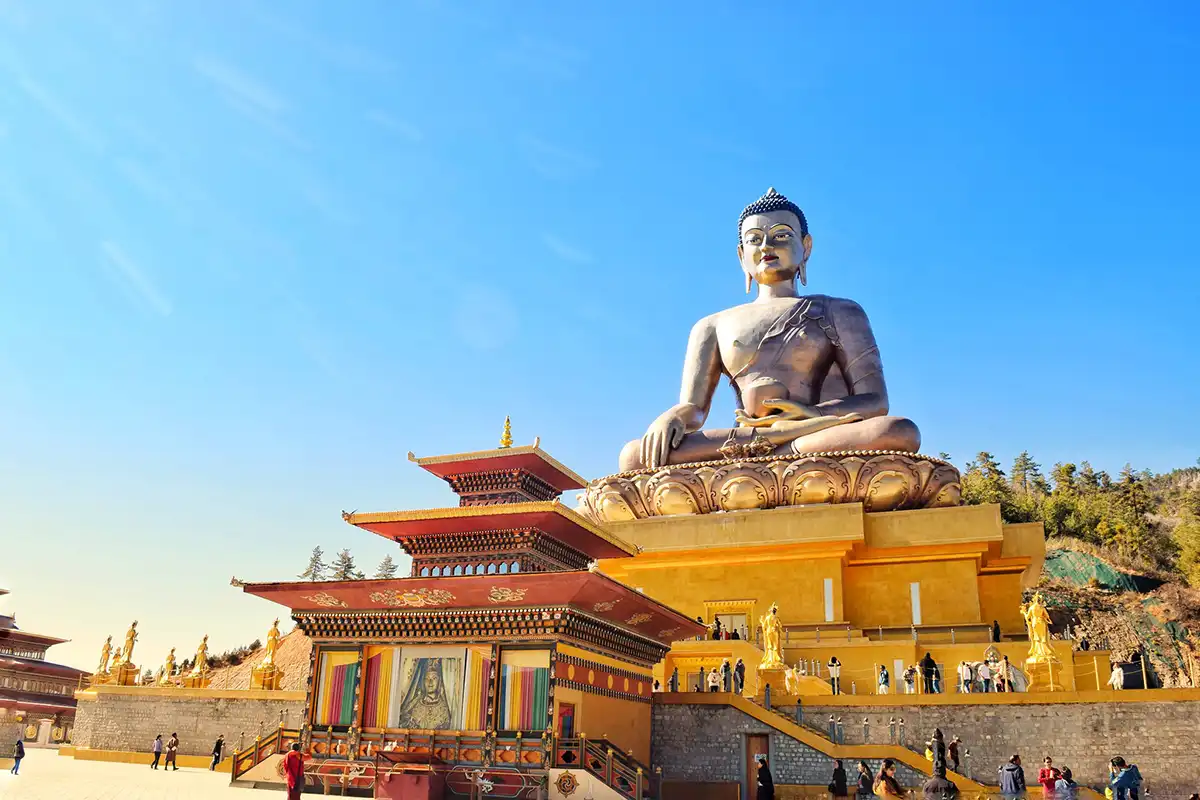
What Makes Bhutan Worth Experiencing?
Bhutan’s difference is not based on a single attraction.
It comes from the way several elements fit together.
You can visit a centuries-old monastery in the morning, drive through a mountain pass in the afternoon, walk through a traditional village later in the day, and end the evening in a modern capital city.
The mountains are important, but so are the buildings, beliefs, crafts, food, landscapes, and daily routines.
Compared with other Himalayan destinations, Bhutan offers a particularly compact journey where culture and nature are rarely separated.
That may be the easiest way to understand what makes Bhutan different.
You do not come here only to see the Himalayas. You come to experience how a Himalayan kingdom has preserved a distinctive cultural identity while continuing to change with the modern world.