
Choosing whether to travel to Tibet by train or leave Tibet by train can shape the rhythm of your whole journey. The railway offers striking high-altitude scenery and a gradual approach to the plateau, while a flight can save time and make it easier to fit Tibet into a short itinerary. There is no single best direction for every traveler: your route should reflect your available days, how you respond to altitude, and what you most want from the journey. In this guide, you’ll find the main trade-offs, planning considerations, and sample route ideas to help you decide whether to take the train into Tibet, ride it out, or combine rail and air. Keep in mind that train availability and travel requirements can change, so confirm current arrangements before booking.
Key Points
- Taking the train into Tibet gives you a gradual journey toward the plateau, but it does not prevent altitude sickness.
- Leaving by train lets you enjoy the railway scenery after spending time acclimatizing in Lhasa.
- Flying in and taking the train out is a useful compromise for travelers with limited time.
- Train journeys are long, and tickets, permits, and connections require advance planning.
- Choose your direction based on health, schedule, scenery preferences, and tolerance for a long ride.
What the Tibet Railway Journey Is Like?
The Qinghai–Tibet Railway links Xining in Qinghai Province with Lhasa, crossing a vast, high-altitude landscape. Depending on the train and starting point, the journey can take many hours or more than a day. Travelers boarding in Xining generally have a shorter rail journey than those starting farther east, such as in Beijing, Shanghai, Chengdu, or Guangzhou. Exact schedules and services vary, so check the current timetable rather than relying on a fixed journey time from an old itinerary.
The route is memorable for its changing scenery: broad grasslands, mountain ranges, open plateau, and sparsely settled stretches. On some sections, passengers may see wildlife from the train, though sightings are never guaranteed. The scenery is part of the experience, but it is not a continuous panorama. There are long periods when the view is understated, and weather, light, and your seat position all affect what you can see.
Passenger trains serving Lhasa are designed for high-altitude travel and have oxygen supply facilities. These can provide support in the train environment, but they do not eliminate the effects of altitude or guarantee that every passenger will feel well. The train also moves through areas at significant elevation, so travelers with medical concerns should discuss the trip with a qualified healthcare professional before departure.
For many visitors, the journey is less about getting from one place to another as quickly as possible and more about experiencing the transition from lower elevations to the Tibetan Plateau. For others, the long ride is tiring, especially after a busy itinerary or when traveling with children. Thinking honestly about how you feel on overnight trains can help you choose the right direction.
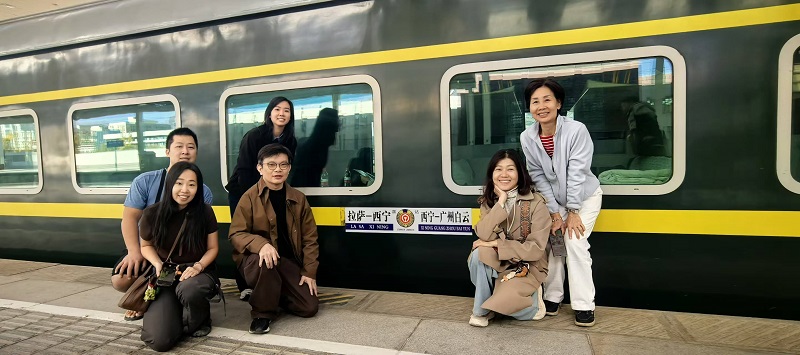
Tibet Train
Should You Arrive in Tibet by Train?
Taking the train to Tibet is appealing if you want the railway journey to be a central part of your trip. You can watch the landscape change as the train climbs toward the plateau, arrive in Lhasa without taking a flight, and build a slower transition into your itinerary. It may also suit travelers who enjoy long rail journeys and have enough days to spend on the route.
However, the gradual rise in elevation should not be treated as medical protection. Altitude illness can affect people regardless of fitness, age, or the way they arrive. The train passes through high-altitude areas, and passengers can experience symptoms during the ride. Once in Lhasa, which is itself at high elevation, it is sensible to allow time to rest and adjust before undertaking strenuous sightseeing or heading to higher destinations.
A rail journey into Tibet can also make practical sense if you are already traveling in western China or can begin from a rail hub that fits your route. Starting in Xining is often more efficient than taking a long train from a distant city solely to reach Lhasa. Consider the cost of getting to the departure station, the number of nights on board, and the value of the time you would otherwise spend in Tibet.
The train is less suitable if your schedule is tight, you have difficulty sleeping on overnight transport, or you know that a long journey leaves you exhausted. Fatigue can make the first days of a high-altitude trip harder. A flight may get you to Lhasa more quickly, allowing you to spend more time resting there, although flying also brings a rapid change in elevation and does not remove the need for acclimatization.
Advantages of Taking the Train In
- A gradual approach: The route lets you experience the transition toward the plateau over time, although it does not prevent altitude illness.
- Scenery along the way: You can see remote landscapes that are not part of a typical flight itinerary.
- A distinctive travel experience: For rail enthusiasts, the journey can be a highlight rather than just transportation.
- A slower itinerary: The train can fit travelers who prefer to travel overland and have enough time for the journey.
Drawbacks of Taking the Train In
- A substantial time commitment: Depending on your departure city, the journey may take a large share of your vacation.
- Limited control over rest: Sleeping and moving around on a train may be less comfortable than staying in a hotel.
- Altitude symptoms remain possible: The railway’s oxygen facilities are not a substitute for medical advice or sensible pacing.
- Ticket planning matters: Popular services can be in demand, and your broader itinerary depends on securing suitable dates.
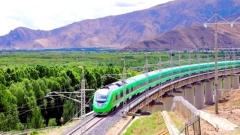
Should You Leave Tibet by Train?
Taking the train out of Tibet can be a rewarding choice if you would rather arrive in Lhasa quickly and enjoy the rail journey once you have spent time at altitude. This order can work well for travelers with limited vacation days: fly into Lhasa, take time to rest and explore, then travel by rail toward Xining or another destination served by the route. It also lets you finish the Tibet portion of your trip with a long scenic journey rather than beginning your visit with an extended ride.
There is a practical comfort advantage to this arrangement. By the time you board the train, you may already have spent several days in Lhasa and have a better sense of how you are responding to elevation. That said, acclimatization varies from person to person, and feeling fine in the city does not guarantee that you will have no symptoms during the train ride or at a higher destination. Continue to take altitude seriously, avoid overexertion, and seek medical care if symptoms are severe or worsening.
Leaving by train also provides a natural transition from Tibet to the rest of your China itinerary. You can continue from Xining by rail or connect to onward transport, depending on your plans. Before booking, check the actual arrival time, the station location, and whether you need an overnight stay or a separate ticket for your next leg. A tight connection can turn a scenic ride into a stressful travel day.
The main disadvantage is that the train journey happens at the end of your Tibet visit, when you may be ready to move on quickly. If you are tired, have a fixed international departure, or need to reach another city on a particular date, a flight may be more convenient. Train delays are possible, so avoid scheduling an important connection too close to your expected arrival.
Advantages of Taking the Train Out
- More time in Lhasa at the start: Flying in can make a short trip more practical, while the rail journey comes later.
- A scenic farewell: The changing landscape can make the departure itself part of the experience.
- A useful bridge to western China: The train can connect naturally with an overland itinerary beyond Tibet.
- Time to settle in first: Spending several days in Lhasa before departure gives you time to observe how you feel at altitude.
Drawbacks of Taking the Train Out
- The long ride comes at the end: You may be ready for a faster way out after a demanding itinerary.
- Connections need a buffer: A separate train, flight, or hotel booking should allow for schedule changes.
- The route still involves high elevation: Do not assume that time in Lhasa removes all altitude-related risks.
- It may use valuable travel days: A long journey can reduce time available for other destinations.
Train In or Train Out: A Side-by-Side Decision
The best direction depends on what you want to prioritize. If the railway experience is a major reason for your trip, either direction can deliver it. If you want to maximize time in Tibet, flying one way and taking the train the other is often a sensible balance. If your main concern is altitude, do not make the decision based on the assumption that one direction is automatically safe. Plan conservatively, allow time to rest, and follow professional medical advice where relevant.
| Your priority | A route to consider | Why it may fit |
|---|---|---|
| Experience the railway as the approach to Tibet | Train in | The journey and changing scenery become part of the arrival |
| Save time before starting sightseeing | Fly in, train out | You reach Lhasa sooner and keep the rail experience for departure |
| Spend as long as possible in Tibet | Fly one way, train the other | Avoids spending the entire overland journey in one direction |
| Avoid a tiring rail ride at the end | Train in, fly out | The long journey happens before your time in Lhasa |
| Travel slowly through western China | Train in or out via Xining | The railway can fit an overland route through the region |
| Reduce uncertainty around a fixed onward departure | Choose the more reliable connection for your dates | Leave a generous buffer and avoid a close same-day connection |
These are planning patterns, not universal recommendations. A traveler with a week available may make a different choice from someone taking a longer overland journey. Likewise, family needs, mobility, health history, and tolerance for overnight travel can outweigh the appeal of a particular route.
How Altitude Should Affect Your Choice?
Altitude deserves more attention than the train-versus-plane debate. Lhasa sits at high elevation, and many popular destinations in the region are higher still. People can develop altitude illness even if they are fit, have traveled at altitude before, or feel healthy at sea level. Symptoms can include headache, nausea, dizziness, unusual tiredness, and difficulty sleeping. Severe or worsening symptoms require prompt medical attention; do not try to push through them to keep a sightseeing schedule.
A train ride is sometimes described as a way to acclimatize gradually. The journey does involve a gradual route toward the plateau, but it also reaches very high elevations before arrival. The train’s onboard oxygen supply is a feature of the service, not a guarantee against illness. Similarly, flying directly to Lhasa brings a quicker change in elevation, but travelers can reduce unnecessary strain by keeping their first days easy and arranging an itinerary that does not rush immediately to higher places.
Whichever route you choose, build in a gentle start. Keep the first day in Lhasa light, drink fluids according to your needs, avoid strenuous activity and excessive alcohol while adjusting, and speak with a doctor before travel if you have relevant health conditions or questions about preventive medication. Do not self-diagnose serious symptoms or rely on oxygen as a substitute for care.
It can be helpful to choose the route that leaves you with the most flexibility. A schedule with room to rest is more valuable than a tightly packed plan that depends on feeling well every day. If your trip includes destinations above Lhasa, check the elevations and travel times, and avoid treating a brief stop in the city as proof that you are fully acclimatized.
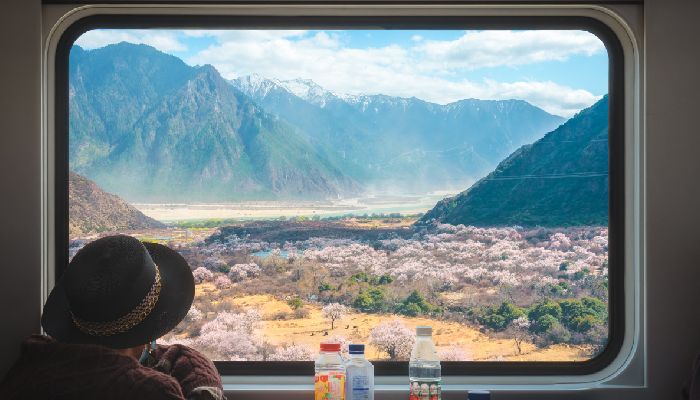
Scenery Outside the Window of the Qinghai-Tibet Railway Train
Time, Cost, and Comfort of Qinghai-Tibet Train
A common mistake is comparing only the ticket price. The full cost of taking a train includes getting to the departure city, meals and accommodation during the journey, possible hotel nights around connections, and the value of the days spent traveling. A flight may cost more on some dates but save time; on other dates, fares and rail tickets can vary considerably. Compare the total itinerary rather than assuming that rail is always cheaper.
Comfort is personal. A train offers room to move around, a chance to watch the landscape, and a different experience from flying, but shared sleeping space and limited privacy may not suit everyone. The class of berth, train facilities, journey length, and your ability to rest all matter. If you are traveling with older relatives or young children, think through meals, medication, sleep, and how everyone handles long periods in transit.
For travelers who dislike overnight transport, a flight in one direction can make the trip easier. For those who enjoy rail travel, taking the train may be worth the extra time even if it is not the fastest or cheapest option. The right decision is not necessarily the one with the lowest fare; it is the one that works with your energy, schedule, and travel priorities.

Drinking Water on Tibetan Train
Permits, Tickets, and Booking Logistics
Travel requirements for Tibet are different from those for many other parts of China, and the process depends on your nationality and itinerary. Foreign visitors generally need to arrange travel through an authorized Tibet tourism operator and obtain the required Tibet Travel Permit for the planned visit. Additional permissions may be needed for some areas or routes. Requirements can change, so confirm them with an authorized operator and the relevant official channels before making non-refundable bookings.
For foreign travelers, independent travel in Tibet is restricted, and itineraries commonly need to be organized with an authorized operator and a guide. A permit is generally required to board transport to Lhasa, including trains and flights. Confirm who is arranging the documents, when you will receive the necessary permit details, and how the documents will be handled at departure. Do not assume that a standard passport or a mainland China visa, where applicable, replaces Tibet-specific requirements.
Train tickets are separate from permits and may need to be purchased using passenger information that matches your travel documents. The booking process and release arrangements can vary. Ask your operator or ticketing provider to confirm what is included, what documents are required, and what happens if your itinerary changes. Avoid relying on informal promises about ticket availability.
If you are taking the train out, check your arrival city and onward connections before confirming the rest of your journey. If you are taking it in, consider where you will stay before departure and whether your arrival day in Lhasa should be reserved for rest. For either direction, keep a buffer before flights or important commitments. The more complex the route, the more valuable a spare night can be.
Sample Tibet Train Itineraries to Help You Decide
Train In for a Slower Overland Arrival
This option suits travelers with enough time for a rail journey and a strong interest in the route. Travel to a suitable departure city, take the train to Lhasa, and keep the first days after arrival relatively light. Add sightseeing only as you feel comfortable, then continue to other destinations according to your permits and health. Avoid placing a demanding high-altitude excursion immediately after the train.
A longer starting journey from an eastern city can be appealing if you want to travel across more of China by rail, but it uses more vacation time. If the main goal is the Qinghai–Tibet Railway, starting from Xining may be more efficient. Compare the whole route, including how you get to Xining and what you plan to do after Lhasa.
Fly In and Train Out for a Balanced Trip
For many visitors with a limited schedule, this is a practical compromise. Fly to Lhasa, allow time to rest and acclimatize, and then take the train out toward Xining. The itinerary preserves a substantial rail experience without using the train for both directions. It also allows you to decide, after spending time in Lhasa, whether a long departure ride still sounds appealing.
This arrangement needs a sensible departure buffer. If you have an international flight or a time-sensitive commitment after the train, consider reaching the connecting city early enough to handle delays and station transfers. A final-night hotel in the connection city may be more comfortable than trying to coordinate several transport legs on the same day.
Train In and Fly Out for a Railway Arrival
This pattern works for travelers who want the railway to introduce the plateau but do not want a long train journey at the end. It can suit a trip with a fixed departure date or a traveler who expects to be tired after touring. Allow time for the train journey and avoid making the first Lhasa day too ambitious. Check that your planned flight departure gives you enough time to reach the airport and meet any operator or permit arrangements.
Fly Both Ways for a Short Visit
If your priority is a brief visit and the rail journey is not essential, flying both ways may preserve more time for Lhasa and nearby destinations. This does not mean you can skip acclimatization. Plan a gentle first few days and avoid an itinerary that climbs rapidly to higher elevations. You can still experience highland scenery during guided excursions, but travel times and permitted routes should be checked before booking.
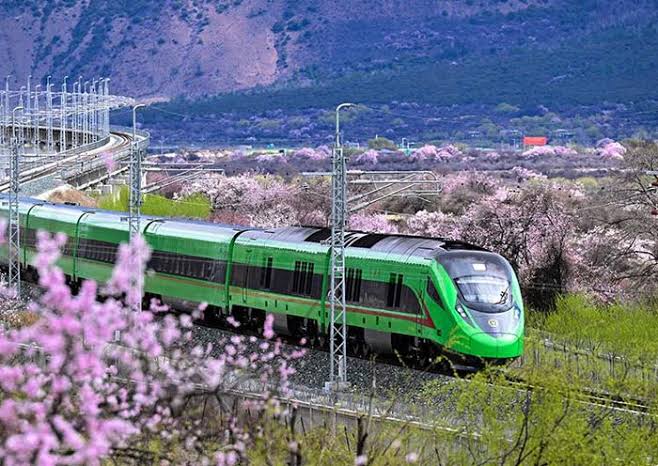
Qinghai-Tibet Railway Train
Choosing the Best Direction for Different Travelers
For first-time visitors: Either direction can work. Choose the one that gives you a less rushed schedule, and do not rely on the train as a substitute for an acclimatization plan.
For travelers with only a few days: Flying one or both ways may be more practical. A train ride can be a major part of the trip, but it can also take time away from your stay in Tibet.
For railway enthusiasts: Taking the train in makes the approach to Lhasa a defining part of the journey. Taking it out can be equally memorable if you prefer to arrive quickly and enjoy the rail route after exploring.
For travelers concerned about fatigue: Consider flying in and leaving by train only if you are comfortable with a long ride at the end. If you recover better after a journey than before one, the reverse order may suit you. Health conditions and altitude concerns should be discussed with a healthcare professional rather than settled by a general travel rule.
For families: Compare the total duration, sleep arrangements, and meal options with the needs of everyone traveling. A train can offer a more spacious experience than a plane, but a long ride may be difficult for children who need routine or frequent breaks.
For a broader China itinerary: Look at how Tibet fits between your other destinations. The rail route may connect naturally with Xining and western China, while flights can be more convenient for distant cities. Build your plan around available transport and the required permits, not just a map’s straight-line distances.
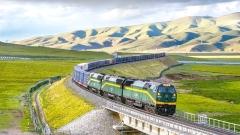
Planning Support and China Dragon Travel
Because Tibet travel involves permits, transport coordination, and route-specific rules, some visitors choose to arrange their trip through an authorized operator. China Dragon Travel can be considered as one option for travelers who want help coordinating a Tibet itinerary. Before booking, confirm the operator’s authorization, the exact services included, the permit process, transport arrangements, cancellation terms, and what support is available if your schedule changes.
Ask clear questions before paying: Is the train ticket included or arranged separately? Which cities are covered by the itinerary? How much time is reserved for acclimatization? What happens if a permit or transport booking is delayed? Are guide, accommodation, and local transfers included? Written answers help you compare an organized trip with a self-planned route and understand where extra costs may arise.
Whether you use an operator or arrange parts of the trip yourself, keep copies of your passport and travel documents, verify every departure time, and leave flexibility around connections. A good itinerary should make the logistics clear without promising that altitude symptoms, delays, or changes can be prevented.
Frequently Asked Questions
Is it better to take the train to Tibet or from Tibet?
It depends on your time and priorities. Take the train in if the railway journey is part of the experience you want. Fly in and take the train out if you want to reach Lhasa sooner while still experiencing the route. There is no universally best direction.
Does taking the train prevent altitude sickness?
No. The journey includes high-altitude sections, and the onboard oxygen supply does not guarantee protection. Allow time to adjust in Lhasa, keep your early itinerary gentle, and seek medical advice for personal health concerns.
How long does the train to Lhasa take?
The journey time depends on the departure city and service. Trains from Xining generally take less time than trains starting in distant cities. Check the current timetable for your specific dates before planning connections.
Do foreign travelers need a permit to take the train to Lhasa?
Foreign visitors generally need the required Tibet Travel Permit to travel to Lhasa, and travel arrangements may need to be made through an authorized operator. Requirements can depend on nationality and itinerary, so confirm current rules before booking.